

House Lawmakers Launch Bipartisan U.S.-Mexico Caucus Amid Bilateral Tensions

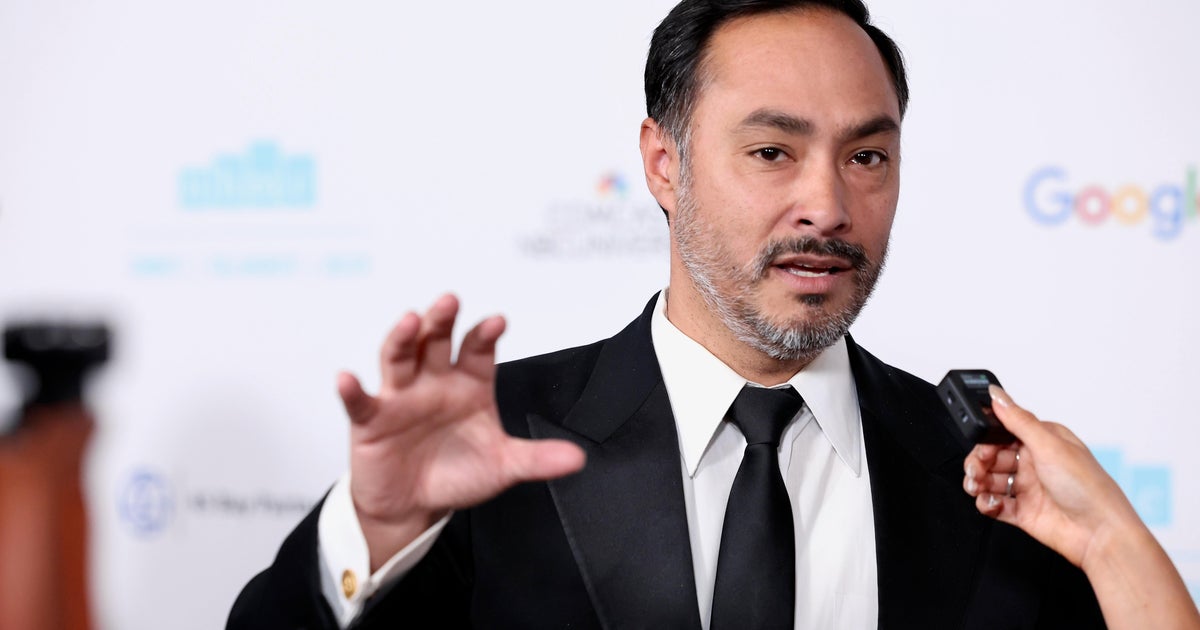
A bipartisan group of House lawmakers will launch a U.S.-Mexico caucus on Thursday to strengthen ties between the two countries on trade, security and culture amid rising tensions in the bilateral relationship.
Rep. Joaquin Castro, a Texas Democrat and ranking member of the House Foreign Affairs Subcommittee on the Western Hemisphere, and Rep. Rudy Yakym, an Indiana Republican, will serve as co-chairs. The launch has support from the American Mexican Leadership Council, a new national organization also debuting Thursday to promote Mexican American leadership and U.S.-Mexico collaboration.
The effort arrives during a turbulent period for relations. Last week, the State Department began reviewing all 53 Mexican consulates in the U.S., a step that could prompt Secretary of State Marco Rubio to close some offices. Tensions stem from disputes over security cooperation and cartel violence after two American CIA officers died in a counter-narcotics operation in northern Mexico. The strain precedes the first joint review of the U.S.-Mexico-Canada Agreement on July 1, 2026.
"I am thrilled to announce the official launch of the U.S.-Mexico Caucus to strengthen the relationship between the United States and Mexico," Castro said. "Our shared border, history and interests — particularly in trade, migration, and security — make the creation of this caucus relevant now more than ever."
Yakym, whose Indiana district depends heavily on trade with Mexico, highlighted economic and security priorities at home.
"Hoosier manufacturers and farmers rely on Mexico for inputs and exports, while our communities count on a strong security relationship to keep fentanyl and other deadly drugs off the streets," he said. "I look forward to this caucus serving as a forum to deepen that relationship."
The caucus starts with 10 inaugural members split evenly between parties: Reps. Pete Aguilar, D-Calif.; María Salazar, R-Fla.; Adriano Espaillat, D-N.Y.; Juan Ciscomani, R-Ariz.; Greg Stanton, D-Ariz.; Michael McCaul, R-Texas; Veronica Escobar, D-Texas; and Don Bacon, R-Neb.
"Mexico and the United States are connected not only by our southern border, but also by mutual security challenges and shared economic interests," McCaul said. He added that he is "very proud to join this caucus."
"Strengthening areas of collaboration — from agriculture to immigration to counter-narcotic efforts — will no doubt benefit both our nations and the broader region," he said.
Outside Congress, the new AMLC backs the caucus. The group is co-chaired by former U.S. Ambassador to Croatia Nathalie Rayes and led by president and CEO Sergio Gonzales. Its bipartisan coalition includes former U.S. Treasurer Rosario Marín, former Transportation and Energy Secretary Federico Peña, and former House Foreign Affairs Committee Chair Ileana Ros-Lehtinen.
"This is about creating opportunity, prosperity and economic security for communities across the United States," Gonzales said. "So many of the sectors that drive our economy, from agriculture to finance, innovation, and trade depend on a successful relationship with Mexico. America's strength and competitiveness in the world are deeply connected to the success of this partnership."
Rayes said the timing calls for setting politics aside.
"The launch of this bipartisan caucus sends a strong message: the U.S.-Mexico relationship transcends politics," she said. "It is about maintaining economic strength, striving towards shared security, and the millions of people whose lives are shaped by this partnership."
Mexico runs the largest foreign consular network in the U.S., with offices offering documentation and legal aid to millions of its citizens. Most are in border states and cities with large Mexican American populations, such as California, Texas and Arizona.
U.S. consulate closures in recent years have typically signaled tensions with rival nations. In 2020, the Trump administration ordered China's consulate in Houston to close over espionage and intellectual property theft concerns. In 2017, the U.S. directed Russia to shut its San Francisco consulate and facilities in Washington and New York after Moscow expelled American diplomats.
Mexican President Claudia Sheinbaum recently addressed the State Department's review plans. "There would be no reason for it because the consulates are very respectful of U.S. politics," she told reporters.
What's Your Reaction?
 Like
0
Like
0
 Dislike
0
Dislike
0
 Love
0
Love
0
 Funny
0
Funny
0
 Wow
0
Wow
0
 Sad
0
Sad
0
 Angry
0
Angry
0




Comments (0)