

Trump says Hezbollah and Israel agree to halt fighting

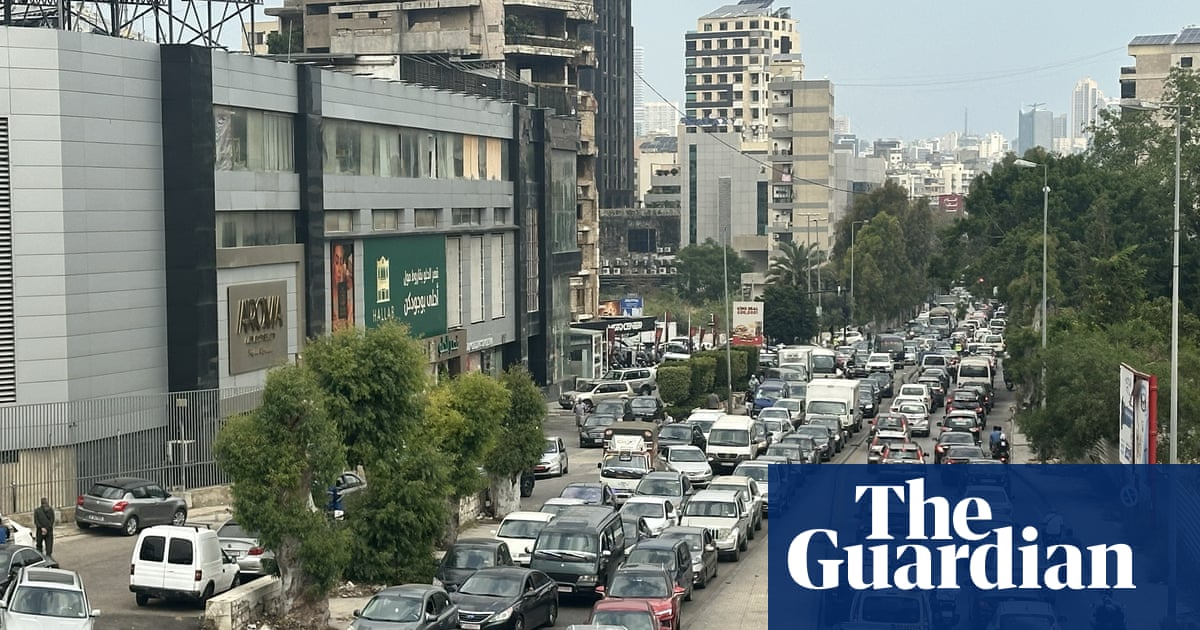
Donald Trump said Hezbollah and Israel have agreed to mutual de-escalation and to scale back fighting, seemingly averting an Israeli strike on Beirut and the potential collapse of ceasefire talks with Iran.
The US president said in a social media post that he spoke to Israel’s prime minister, Benjamin Netanyahu, and representatives of Hezbollah and both agreed that “all shooting will stop”.
“There will be no troops going to Beirut and any troops that are on their way have already been turned back. Likewise, through highly placed representatives, I had a very good call with Hezbollah, and they agreed all shooting will stop,” Trump said in a post.
According to a statement by Lebanon’s presidency, under the proposed arrangement Israel would not strike Beirut’s southern suburbs if Hezbollah did not launch attacks against Israel.
However attacks from both sides were reported after Trump’s announcement, and both Israeli officials and Hezbollah made statements that cast doubt on the durability of the agreement. The Hezbollah MP Hassan Fadlallah said the group refused a partial truce offer to spare Beirut in exchange for an end to Hezbollah attacks on Israel.
In a statement on X, Netanyahu said he told Trump that Israel would attack Beirut if Hezbollah did not stop attacking Israel and its citizens, adding that Israel will continue to operate “as planned” in southern Lebanon.
Early on Tuesday, the Israeli military said that it intercepted two projectiles that crossed from Lebanon into northern Israel, but that no injuries were reported.
Trump’s statement came just hours after Netanyahu instructed the Israeli military to bomb the southern suburbs of Beirut, sparking a mass exodus by the area’s residents.
The Israeli prime minister and his defence minister, Israel Katz, said they had given instructions to strike “terrorist targets” in the southern suburbs for what they described as “repeated and ongoing violations of the ceasefire by Hezbollah”.
The bombing order marked the most serious escalation of Israel’s war in Lebanon since a supposed ceasefire was announced on 17 April and was followed by Iran’s political leadership calling off all further negotiations, maintaining that a ceasefire in Lebanon was a precondition for a broader truce with the US.
Iran had previously threatened that further Israeli attacks on Lebanon could endanger the US-Iran ceasefire.
Donald Trump initially responded by suggesting he was not opposed to a halt in negotiations, telling US media: “I think we’ve been talking too much.”
However, those comments were then followed by a flurry of phone calls, in which Trump said he spoke with Netanyahu and, via intermediaries, with Hezbollah as he sought to broker a new ceasefire.
He later told ABC news that he expected a deal with Tehran in “the next week,” while playing down the significance of Monday’s events.
“There was a little glitch today, but I turned that one around very quickly, as you probably noticed earlier,” Trump said.
Fighting between Israel and Hezbollah has not stopped despite the last month’s ceasefire, and Israeli strikes have killed more than 800 people in Lebanon since its announcement. Hezbollah has targeted Israeli troops in southern Lebanon, and in recent days launched rockets towards northern Israel.
The ceasefire was previously understood to exempt Beirut from Israeli strikes, largely at Washington’s request, though Israel has struck the southern suburbs twice in what is still a reduction from the daily bombing of the capital before 17 April.
More than a million people have been displaced because of Israeli bombing in southern Lebanon and the Bekaa valley, as well as the dozens of forced evacuation orders the Israeli military has placed on towns and villages across Lebanon.
On Sunday, the Israeli military captured the medieval Beaufort castle in southern Lebanon, the deepest it has reached since its 18-year occupation of the region ended in 2000. It also bombarded Tyre, levelling entire buildings in some of the most violent airstrikes yet on the southern city.
An Israeli airstrike on Tyre severely damaged the city’s Jabal Amel hospital, blowing in windows and collapsing sections of its ceiling, leaving patients and staff in disarray.
European leaders have condemned Israel’s expansion into Lebanon. The French president, Emmanuel Macron, called for an end to the fighting, saying “nothing justifies the major escalation under way in south Lebanon”.
The foreign ministers of the UK and Germany joined France in condemning the new operation. Britain’s Yvette Cooper called for the US-brokered ceasefire to be respected.
Israeli media reported that Netanyahu’s government had been lobbying Washington in recent days for a green light to strike Beirut, with Washington agreeing over the weekend to expanded strikes as tensions between Washington and Tehran grew.
Sources cited by Israeli media said Netanyahu convened high-level security consultations over the weekend and spoke by phone with the US secretary of state, Marco Rubio, arguing that Israel could not allow Hezbollah to enjoy what it viewed as de facto immunity in Beirut.
The Israeli military subsequently presented political leaders with a range of operational plans, including options that would require civilian evacuation orders. Reports said Netanyahu acknowledged in private discussions that US restrictions continued to limit Israel’s freedom of action.
The current conflict began in March, after Hezbollah fired rockets towards Israel in retaliation for the US-Israeli killing of Iran’s supreme leader. Since then, more than 3,300 people, including children and first responders, have been killed in Lebanon. Hezbollah strikes since 2 March have killed two people in Israel and more than 20 soldiers and one contractor in southern Lebanon.
Talks between senior officials from Israel and Lebanon began in April in Washington, the first in more than three decades between the countries, which have no formal diplomatic relations. Those discussions were scheduled to continue this week. Hezbollah is not taking part and has said it will not accept any results.
Observers have suggested Israeli officials and military commanders want to inflict as much damage as possible on Hezbollah before a potential deal imposes new limits or stops the current offensive.
What's Your Reaction?
 Like
0
Like
0
 Dislike
0
Dislike
0
 Love
0
Love
0
 Funny
0
Funny
0
 Wow
0
Wow
0
 Sad
0
Sad
0
 Angry
0
Angry
0




Comments (0)