

New pill nearly doubles survival time for advanced pancreatic cancer

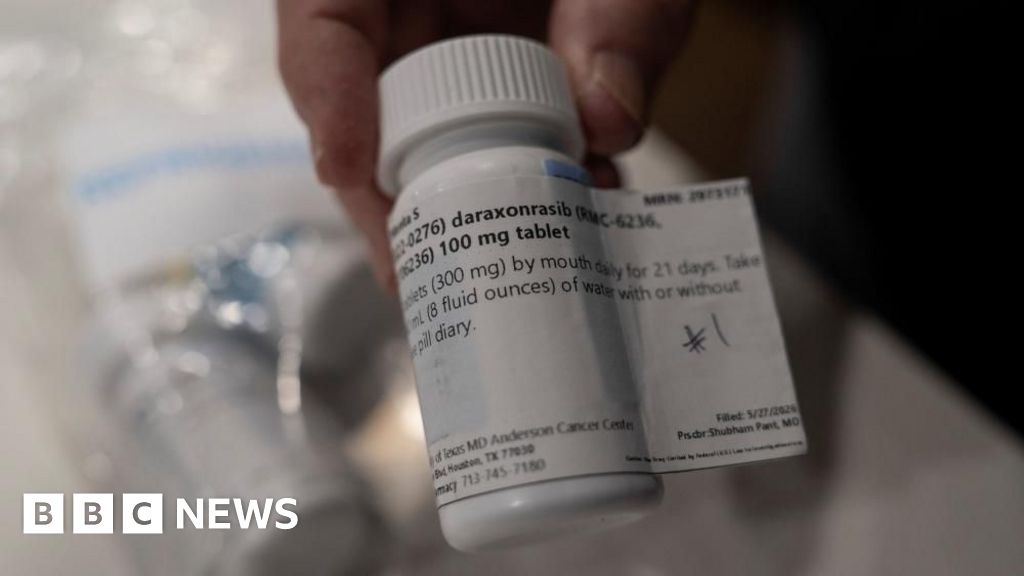
A pill has been found to nearly double the survival time for patients with advanced pancreatic cancer.
The drug, called daraxonrasib, works by locking onto and shutting off the mutated KRAS gene, which is present in more than 90 percent of pancreatic tumors and drives cancer growth.
In a trial of 500 patients across North America, Europe and Asia, those given chemotherapy lived an average of 6.6 months. Patients who received daraxonrasib lived an average of 13.2 months. The drug also produced fewer severe side effects.
"These results are landscape-changing for metastatic pancreatic cancer patients with a KRAS mutation," said Rachna Shroff, chief of the division of haematology/oncology at the University of Arizona Cancer Centre.
Pancreatic cancer is often diagnosed late and is difficult to treat. More than half of people with the disease die within three months of diagnosis. Britain records 11,500 new cases and around 10,200 deaths each year, according to Cancer Research UK. Actor Alan Rickman died of pancreatic cancer in 2016, five months after diagnosis.
The trial, led by American researchers and presented at the American Society of Clinical Oncology annual meeting in Chicago, included 248 patients who took daraxonrasib once daily and 252 who received chemotherapy.
Severe side effects occurred in 43.6 percent of patients on daraxonrasib, compared with 57.5 percent on chemotherapy.
Anna Jewell, director of services, research and innovation at Pancreatic Cancer UK, said the results were "some of the most exciting developments we have seen in pancreatic cancer for a very long time."
"More time with those we love most is truly priceless," she said. "We must do everything possible to ensure the most promising new treatments are available here in the UK."
What's Your Reaction?
 Like
0
Like
0
 Dislike
0
Dislike
0
 Love
0
Love
0
 Funny
0
Funny
0
 Wow
0
Wow
0
 Sad
0
Sad
0
 Angry
0
Angry
0










Comments (0)