

Japan's 'catnomics' set to add nearly ¥3tn to economy in 2026

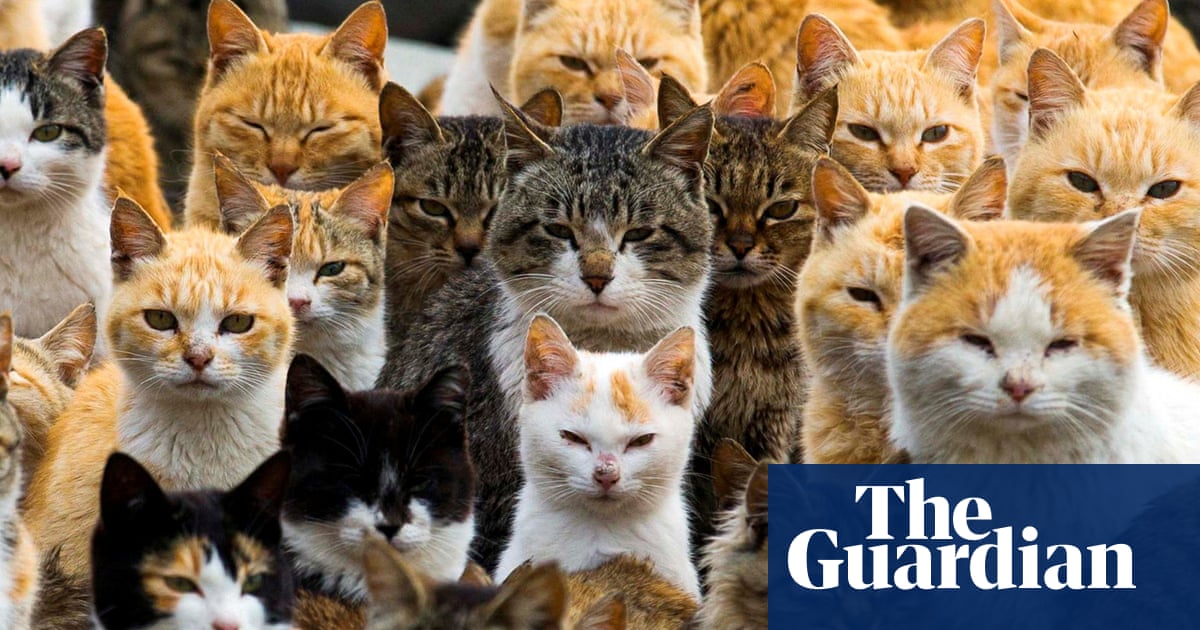
Feline faces appear on countless book covers, a national day celebrates their appeal, and cats have outnumbered dogs as household pets for a decade.
Their reach extends through Japanese society. A recent report estimates cats will add just under ¥3tn ($18.8bn) in value to the economy in 2026, a figure researchers have labeled "catnomics."
The effect shows clearly in Yanaka Ginza, a Tokyo district that calls itself the capital's "cat town." On a recent warm afternoon, visitors from North America, Australia and Europe walked the narrow streets where cat images mark shop signs and visitors can buy cat-shaped sweets or order custom hanko seals.
Few of the neighborhood's cats appeared. Shoppers instead bought black-cat fridge magnets, postcards, chopsticks and dishes said to bring luck.
"There have always been cats in Yanaka because there are lots of Buddhist temples here," said Yumiko Yamashita, who owns several cats and runs the Neco Action store. "In the old days they roamed around and even went into different houses, but they're less visible these days. They prefer to stay indoors on a hot day like this."
The global popularity of Japanese fiction has turned the cat into a marketing tool more than a century after Natsume Sōseki published I Am a Cat. Cats appear in novels by Haruki Murakami and in works such as Hiro Arikawa's The Travelling Cat Chronicles and Takashi Hiraide's The Guest Cat. Publishers have placed cat images on covers of books that have no connection to the animals.
Japan's households kept 8.8 million cats in 2025, compared with 6.8 million dogs, according to the Japan Pet Food Association. The average cat-owning household spends almost ¥1.8m ($11,300) over the animal's lifetime.
Katsuhiro Miyamoto, professor emeritus at Kansai University, compiled the latest "catnomics" estimate by combining spending at cat cafes, sales of photo books, and revenue and wages at cat-food makers and related firms. The total falls just short of the economic impact projected for the 2025 World Exposition in Osaka.
Miyamoto said cats still produce "a comparable economic effect, demonstrating the significant contribution cats are making to the Japanese economy."
The emperor and empress keep cats, and Prime Minister Sanae Takaichi has said she prefers them to dogs.
Cats reached Japan during the Nara period (710-794) through envoys returning from Tang Dynasty China. Temples took them in to guard scriptures from rodents, giving the animals a special status.
"Cats don't live for the moment; they live in the moment," said Japan-based author Stephen Mansfield. "Dwelling neither in the past or future, their minds are likely a lot less cluttered than ours."
Japanese folklore presents cats as benign figures whose compassion can signal good fortune, a belief reflected in the maneki neko figurine with one paw raised. Legend holds that a wealthy lord at Gōtokuji temple in Kyoto was saved from lightning after following a cat's gesture, prompting him to restore the temple.
Such statues now stand in shops and restaurants seeking similar luck.
Japan's long-term population decline may eventually reduce the number of households able to keep cats, but for now the animals remain a steady presence in daily life.
What's Your Reaction?
 Like
0
Like
0
 Dislike
0
Dislike
0
 Love
1
Love
1
 Funny
2
Funny
2
 Wow
0
Wow
0
 Sad
1
Sad
1
 Angry
0
Angry
0











Comments (0)