

Designers Share Tips for Living Well in Tiny Apartments

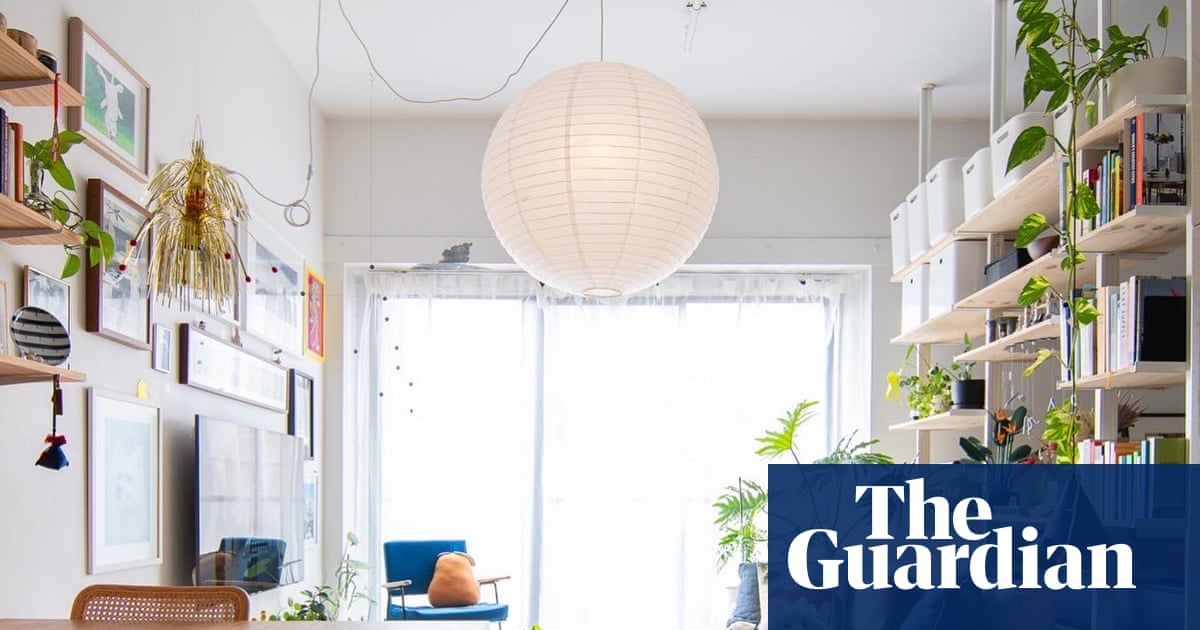
In 2010 Colin Chee collected the keys to his 37 square metre off-the-plan apartment in Melbourne’s city centre. “It was only then that I realised how shit it was.”
With no design experience and a limited budget, his search for ideas led to the launch of Never Too Small, a YouTube channel that shows clever small-space designs from around the world. The channel began in 2017 and now has more than 3 million subscribers.
A housing shortage and a rise in apartment construction have left more Australians looking for ways to make the best of compact homes.
This weekend Chee will appear with Claire Scorpo, a director of Agius Scorpo Architects, and Tahj Rosmarin, a director of Card Practice, at a free talk called Small Spaces, Big Living at the National Gallery of Victoria. Ahead of the event the three designers spoke about the choices they made in their own small homes.
Chee advises against rushing to furnish a new place. He recommends moving in with whatever fits, then living in the space for a while before making changes. “People think a home needs to be finished instantly,” he says. “But what I try to convey is that homes will never be perfect.”
Small spaces take longer to understand, he adds, and residents should treat them like a flatmate that has both good and bad days.
When Chee and his partner moved into their 40 square metre converted warehouse, the extra three square metres felt like a luxury. They kept costs low by mixing second-hand pieces with simple custom work. “If I was rich, I’d live in a bigger house. Budget is our biggest consideration,” he says.
In the kitchen he installed a bar fridge and a separate small freezer rather than one large unit. Months after moving in he added a DIY entryway shelf once he knew what it needed to hold. He looked for furniture with “skinny legs” to keep the floor visible and create a sense of space. Instead of a coffee table, he suggests, “maybe you just need a stool for your drink” that can also serve as a step ladder.
Rosmarin built a six-metre-long custom bench along one wall of his North Melbourne apartment. The piece stores camping gear under the dining nook seat, acts as a display shelf and holds the television. It cost about $5,000 but removed the need for other furniture.
Rosmarin says 1960s walk-up apartments like his have strong external features but were often divided inside, making rooms feel cramped. Rather than remove the wall between kitchen and living areas, he and his partner cut a cafeteria-style window through it. “It created a bit of visual connection so that when you’re in the kitchen, you can see people in the living area but it also hides all the mess,” he says. He notes that demolishing load-bearing walls is costly, so smaller openings help keep the project within budget.
When Scorpo and her husband moved into their Fitzroy bedsit it had been poorly renovated. In the small bathroom they kept the bath and added a fluted glass partition that splits the room into dressing and bathing zones while letting light through.
“The most sanity-saving design choices keep rooms usable for different purposes by two people at the same time,” she says. “We get lured into the idea that open-plan living is the best kind of design for small spaces but often that one big space can only do one thing at once.”
With only 23 square metres of floor area, Scorpo’s first move was to switch to a double bed. The couple built a nook to hide it and raised the bed for storage, including space for a washing machine. Scorpo says the approach works if residents have no mobility issues.
Chee says many online tutorials show how to raise a bed on a budget. He and his partner set a $5,000 limit for upgrades and used Ikea and Bunnings products to copy custom looks at lower cost. “We used an Ikea Elvarli modular shelving system, salvaged some wood for the shelves and had that cut to size,” he says.
In apartments with standard ceiling heights, raising shelves and curtain rods close to the ceiling makes rooms feel taller. Chee adds that painting ceilings with glossy paint increases the effect.
What's Your Reaction?
 Like
0
Like
0
 Dislike
0
Dislike
0
 Love
0
Love
0
 Funny
0
Funny
0
 Wow
0
Wow
0
 Sad
0
Sad
0
 Angry
0
Angry
0











Comments (0)