

Fire damage and repairs leave mother unable to feel son's presence in family home

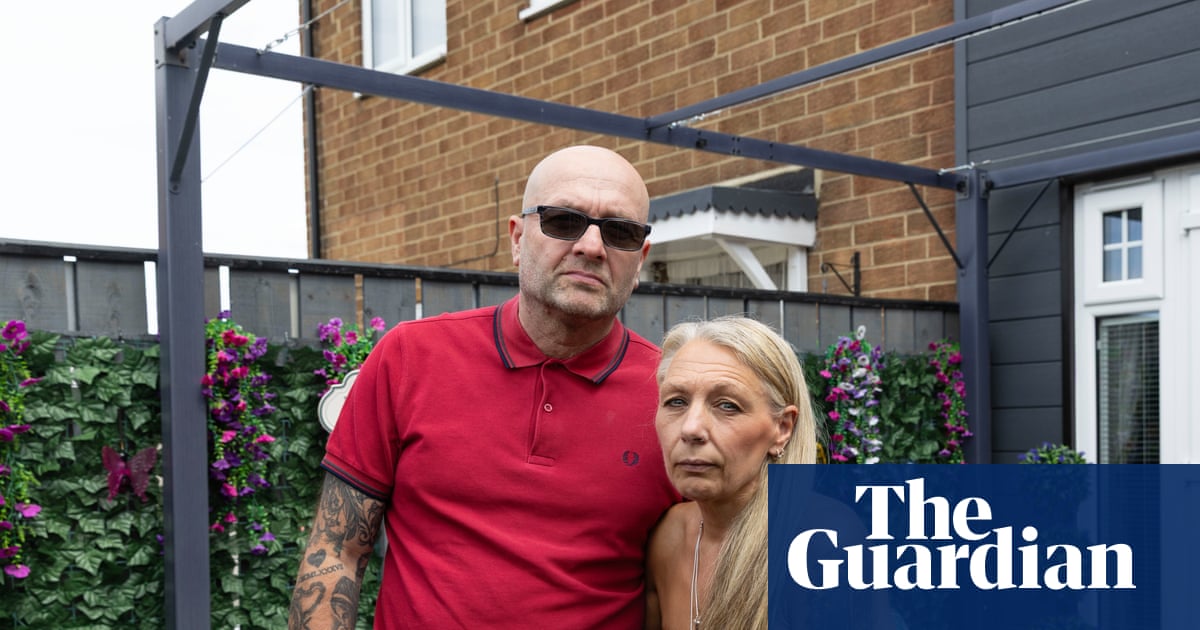
Karen Holmes is sitting in her newly renovated lounge in a house she has lived in for 28 years, but she cannot live here now. She cannot leave, either.
The house looks good. Better than good, people tell her. There are new walls, new floors, new windows. French doors where there used to be a window.
She cannot bear it. "What people don’t realise is, this whole house was just about Dylan," she says. "I could sit on this sofa and I could still see him laid there, where he was when he died, and I got comfort in that. But that’s all gone."
Dylan Holmes died in the living room of this house in Thornaby, North Yorkshire, on 19 April 2017. He was 20. He had Hodgkin’s lymphoma and, after 13 months of illness, died at home as he had wanted, in his mother’s arms, with his father, Tosh, his sisters and two of his best friends nearby, listening to his music.
Karen and Tosh, 59, have been together since they were teenagers. They had already lived through one devastating loss. Karen was 17 when their second baby, James, died of cot death.
Dylan was diagnosed in 2016, aged 19. For years afterwards, Karen and Tosh visited his grave every day. The house became a way of keeping him close – the sofa where he had lain, the room where he had died, the layout that had been his since childhood. It was painful. But it was also, she says, a comfort.
Then, in the early hours of 31 May last year, someone threw two petrol bombs towards the back window. The attack was not meant for Karen’s family. Police told them the intended target was a flat nearby and that the addresses had been confused.
Later, Karen says, she discovered something that made it even harder to take in: the people who had been living in that flat had already gone. It was empty.
The fire spread through the house. Karen and Tosh had to move out for six months while it was repaired. The case has since been closed, with nobody charged.
What happened that night was violent and frightening. But what has proved hardest to bear is what came after. Because the problem was not only that the fire damaged her home, it was that the repair changed it.
Every room, apart from the bathroom, is different now. The room where Dylan died no longer feels like the room where he died. The corner of the sofa where Karen used to sit and feel his presence near her is no longer the same corner. The house has been restored in every material sense. What it meant to her has not.
"They took everything," she says. "It wasn’t just our house. It took everything, the memories." Then, more quietly: "It’s not my house any more."
"Memorialisation is a normal and important part of the grieving process," says Kay Thomas, a grief counsellor. "People often keep a room, a place or an object just as it was because it helps them stay connected to the person they have lost. When that space is changed or taken away, it can feel like another loss on top of the first one."
A year on, Karen says the grief is getting worse, not better. When she was displaced, busy with insurance, repairs and family logistics, she thought she was coping. It was only when she moved back that the scale of it became clear. "The longer I’m in it, the worse I’m getting," she says.
Karen has withdrawn from family life. She used to see her sister and aunt twice a week. Now it is far less. She has had to tell one of her daughters she can no longer help with a young grandchild in the way she once did.
She and Tosh used to visit Dylan’s grave every day. Now, they go once a week. "We used to go to the cemetery every single day," she says. "But since this, it’s just consumed our whole life to the point where we now only go down once a week. And I feel guilty over that."
She is in counselling. Her husband has gently suggested they may need to sell. She resists. Asked whether leaving would feel like leaving Dylan behind, she answers without hesitation. "Yes," she says. "I already feel like I left James in the other house."
Karen does not dwell on the objects lost in the fire. It is the rooms themselves she mourns. "I don’t care about that," she says of the improvements people point out. "I was happy with my house before. I didn’t need all this to happen."
She adds: "These kids that throw these petrol bombs, they don’t realise the impact it has on the people inside that house. I’m told it’s probably just somebody being paid a couple of quid to go and do it, but how would they feel if it was their family going through this? If it was their parents or sisters and brothers, how would they feel?"
A year on, that is the question she is left with. The house has been repaired. But for Karen, the home she had lived in – the one that held Dylan as he was, and as he died – has not been given back.
What's Your Reaction?
 Like
0
Like
0
 Dislike
0
Dislike
0
 Love
0
Love
0
 Funny
0
Funny
0
 Wow
0
Wow
0
 Sad
0
Sad
0
 Angry
0
Angry
0







Comments (0)