

Thailand to cut visa-free stays to 30 days amid tourist complaints

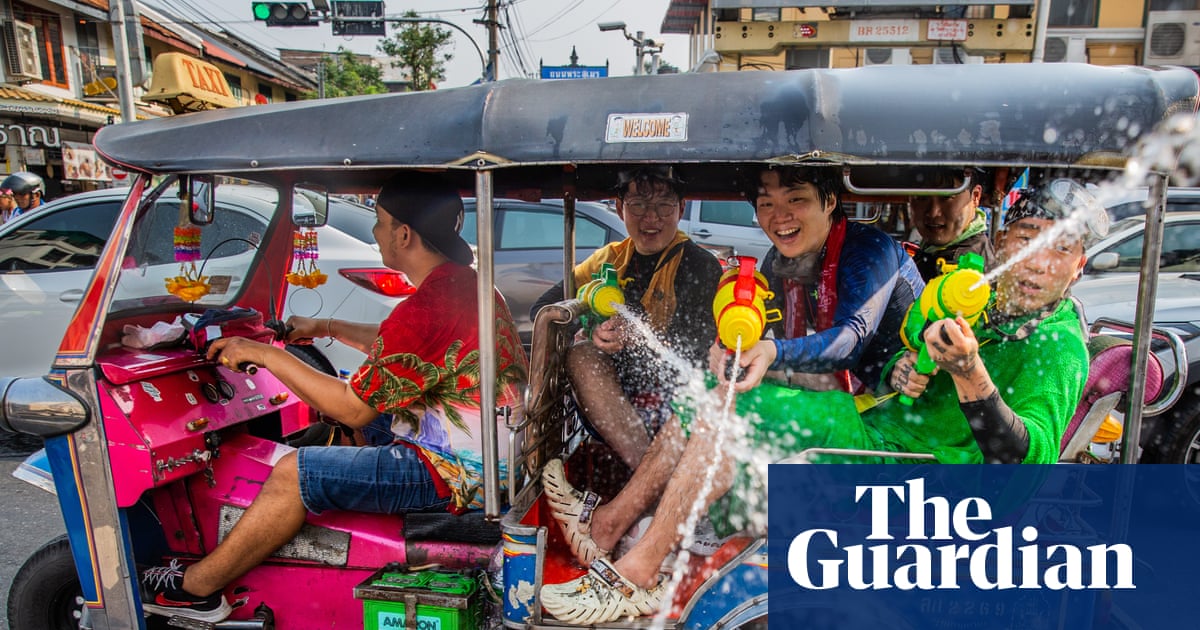
It’s late afternoon on Bangkok’s Khaosan Road, the city’s backpacker strip. Bar staff call after passersby with drink promotions. The smell of cannabis, widely sold in the city, drifts into the street, where vendors sell fake tattoos, flip-flops and icy fruit shakes.
This street and its noisy nightlife have drawn visitors from around the world for decades. But some in Thailand are growing tired of the country’s party-loving visitors.
Some assume Thailand can be treated “as a playground,” says Minnie, who runs Thai’d Up with Minnie, a social media channel that teaches visitors about Thai language and culture.
Last month the government announced it would tighten visa rules, cutting the length of visa-free stays for visitors from more than 90 countries from 60 days to a new allowance of up to 30 days in most cases. It is unclear when the new rules will take effect.
The changes have been welcomed by many in Thailand, who are fed up with a stream of news about misbehaving tourists. Reports include visitors refusing to pay restaurant bills, viral clips of drinkers brawling in the streets and foreign couples deported for reportedly having sex in a tuk-tuk.
Videos have also shown abusive treatment of locals. In one case a foreign visitor appeared to blow mucus from his nose at a street food vendor.
There’s “a growing response of unhappy Thais who are really starting to see now that we don’t want this kind of behaviour,” says Minnie, who asked not to give her second name. “It hurts the people who do live here.”
The anger has been picked up by the government, which has issued its own warnings against badly behaved tourists.
“Foreigners who enter Thailand cannot act like influential figures, do illegal things, bully the people of the host country, or behave in ways that go against Thailand’s morals, culture or traditions,” said Arsit Sampantharat, permanent secretary of the interior ministry, in comments reported by The Nation.
Despite the strong words, the government is trying to strike a balance between public order and the economy, which relies heavily on foreign visitors. The tourism sector contributes up to 20 percent of GDP and drives employment from luxury hotels and spas to food sellers and taxi drivers.
It is not only reports of unruly behaviour that trouble Thailand. Officials also cite concerns that foreign visitors are running businesses illegally or exploiting visa rules to use the country as a base for more serious transnational crimes.
South-east Asia has become a hub for criminal scam compounds in recent years, with syndicates often transporting human trafficking victims through Thailand into neighbouring countries such as Myanmar to work in scam facilities. When announcing the visa changes, officials referred to “national security” without giving further details.
The current system created “a loophole for people without good intentions to take advantage,” said Rachada Dhnadirek, a Thai government spokesperson.
Authorities have launched crackdowns on foreigners setting up businesses or illegally owning land in tourist areas without the correct papers. Opposition politicians have called for further immigration crackdowns, including tighter screening of people who hold long-term visas and elite residency programs.
“What we worry about is not the real tourists but the people who enter with the tourist visa but stay here, and make a business here illegally,” says Chutima Jeeramongkol, president of the Pattaya Business and Tourism Association.
Chutima says the tightening of visa laws will allow for better screening of tourists and that the impact will be minimal because most tourists do not stay for an extended period.
Outside Wat Arun, one of Bangkok’s most famous temples, sunbaked tuk-tuks line up waiting for customers while shop owners display glittering silk dresses ready to hire for temple photoshoots.
Most tourists passing through say the immigration changes would not have affected their holiday plans. Juan Luna is visiting Thailand with his husband and two children. Despite only being here for four days, he says the new rules would still give plenty of time to travel in Thailand if they had wanted to explore further.
Some had planned to stay longer. Rudolf Guzsaly, who is visiting from Hungary, says he had hoped to stay for at least six weeks. “I understand, because there are many troubles with the tourists now,” he says, but he is not convinced the changes will stamp out bad behaviour.
“Most of the tourists just come for two weeks so if they want to make trouble, they make trouble in two weeks,” says Guzsaly.
Many, like Minnie, hope the visa changes will help protect the things that make Thailand special. In Thailand, people often try to be considerate of others and not impose, a concept known as being “greng jai,” she explains. This can lead people to be passive in the face of tourists behaving badly.
Attitudes are now changing, she says. “I think Thailand now is trying really hard to preserve its culture.”
What's Your Reaction?
 Like
0
Like
0
 Dislike
0
Dislike
0
 Love
0
Love
0
 Funny
0
Funny
0
 Wow
0
Wow
0
 Sad
0
Sad
0
 Angry
0
Angry
0







Comments (0)