

New fungus found killing invasive moss in Britain

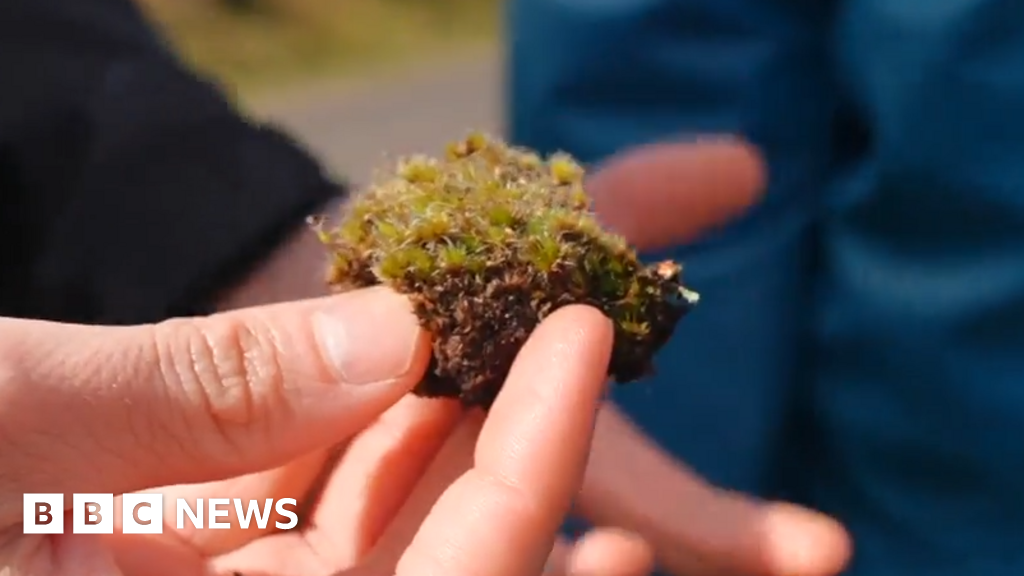
A new species of fungus has been found in Britain that kills an invasive moss and may help restore native habitats.
The fungus infects heath-star moss, which has spread across the country since arriving from the southern hemisphere in the 1940s. By 1990 the moss was established nationwide and now grows on hillsides, sand dunes and even tarmac.
Dr George Greiff discovered the fungus four years ago while walking on the Isle of Wight. He noticed dead patches of the moss and later identified the cause with help from scientists in Britain and France. The fungus has been named moss die-back.
Greiff took BBC News to Bannau Brycheiniog national park near Abergavenny in south Wales to show the effect. He pointed out brown rings of dead moss where the fungus had taken hold and noted young heather plants growing in the cleared spaces.
More than 1,000 moss species exist in Britain. Many form the base of rare temperate rainforests and peatlands that store carbon. Heath-star moss reproduces quickly and sends spores widely, allowing it to crowd out native mosses.
Greiff said the fungus appears to affect only the heath-star moss and one other species so far. He believes it may have evolved from a native fungus that adapted to the invader.
Around 2,000 non-native plants and animals have reached Britain. Some, such as Japanese knotweed and rhododendron, cause damage to buildings or soils. Control of heath-star moss by hand is considered too costly and slow.
Greiff said the discovery offers a chance for the British environment to push back against an invasive species without large-scale human intervention.
What's Your Reaction?
 Like
0
Like
0
 Dislike
0
Dislike
0
 Love
0
Love
0
 Funny
0
Funny
0
 Wow
0
Wow
0
 Sad
0
Sad
0
 Angry
0
Angry
0








Comments (0)