

Few US States Show Reading Gains as Scores Lag Pre-Pandemic Levels

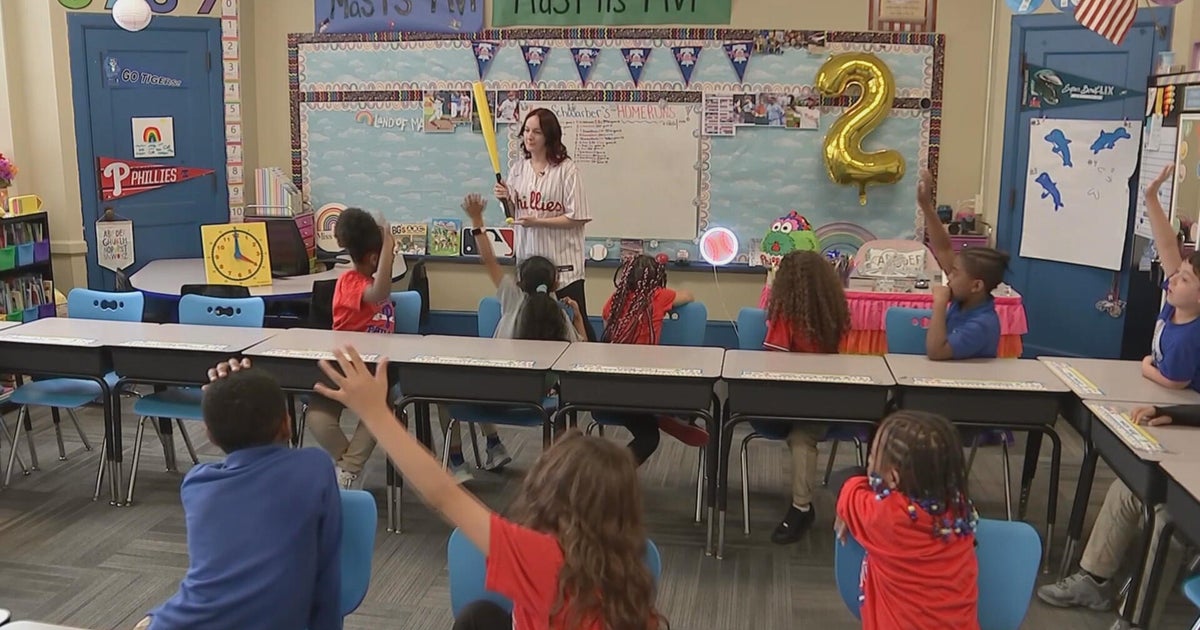
Modesto, Calif. — Teacher Nancy Barajas dims the lights, turns on a disco ball and plays music from her playlist before every important test. Her sixth graders dance together in a pre-celebration to build confidence, then sit for the exam.
Elementary schools in Modesto, California, have posted steady gains in reading and math scores over the past several years.
Nationwide, the results paint a darker picture. Researchers describe a reading recession in the U.S., a decline that began before the pandemic disrupted schools.
Scholars from Harvard, Stanford and Dartmouth examined state test scores for third through eighth graders across more than 5,000 school districts in 38 states. Their national Education Scorecard allowed comparisons between districts and states.
The findings were stark: Only five states and the District of Columbia showed meaningful reading score growth from 2022 to 2025. Nationally, students trail pre-pandemic reading levels by nearly half a grade and lag slightly less in math.
Schools have worked to help students catch up since COVID-19 upended education. Yet reading scores for eighth graders have fallen since 2013 and for fourth graders since 2015, per the National Assessment of Educational Progress.
"The pandemic was the mudslide that had followed seven years of steady erosion in achievement," said Thomas Kane, a Harvard professor who helped create the Education Scorecard.
"The 'learning recession' started a decade ago, after policymakers switched off the early warning system of test-based accountability and social media took over children's lives. In this report, we highlight the work of a small group of state leaders who have started digging out by changing how students learn to read, and 108 local school districts that are finding ways to get students learning again. The recovery of U.S. education has begun. But it's up to the rest of us to spread it."
States and districts with progress have shifted to phonics-based instruction and added support for struggling readers. Math scores also improved in almost every state analyzed from 2022 to 2025. Student absenteeism dropped in most states. In more than 400 districts, including Modesto, reading or math growth beat demographically similar districts in the same state.
Researchers debate causes of the reading recession. Social media on smartphones may have cut recreational reading among children. States have also eased strict penalties for schools with poor standardized test results, Kane said.
States that boosted reading scores — Louisiana, Maryland, Tennessee, Kentucky and Indiana — required schools to use phonics-based "science of reading" methods.
Schools had long downplayed phonics in favor of strategies like guessing words from context. As scores dropped over the past decade, parents, scholars and literacy advocates called for methods backed by research on how children learn to read, mainly by sounding out words.
These states also mandated dyslexia screening and hired coaches to aid teachers. Still, science of reading changes did not ensure gains everywhere. Florida, Arizona and Nebraska adjusted reading instruction but saw scores fall.
Modesto overhauled reading instruction during the pandemic and math a couple years earlier. The district formed a department for English learners and boosted teacher training. Educators earned $5,000 for finishing the LETRS program, Language Essentials for Teachers of Reading and Spelling.
Test scores there gained the equivalent of 18 weeks of math learning and 13 weeks of reading. Overall scores remain well below grade level.
In Detroit, a reading push plus attendance efforts lifted scores. The urban district long faced poor school conditions, prompting a 2016 lawsuit where students claimed denial of the right to read. A settlement topped $94 million and aided gains. Scores still trail national averages but outpace similar Michigan urban districts.
"It took a lot to rebuild systems, and now kids are learning at higher levels, but I'm still not satisfied. And I think that's the next challenge: continuing to motivate, inspire and change things," said Superintendent Nikolai Vitti.
The funds helped Munger Elementary-Middle School in a largely Latino Detroit neighborhood hire 18 educators for small-group support. An attendance agent calls absent students' homes and visits doors.
First-grade teacher Samantha Ciaffone said seven or eight children used to miss class daily. Now it's usually one or two.
"It allows us to be better educators to see kids consistently in the seat instead of once or twice a week," Ciaffone said. "It makes such a difference."
Southern states have led education reforms over the last decade, defying past low rankings. They adopted research-based methods quickly and funded teacher training.
Louisiana and Alabama were the only states with 2025 math scores above pre-pandemic levels. Louisiana alone topped its pre-pandemic reading average, with 87% of traditional public school students in districts beating 2019 scores.
Alabama posted strong post-pandemic reading gains after a law mandated phonics instruction in every school. In 2022, legislators copied those efforts for math with the Numeracy Act, which standardized instruction, added regular tests and required intervention for struggling students.
Oxmoor Valley Elementary in Birmingham added a full-time math specialist this year. The school, labeled failing in 2016, has raised math and reading scores, though most students remain below proficient.
"We can provide all of these supports, but at the same time, hold kids to high expectations," said Superintendent Mark Sullivan.
Researchers say such gains can spread nationwide, citing past successes. From the 1990s through the mid-2010s, test scores and graduation rates rose while racial gaps shrank.
"We made enormous progress as a country in terms of educational success from over a 30-year period. Test scores went up dramatically," said Stanford professor Sean Reardon. "And so I think that says, as a country, we can improve education and educational opportunity."
At Modesto's Fairview Elementary, where Barajas teaches, students practice reading speed and fluency daily. After dancing, the class reads a one-page text aloud together for one minute, then in pairs. English learners pair with native speakers, and each reads with Barajas.
"Eventually, you get through the word like it's water," one boy said. "You just say it smooth."
What's Your Reaction?
 Like
0
Like
0
 Dislike
0
Dislike
0
 Love
0
Love
0
 Funny
0
Funny
0
 Wow
0
Wow
0
 Sad
0
Sad
0
 Angry
0
Angry
0






Comments (0)