

Educator Laments Loss of Children's Imagination in Western Culture and Schools

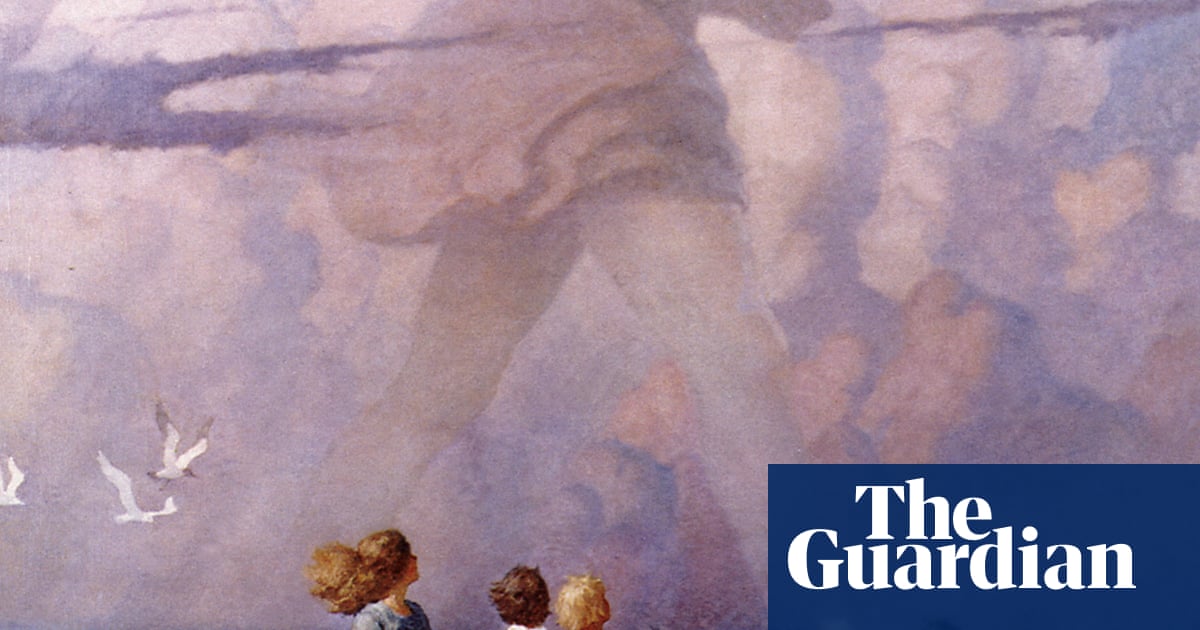
Six children sit at the waterline amid roaring wind. Seagulls beat their wings against the gusts while waves crest and crash below. A girl barely three years old stands and gazes toward the horizon, where a giant strides with its immense feet hidden from view.
American artist NC Wyeth painted The Giant in 1923. The low angle stresses the giant's size, and the children face away from the viewer. They become any children we imagine in this magical scene. What child has not watched a cloud animal dissolve into mere water droplets?
Wyeth infuses the painting with nostalgic impermanence tied to imagination.
Western society confines imagination to early childhood, those years when cloud giants seem real. The word 'imagination' vanishes from Victorian education curricula before high school, if it appears at all.
Adults often see the term as ambivalent or negative. Calling someone a 'dreamer' seldom flatters, and dismissing hopes as 'in one's dreams' mocks the effort to build them.
This language pulls people toward what society calls 'the real' and useful.
Young children possess rich imaginations and explore vivid imaginative worlds. Yet most lose this ability by their mid-teens, or see it fade away.
Culture accepts this loss as part of growing up, linking imagination to immaturity.
This stands as one of the greatest unseen tragedies in children's lives. It leads adults to squandered potential, or worse.
The loss need not happen. Adults can sustain young people's imaginations, empowering and protecting them in deep ways. Imagination changes and saves lives.
True imagination—untethered dreaming for self-nourishment—now counts as a radical act, like trespassing or rejecting life's prescriptive rules. Parents and adults face the same issue.
Reasons for sidelining imagination matter little. Industrial society may view it as useless to capitalism. Educators favor 'creativity,' which promises output. Dreaming yields nothing measurable, but creating delivers products.
Creation carries expectations, especially in school. Expectations erode imaginative freedom.
The author's grandfather once let him dream about smooth stones in a rock garden, with no demands. No better rock or story required. They called it play, as with Wyeth's beach children, but it ran deeper. 'Play' trivializes imaginative dreaming.
When the author's daughter talks fairies, he sees vital work for her life ahead, full of wonder and possibility.
Inviting demand-free activity stirs adult fears of wasted time. Modern education demands products and data to prove growth. Claiming children gained from sky giants prompts demands for evidence.
English teachers seek writing to assess. Art teachers want paintings. Products and data follow fast.
Teachers watch every process and product. An adult looms over every shoulder, breeding self-consciousness and second-guessing.
Criteria stifle imagination most. Write science fiction? Follow conventions. Poems? Use Emily Dickinson's style. Every rule implies endless no's. Criteria oppose dreaming, like water in a concrete channel.
Rules let students break them only if unbroken first.
Criteria have value, showing progress. But applied everywhere, they stunt imagination. They may destroy it, causing harm.
Driven students dream themselves into goals young. Education fails to dim their inner worlds. A 12-year-old aspiring archaeologist feels the sand, sees pyramids, explores tombs.
Culture forgets this. Teachers forget worst of all. Without imagination, possibilities die.
Loss of imagination means loss of hope.
What's Your Reaction?
 Like
0
Like
0
 Dislike
0
Dislike
0
 Love
0
Love
0
 Funny
0
Funny
0
 Wow
0
Wow
0
 Sad
0
Sad
0
 Angry
0
Angry
0









Comments (0)