

Democrats Propose Tripling Federal Minimum Wage to $25 an Hour

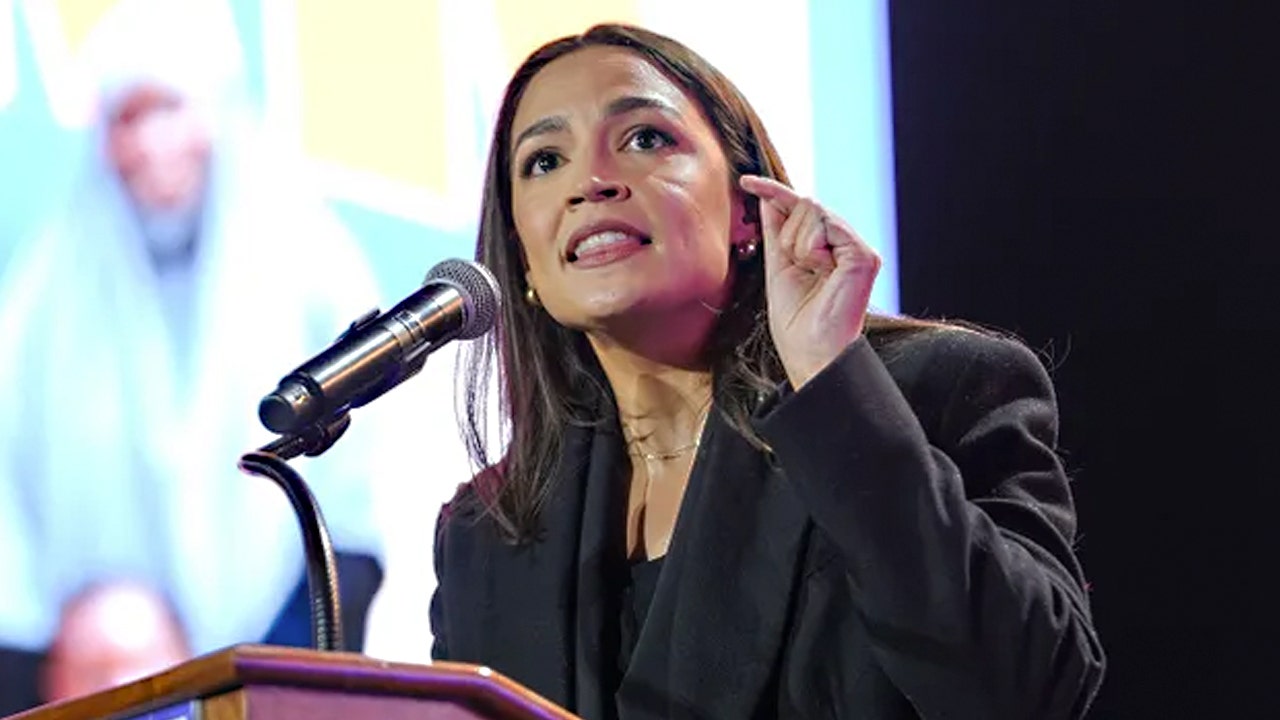
Democrats' effort to more than triple the federal minimum wage to $25 an hour is sparking fresh debate over a uniform national policy for the U.S. economy.
Critics say the proposal would cause more damage than benefit, citing risks of inflation, job losses and pressure on small businesses.
Lawmakers and advocacy groups have long called for a big jump in the federal wage floor. A plan supported by Rep. Alexandria Ocasio-Cortez, D-N.Y., and more than 100 organizations would deliver one of the sharpest increases in recent history.
Minimum wage laws differ sharply across the United States. The federal rate has stood at $7.25 an hour since 2009, despite climbs in housing, food and healthcare costs.
Congress last lifted it in a three-phase rise from the 2007 Fair Minimum Wage Act: $5.85 in 2007, $6.55 in 2008 and $7.25 in 2009.
Adjusted for inflation, that 2009 level would equal $11.34 an hour today.
States have diverged further as a result. Progressive areas have set wages more than double the federal minimum, with some topping $15 an hour. Others stick near $7.25, mirroring local living costs, economies and politics.
California and New York exceed $16 an hour. Georgia and Wyoming hover at or near $7.25. Georgia's $5.15 rate applies symbolically; federal law mandates at least $7.25 for most workers. A few at tiny businesses or exempt jobs might earn the state floor, but cases stay rare.
Opponents of a steep federal hike say it would squeeze small businesses in low-wage states with thin margins. Firms might hike prices, trim staff or shorten hours, economists note.
Santiago Vidal Calvo, a policy analyst at the Manhattan Institute, told Fox News Digital in March that steep raise arguments ignore economic basics. "That’s one of the common fallacies people fall into — many believe raising the minimum wage will solve everything, that wages will go up while prices stay the same," he said. "But that’s Econ 101 — it doesn’t work that way."
"This is about unintended consequences — what happens after the policy is passed," Vidal Calvo added.
Nicole Huyer, a senior research associate at the Thomas A. Roe Institute for Economic Policy Studies, said the Ocasio-Cortez plan risks big fallout. "The AOC-backed federal minimum wage hike from $25 per hour to $30 is aspirational rhetoric, but poor policy that risks creating inflation and unemployment in affected sectors," she told Fox News Digital.
"When faced with higher labor expenses, small businesses will look to cut costs by any means necessary. That includes increasing prices for consumers, laying off workers, cutting hours or relocating altogether."
Supporters counter that a higher federal wage would match rising costs and cut dependence on aid, especially in states stuck at $7.25 for over a decade.
The push is set to fuel arguments on whether a national wage fits varied state economies or if states should handle it alone.
What's Your Reaction?
 Like
0
Like
0
 Dislike
0
Dislike
0
 Love
0
Love
0
 Funny
0
Funny
0
 Wow
0
Wow
0
 Sad
0
Sad
0
 Angry
0
Angry
0




Comments (0)