

Amazon's Scale and Tactics Leave Few Rivals in Western E-Commerce

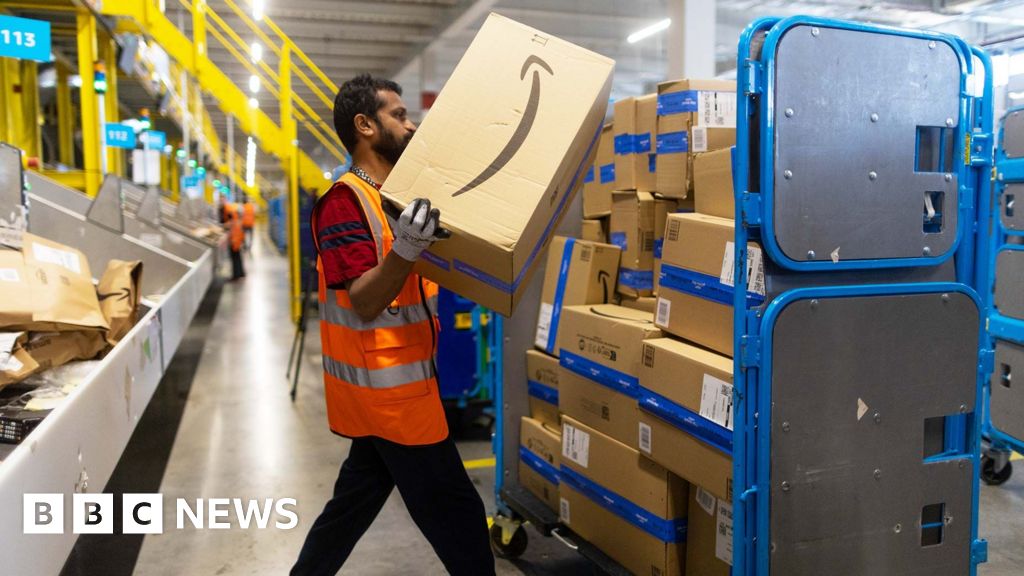
Vitamins, repair tape and a jar of mango chutney were among the items one household bought last month through Amazon's online platform.
The same household also shopped at the company's Whole Foods supermarket chain, streamed its television shows, read books on Kindle e-readers and visited websites that run on Amazon Web Services, its cloud-computing business.
Amazon, which Jeff Bezos started in 1995 as an online bookstore in a rented garage, overtook Walmart earlier this year to become the world's largest company by annual sales.
The company faces competition in individual segments. Walmart and Target both run large online stores and offer their own versions of the Prime subscription service. In the UK, Tesco leads online grocery sales, while Zalando is Germany's largest online clothing retailer. Temu and Shein sell low-priced goods from China, and eBay focuses on auctions and second-hand items.
GameStop offered $55.5 billion to buy eBay earlier this month and said it hoped the deal would create a stronger rival to Amazon. Amazon still holds the largest share of the market.
In the United States, Amazon accounts for 40.5% of online retail sales, compared with 9.2% for Walmart and about 3% for eBay, according to figures released last month.
"Amazon is not an undisputed monopolist in e-commerce, but it is the dominant firm," said Annabelle Gawer, director of the Centre of Digital Economy at the University of Surrey. "And the scope of what it sells is unparalleled."
Early entry gave Amazon a first-mover advantage. It scaled online retail quickly and used shareholder tolerance for losses to reinvest profits and expand. The company has never paid a dividend.
"The strategy constrained the competition," said David Yoffie, professor emeritus at Harvard Business School. Traditional retailers that tried the same approach would have hurt their stock prices, he said.
Amazon now draws profits from AWS to support its lower-margin retail operations and new projects. It also built its business around algorithms, automation and data.
The company experimented with cloud computing, consumer devices, original content and healthcare. In 2000 it opened its platform to third-party sellers, creating a network effect that drew more customers and more sellers.
The 2005 launch of Prime in the United States and the 2007 launch in the United Kingdom added free and fast shipping for an annual fee. The service later expanded to include streaming video and Whole Foods discounts, making membership harder to cancel.
"Amazon is not just a website that sells products," said Gawer. "It's an ecosystem of multiple businesses that are reinforcing each other, which makes it very hard to compete with."
The Federal Trade Commission and the state of California have filed separate antitrust lawsuits against Amazon that are scheduled for trial in early 2027. The cases allege that Amazon punishes sellers who offer lower prices on other sites, reducing the incentive for shoppers to leave the platform.
Stacy Mitchell, co-executive director of the Institute for Local Self-Reliance, said breaking Amazon into separate companies would increase competition.
E-commerce is also beginning to appear inside generative AI tools such as ChatGPT, allowing purchases without leaving those sites.
What's Your Reaction?
 Like
0
Like
0
 Dislike
0
Dislike
0
 Love
0
Love
0
 Funny
0
Funny
0
 Wow
0
Wow
0
 Sad
0
Sad
0
 Angry
0
Angry
0





Comments (0)