

Rail and farm leaders warn Congress against mandates that could raise costs

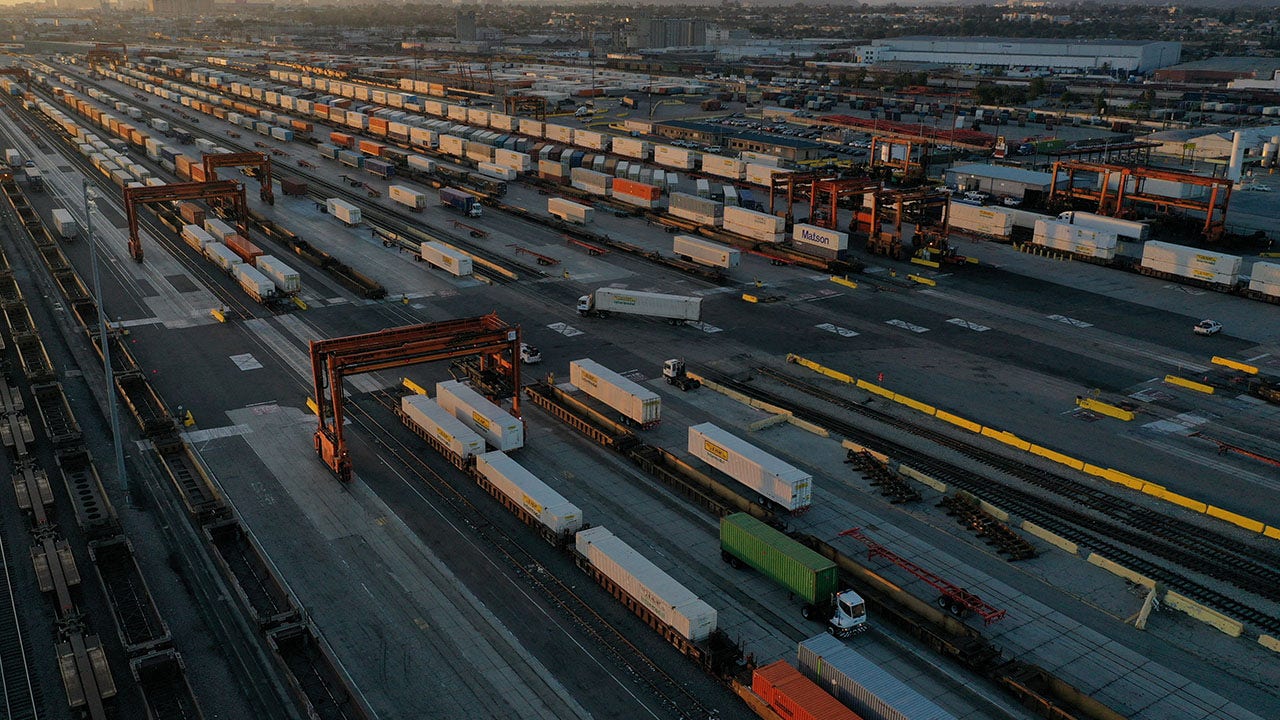
A railroad CEO and an agricultural industry leader say they share concerns about proposals in Congress that could raise costs for both sectors.
Every year, railroads haul hundreds of millions of tons of grain, feed, fertilizer, biofuels, ethanol, and other commodities. Freight rail moves crops from farms in Iowa to elevators in the Pacific Northwest, from feedlots in Kansas to export terminals on the Gulf Coast. There is no realistic substitute for the volume, distance, safety, or cost-efficiency that rail provides.
Congress should avoid new mandates on freight rail that would raise costs, reduce capacity, and ultimately pass those costs to consumers, the leaders said.
Farm country is hurting. Net farm income has declined sharply in recent years. Input costs remain elevated. Export markets face new uncertainty. Transportation costs are not an abstraction. They are the difference between a profitable crop year and a losing one. Every dollar added to the cost of moving grain or fertilizer comes directly out of a farmer’s bottom line, and those costs reach consumers at the store.
Some provisions under consideration would impose sweeping operational mandates on freight rail without credible evidence they would improve safety. These include train length limits that would constrain network efficiency and expanded manual inspection requirements that could slow the adoption of advanced automated detection technology. The leaders called these one-size-fits-all federal mandates dressed up in safety language.
Rail safety matters, and farmers and ranchers demand safe operations. Railroads have invested billions of dollars in technology, infrastructure, and training over the past two decades. New data from the Federal Railroad Administration showed freight rail safety improved across nearly every major category in 2025, a record-breaking year for the industry. That progress came from sustained private investment, data-driven practices, and a focus on operational excellence, not from sweeping federal mandates.
The leaders support targeted safety measures, including expanded detection technologies, stronger track maintenance programs, improved funding for first responder training, and resources for communities to respond to hazardous materials incidents. Many of these steps are already advancing because railroads and their customers have a strong incentive for safety.
They cannot support provisions that constrain the operational flexibility and capacity of a freight network that American farmers depend on every day, especially when those provisions lack a solid evidence base connecting them to better safety outcomes.
In trying to make rail safer, service could suffer and become more congested, more expensive, and less reliable. When rail gets worse, farmers and ranchers feel it first and hardest.
Congress has an opportunity as it weighs a five-year surface transportation bill that comes due in September. Done right, rail safety legislation can strengthen a network vital to rural America, agricultural competitiveness, and the nation’s ability to feed the world. Done wrong, it adds another costly burden to a farm economy already under stress.
America’s farmers are counting on Congress to get this right.
What's Your Reaction?
 Like
0
Like
0
 Dislike
0
Dislike
0
 Love
0
Love
0
 Funny
0
Funny
0
 Wow
0
Wow
0
 Sad
0
Sad
0
 Angry
0
Angry
0






Comments (0)