

Trump Administration Threatens UN Budget Cuts to Push Trade Over Aid

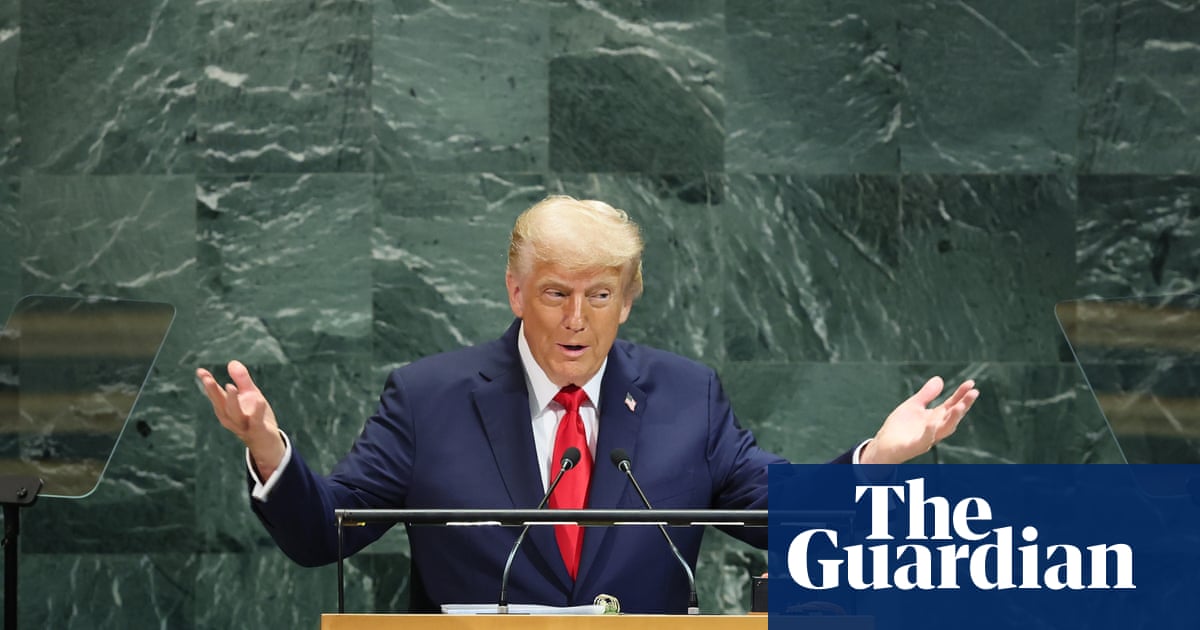
The Trump administration keeps pressing the United Nations and international aid groups to adopt trade-focused policies that help US companies, or risk more funding cuts.
Donald Trump's second term brought mass layoffs at USAID. The agency folded its remaining work into the State Department. Experts say the global fallout will cost thousands of lives as key programs end.
The administration has mostly halted support for groups like the World Health Organization, the UN Human Rights Council and UNESCO.
Last week at the United Nations, officials rolled out a "trade over aid" initiative. It calls for moving from donor aid to private investment, described as "an international economic development vision built on free markets."
Devex reported on two US diplomatic notes sent in Geneva and New York. They show the US ready to threaten further cuts to push its goals.
One note, obtained by Devex, said the US would pay only "a significant portion" of UN dues if the body enacted reforms. Those include overhauling the UN pension system and cutting travel costs. The US would add funds to peacekeeping only for a 10 percent drop in missions, Devex said.
The administration fired nearly all of USAID's 16,000 employees when it shut down the agency last year. About 280,000 contractors, partners and local hires worldwide lost jobs too. The effects hit vulnerable areas hard.
Oxfam America figures at least 23 million children could lose schooling. Up to 95 million people might lose basic healthcare. The group predicts more than 3 million preventable deaths a year from the closure.
After word of the notes spread, UN Secretary General António Guterres said last week the owed US funds are "non-negotiable." Earlier this year, he warned of the UN's "imminent financial collapse" from unpaid dues, mostly from the US.
The UN faces heavy strain. Its refugee agency, UNHCR, says 3.2 million people in Iran and 1 million in Lebanon have been displaced since the Iran war started two months ago. With 30 percent staff cuts last year, it needs $61 million more to aid 600,000 people over the next three months. Operations are "dramatically underfunded," especially in Lebanon, Syria, Iran and Afghanistan.
"The drop in global humanitarian funding is having a major impact on humanitarian actors at the very moment as needs are rising sharply," the UNHCR told the Associated Press this month in an email. Its $23 billion campaign for 87 million people worldwide this year has one-third funding.
The UN World Food Program says nearly 45 million more people could face acute hunger if the war drags past midyear and oil stays above $100 a barrel.
Tensions between the US and UN have run high before, but not like this. In February at the Munich security conference, Secretary of State Marco Rubio said the UN has "virtually no role" in solving conflicts and needs big changes.
In March, Rubio told US diplomats to rally high-level officials behind "trade over aid."
US Ambassador Mike Waltz said the plan does not mean quitting aid. It means changing old practices.
"What you’ll typically hear is that the United States is walking away from aid, or are all the United States is walking away from the UN, it’s turning its back on the world. And I can tell you that couldn’t be further from the truth," Waltz said at the initiative's launch.
US companies like Walmart, Bank of America, Goldman Sachs and Palantir sent representatives. "Free-market principles remain the best proven path to lasting prosperity, with better and more permanent results than any of the alternatives," Waltz said.
Some see promise in swapping aid for trade. "The power of international trade to create benefits from increased competition, more variety, higher productivity, and increases in GDP is well established," said Amrita Saha of the Institute of Development Studies.
But Saha cautioned that "trade creates both winners and losers, and the benefits are often unevenly distributed across countries, regions, sectors, and social groups. If trade dominates the development agenda without complementary policies and support, the result will be highly uneven gains and the reinforced inequalities that risk the future of global trade cooperation."
"Trade cannot operate as disjoint with broader development goals," she added.
The idea is not new, said Thomas Weiss, a UN politics expert now at the City University of New York.
"The irony of this stance is that the birth of the Group of 77 (G77) was at the plenary sessions for the United Nations conference on trade and development (formerly UNCTAD) in 1962 and the party line at that time was we want trade, not aid," Weiss said.
Two years later, those 77 developing nations signed a declaration for shared economic goals. That fight, plus OPEC's 1960 start, gave developing countries more sway until the 1980s. Weiss said the US might miss these ironies.
"This is a very complicated history," he said.
Even so, he called the push short-term politics, not history lessons.
"Mainly, I think, it’s a justification to explain eliminating or cutting back USAID and every form of assistance, whether its humanitarian or development assistance, and many European countries have followed the US," Weiss said.
What's Your Reaction?
 Like
0
Like
0
 Dislike
0
Dislike
0
 Love
0
Love
0
 Funny
0
Funny
0
 Wow
0
Wow
0
 Sad
0
Sad
0
 Angry
0
Angry
0




Comments (0)