

Syrian Arrests Spark Debate Over Selective Justice After Assad

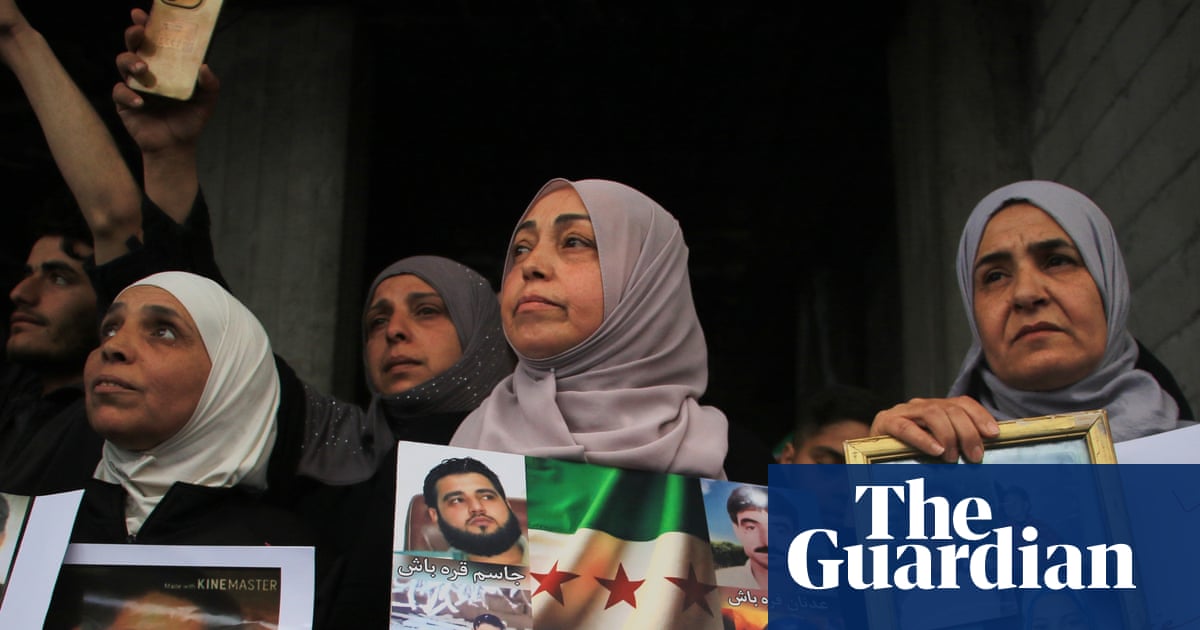
Ahmad al-Homsi jumped out of bed last month when he learned that Amjad Youssef, a Syrian intelligence officer involved in the 2013 Tadamon massacres, had been arrested. He joined others in the streets celebrating the news.
“We stayed out for almost three or four days celebrating. People from neighbouring areas sent camels, sheep, livestock for us to slaughter and distribute them to people. The tears of joy didn’t stop,” said al-Homsi, a 33-year-old activist with the Tadamon Coordination Committee, which documented the atrocities in the Damascus neighbourhood.
To al-Homsi and others across the country, Youssef’s arrest marked a step toward justice for the Assad regime’s crimes. Video footage showed Youssef killing blindfolded civilians in a series of massacres that left at least 300 dead, footage that came to symbolize the regime’s brutality.
Al-Homsi’s celebrations soured, though, after Syria’s interior ministry released what appeared to be a forced confession from Youssef last Sunday. In the video, Youssef claimed he acted alone in the killings.
“Of course it upset us. Of course I didn’t like what he said. This was a cover-up for others [involved],” al-Homsi said. “There are many more criminals. We want to know everyone who held a position or was responsible at the time of the massacres.”
Youssef’s case has highlighted tensions between demands for transparent accountability from victims of Assad’s atrocities and other civil war factions, and the new government’s focus on internal security. Some officials have arrested a few Assad loyalists for public show while cutting deals with others to maintain stability.
“We’ve moved from transitional justice into selective and performative justice,” said Ali Aljasem, a researcher at Utrecht University’s Centre for Conflict Studies. “The idea is, you arrest a couple of people, put them on TV and use them as scapegoats.”
Aljasem cited Youssef’s confession alongside the first hearing last Sunday in the trial of Atef Najib, Assad’s cousin and former head of political security in Deraa province. Najib appeared in a courtroom cage, facing one of the teenagers he tortured early in the revolution. The public has praised the moment as progress toward justice.
A focus on punishing a few prominent figures risks sidetracking a full accounting of past crimes, said Nousha Kabawat, head of the Syria programme at the International Centre for Transitional Justice.
“Transitional justice is not just a punitive process; it is about rebuilding a society and rebuilding trust. While some level of performance is part of this, it should not overshadow fairness, and the Syrian people should be treated as partners rather than spectators in the rebuilding process,” Kabawat said.
Aljasem, who co-authored a report on government deals with former regime figures like Mohammed Hamsho and Samer Foz, said a security-first strategy could entrench old authoritarian patterns. “These deals have nothing to do with justice or moving away from the past. Instead, they risk reproducing authoritarian structures from that past,” he said.
The government has struck reconciliation agreements with Assad-era war profiteers for their assets and information. It has also shielded some former security officials temporarily in exchange for intelligence to counter an insurgency by Assad loyalists on Syria’s coast.
Fadi Saqr, a former commander of the regime’s NDF militia, has acted as a go-between, helping mediate with regime holdouts and aiding arrests. Saqr faces accusations of involvement in the Tadamon killings and other Damascus massacres, which he denies.
“Even those now protecting Fadi will tell you he’s a criminal, but he’s useful to them,” Aljasem said. “Their reasoning is: if you arrest Fadi, you only arrest one person, but if you keep him, he will lead you to many others.”
Syria’s government shows internal divisions on transitional justice, but security decisions rest with a small group around President Ahmed al-Sharaa, who favor stability measures. The administration has included former activists, lawyers and academics committed to justice, but analysts say they hold limited sway.
Victims express frustration over the opacity, even as they back the need for calm. “We have trust in the government; we don’t want to immediately say: ‘No this is not correct.’ But we will demand our rights and the rights of all the families,” said al-Homsi, who has met officials to raise Tadamon families’ concerns about Saqr’s role.
The approach threatens grassroots efforts at social cohesion, including inter-communal dialogues and face-to-face meetings between Assad-era perpetrators and victims in places like Salamiyeh and Homs. Those initiatives have eased sectarian tensions in some areas but remain inconsistent.
Syria’s legal framework lacks definitions for war crimes or crimes against humanity in its penal code. Parliament may take months to pass a transitional justice law.
Public pressure has nudged parts of the government toward accountability. The Guardian reported Thursday that the Commission for Transitional Justice is building a war crimes case against Saqr, whom he denies. The commission anticipates broader action against those linked to Tadamon, beyond Youssef. “Just an arrest is not justice,” said Zahra al-Barazi, the commission’s deputy chair.
Al-Homsi spent years quietly documenting Tadamon atrocities, snapping photos in secret and collecting whispers of evidence. With Assad gone, he wants that material to count. Residents aim to return and rebuild, but he insists the area remains a mass grave.
“People are returning and want to live in their homes. They want to rebuild,” al-Homsi said. “But we are standing there saying: ‘This entire place is a mass grave. It’s full of martyrs; you can’t build yet. You can’t erase the scene of the crime.’”
What's Your Reaction?
 Like
0
Like
0
 Dislike
0
Dislike
0
 Love
0
Love
0
 Funny
0
Funny
0
 Wow
0
Wow
0
 Sad
0
Sad
0
 Angry
0
Angry
0








Comments (0)