

Reform UK Surges in Local Elections, Crushes Labour in North East England

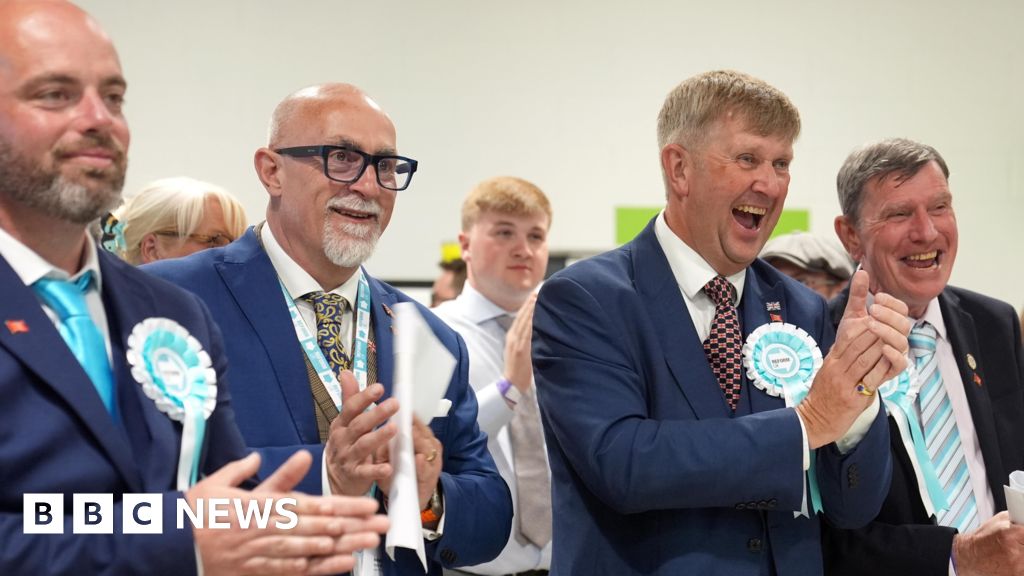
With Labour I think you get nowhere, Linda told BBC Radio 4's Today programme. They're not the working class now, Bernard added.
Like thousands of voters from Sunderland to Swansea, Bernard and Linda have turned to Reform UK with devastating consequences for the main two parties.
In Wales, where Labour has dominated for a century, the party now has just nine of 96 Senedd seats. Reform, from having virtually no presence, won 34 Senedd seats. In Scotland, Reform UK gained 17 MSPs.
In north-east England, the local election results exceeded Reform's wildest dreams and proved a nightmare for Labour.
Labour and Reform agree that national factors proved critical. Both parties found voters on the doorsteps who disliked the government and detested the prime minister. Reform framed the polls as a referendum on Sir Keir Starmer, which paid off and drowned out Labour's positive local messages. Anger about small boat crossings also played a part.
Even if Westminster played its part, distinctive local factors emerged.
Incumbency poses problems for councils. Labour believed its local authorities were delivering positive change after austerity's damage in the region.
But people have faced 15 years of local service cuts alongside council tax rises. The North East has some of the country's highest rates. With the exception of Hartlepool, Labour councils in the region added almost another 5 percent to bills this year.
Labour councils could once blame Conservative or coalition governments, but now nobody else remained to fault.
Voters in Sunderland acknowledged regeneration over the last two years but said it did not excuse the previous 50.
In Gateshead, the closure of a crumbling motorway flyover linking the town to Newcastle symbolized neglect. It shut overnight in December 2024 after proving unsafe, but demolition began only in the middle of the election campaign.
The Labour council might not bear full blame for its state, but voters said they had no faith it could deliver promised regeneration after destruction.
Warning signs for Labour date back further. The 2024 general election saw Labour win all but one North East constituency, but majorities stayed shallow. Reform placed a strong second in many seats despite low-profile candidates and little ground campaign.
Since the 2008 credit crunch, no government has sustained a solution to the core problem: returning modest- and low-income people to feeling gradually wealthier and happier rather than worried about rising living costs.
When Labour warned of risks in handing councils to inexperienced Reform candidates, voters asked what there was to lose.
The response echoed the 2016 Brexit referendum, when North East voters facing EU exit risks said things could not get worse.
When established parties and politicians seem to do little for you and your community, voters see little risk in trying something new.
North East voters in this election said someone different deserved a chance to change things.
Labour faces a risk that these are not short-term losses but a tipping point in a longer decline in a region it has relied on.
Nigel Farage's party has built an operation capable of drawing former Labour voters. Its scale owes much to deep-pocketed donors. Last year, Reform UK received more than £5.4 million in large donations in the final three months, more than any other party, according to new Electoral Commission figures.
Reform also benefits from wider resentment at politics, with many feeling the state fails on the NHS, economy and border control.
As Bernard and Linda said, and as North East doorstep voters echoed, more people are willing to take a chance on a party untested in long-term government.
A big barrier to Reform has been vehement opposition to Farage, with some voting for whoever can defeat them.
Early signs suggest limits to the Stop Reform strategy. In Wigan, ward results show combined Labour, Green and Lib Dem votes often failed to overtake Reform UK.
Reform faces challenges too. As Labour learned, promising change in opposition differs from defending a record in government.
In more places than ever, Reform is no longer the insurgency. It is now the incumbent.
What's Your Reaction?
 Like
0
Like
0
 Dislike
0
Dislike
0
 Love
0
Love
0
 Funny
0
Funny
0
 Wow
0
Wow
0
 Sad
0
Sad
0
 Angry
0
Angry
0










Comments (0)