

German Officials Warn of Rising Antisemitism Fueled by Islamist and Left-Wing Extremists

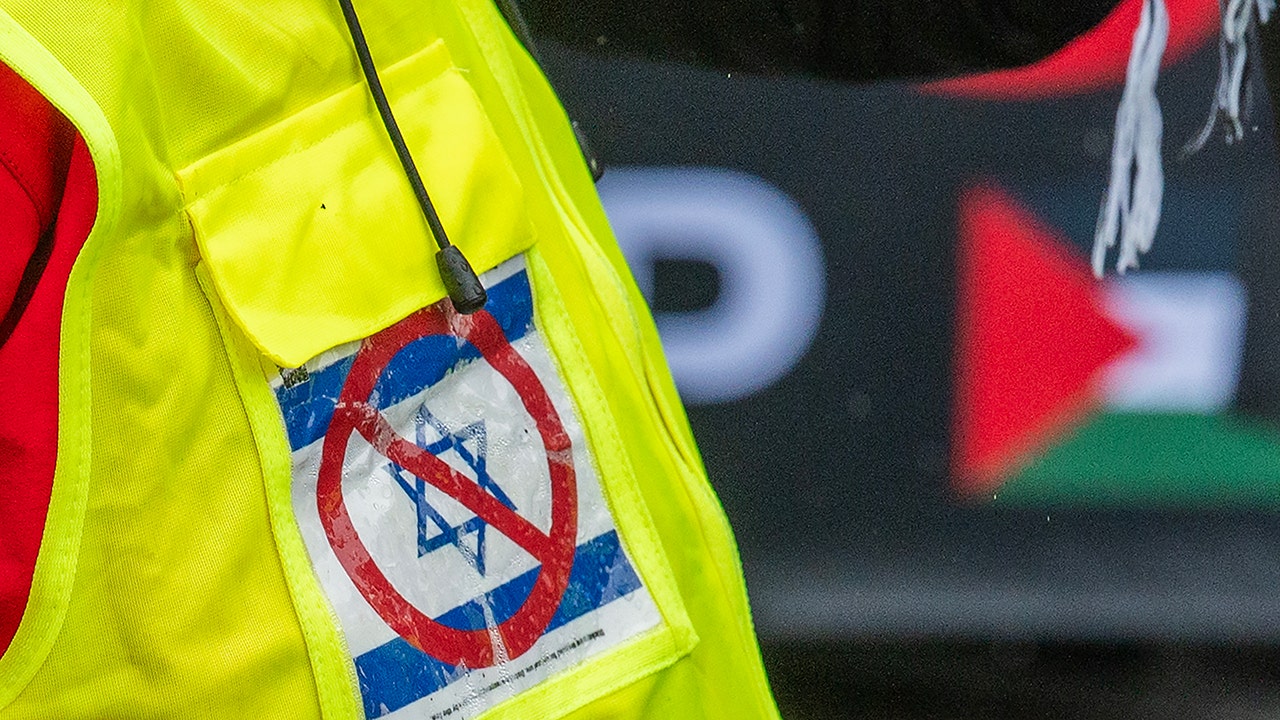
Germany faces a sharp rise in antisemitism, as officials warn that Islamist and left-wing extremist networks exploit the war in the Middle East to spread anti-Jewish rhetoric, mobilize supporters and contribute to harassment and violence against Jewish communities.
These groups use the Israel-Hamas war and broader regional tensions as a pretext to amplify antisemitic narratives, according to a study by the Hessian State Office for the Protection of the Constitution. The study includes accusations of genocide in Gaza and portrayals of Israel as a colonial state, language authorities say increasingly justifies hostility and, in some cases, violence against Jews.
German Interior Minister Roman Poseck warned that the trend is escalating. "Antisemitism is one of the greatest threats to our social cohesion — especially from Islamism and the left-wing extremist spectrum," Poseck said in a statement.
Poseck commissioned the Hessian report and warned of a deteriorating social climate. "Antisemitic sentiments are becoming increasingly intolerable, even in public spaces," he said. "I am deeply ashamed of what Jews in Germany have to endure 80 years after the end of the Second World War. We Germans, in particular, bear a lasting responsibility never to forget what happened."
The developments raise concerns beyond Germany, as officials and Jewish leaders warn of similar antisemitic rhetoric tied to Middle East conflicts emerging across Western democracies, including the United States. Germany, long seen as a bellwether due to its history and legal framework around hate speech, offers a warning of how extremist narratives can move from fringes into mainstream discourse.
Forty-six of 102 Jewish communities surveyed in Germany reported antisemitic incidents, according to a new nationwide report by the Central Council of Jews in Germany.
The most common incidents included verbal abuse, threatening phone calls, vandalism and antisemitic graffiti. Sixty-eight percent of respondents said they feel less safe in Germany since the Hamas-led Oct. 7, 2023, attack on Israel.
"Following the explosive rise in antisemitism after Oct. 7, a ‘new normal’ has emerged," Central Council President Josef Schuster said in a press statement. "A situation in which Jewish communities require constant protection and antisemitism has become normalized as part of the public sphere."
The report found that broader geopolitical developments directly impact Jewish communities. Sixty-two percent of respondents said their sense of insecurity worsened following the recent war involving Iran, while two-thirds said a Gaza ceasefire did not improve their safety.
Jewish leaders say the consequences affect daily life. Many Jews increasingly avoid visible signs of their identity, such as a Star of David or kippah, amid fears of harassment. Some communities have canceled events due to security concerns.
The report also highlights a sharp decline in perceived societal support. Only 35 percent of communities said they feel solidarity from broader civil society, down from 62 percent in 2023.
Officials say the normalization of such rhetoric shifts the boundaries of acceptable public discourse.
What's Your Reaction?
 Like
0
Like
0
 Dislike
0
Dislike
0
 Love
0
Love
0
 Funny
0
Funny
0
 Wow
0
Wow
0
 Sad
0
Sad
0
 Angry
0
Angry
0








Comments (0)