

FDA Rejects Melanoma Drug RP1 Despite Trial Success, Sparking Outrage

The Food and Drug Administration's decision to reject a new skin cancer treatment hit doctors treating melanoma and patients hard. The drug prolonged lives for a third of participants in a clinical trial.
"It was devastating news," said Trisha Wise-Draper, a dermatologist at the University of Cincinnati with patients in the trial.
"This is life or death for maybe 2,000 patients," said Eric Whitman, medical director of the Atlantic Health System's oncology service. A Wall Street Journal editorial criticized the ruling, saying it "will have a chilling effect on drug development."
Oncologists and pharmaceutical analysts pointed to concerns about RP1 that likely prompted the rejection. The company ignored repeated FDA suggestions to alter the trial design for approval.
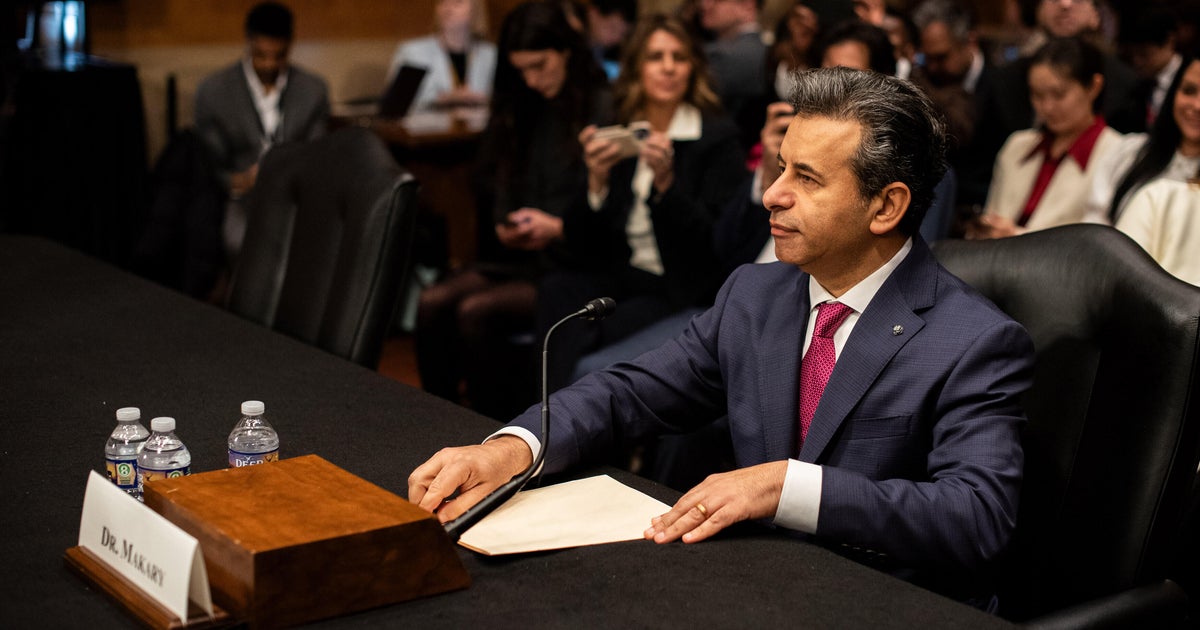
Such a decision would have drawn little notice before the current administration. But Steven Grossman, a regulatory consultant and former Department of Health and Human Services official, said Marty Makary, who became commissioner 13 months ago, changed the agency's culture and eroded decades of built trust while overseeing 20 percent of U.S. consumer spending.
"People have to speculate about the standards and processes by which the agency makes decisions," Grossman said. "And that uncertainty is bad for everybody — patients and sponsors and investors."
Under Makary, who resigned this week, senior officials suppressed or advanced some drug approvals and policies at the direction of President Trump or HHS Secretary Robert F. Kennedy Jr., bypassing agency professionals' advice. Makary often dropped the agency's usual careful language.
Responding to backlash over the melanoma drug rejection, Makary accused manufacturer Replimune of "corruption" and "engaging in corporate spin" to discredit the FDA.
"I don't work for Replimune. I work for the American people," Makary said in a May 5 CNBC interview. Kennedy supported him at a congressional budget hearing, wrongly stating that trial patients also got chemotherapy.
Makary did not respond to comment requests.
"All the norms have been thrown out the window, so we don't know what underlines an agency decision," said Paul Kim, a former FDA staffer and Senate aide to Sen. Edward Kennedy, now a Boston pharmaceutical consultant. "Even when there are legitimate scientific and regulatory reasons why a drug will not be approved, we're left guessing whether it's legitimate grounds or just a political play."
Melanoma ranks as the fifth most common cancer in the United States, with 112,000 new cases yearly. The American Cancer Society forecasts 8,500 deaths this year. Whitman said RP1's trial results could save up to 2,500 patients.
RP1 is a genetically modified virus that kills tumor cells and activates the immune system. Replimune sought accelerated approval based on data from 140 patients, where a third saw tumors shrink or vanish. But the FDA warned in July of denial risk without changes, noting the lack of a control arm versus an approved treatment. All patients received RP1 plus Opdivo immunotherapy.
Replimune scientists do not fully grasp RP1's mechanism, but it destroys cancer cells and releases chemicals that boost Opdivo's immune stimulation. The company called a solo Opdivo control unethical, as trial patients had stopped improving on Opdivo or similar drugs.
"Having a control arm would have been unethical," Wise-Draper said. Some of her patients showed strong responses and no remaining melanoma.
Replimune runs a larger trial with a control arm, but Whitman questioned the company's survival. Accelerated approval would have drawn investor funds to complete it.
Replimune did not comment but told reporters it is cutting more than half its staff and closing operations after the FDA decision.
RP1 would not be the first melanoma drug approved on a single-arm trial. Merck's Keytruda gained approval 12 years ago that way. The FDA doubted RP1 deserved credit over Opdivo in the combo.
Kim said Replimune could have ethically added a control arm. The FDA might have granted provisional accelerated approval instead. The 30-year-old program allows market entry during confirmatory trials as a calculated risk, he said. The FDA's focus on methodology signals less confidence in similar studies.
Criticism of the Trump-era FDA centered on Vinay Prasad, an oncologist fired then rehired last summer. He held leadership roles and intervened in approvals usually handled by junior staff. Prasad resigned May 1, three weeks after the Replimune call.
"There's this lingering question of whether this was Vinay's last stand, or an objective decision made by careful scientists," Kim said.
Makary clashed with Trump officials over decisions like delaying flavored vapes for quitting smoking. Anti-abortion backers sought his removal for keeping generic mifepristone available and not rushing its withdrawal studies.
Industry officials from gene therapy to cancer drugs decry the FDA's erratic path. Past agencies balanced tighter or looser rules. Under Makary, standards swung wildly, Grossman and Whitman said.
"It's very inconsistent; it's all over the place," Whitman said. "The inconsistency is part of the concern."
Makary claimed credit for prior progress or overstated FDA goals, like ending animal testing — seen as impractical — or rushing AI use. He and Prasad aimed to cut required trials from two to one, though exceptions already occur.
"The FDA is sending signals that it wants to even further reduce the evidence needed to support drug approval," said Aaron Kesselheim, Harvard Medical School professor and drug industry expert. "Of course, if we're talking about vaccines, the total opposite is the case. FDA has been taking real steps to make it harder to get vaccines approved."
The FDA dismissed 4,000 staff early in the Trump term. Makary pledged to rehire thousands, but Grossman doubted it amid turmoil.
"What magic trick will get that done?" he asked.
"The unfortunate thing is that there has been so much chaos at FDA that this Replimune decision, which may have needed to happen, has gotten mired in the controversy," said Evan Seigerman, BMO Capital Markets healthcare research leader.
What's Your Reaction?
 Like
0
Like
0
 Dislike
0
Dislike
0
 Love
0
Love
0
 Funny
0
Funny
0
 Wow
0
Wow
0
 Sad
0
Sad
0
 Angry
0
Angry
0









Comments (0)