

WHO Officials Downplay Hantavirus Risk from Cruise Ship Outbreak

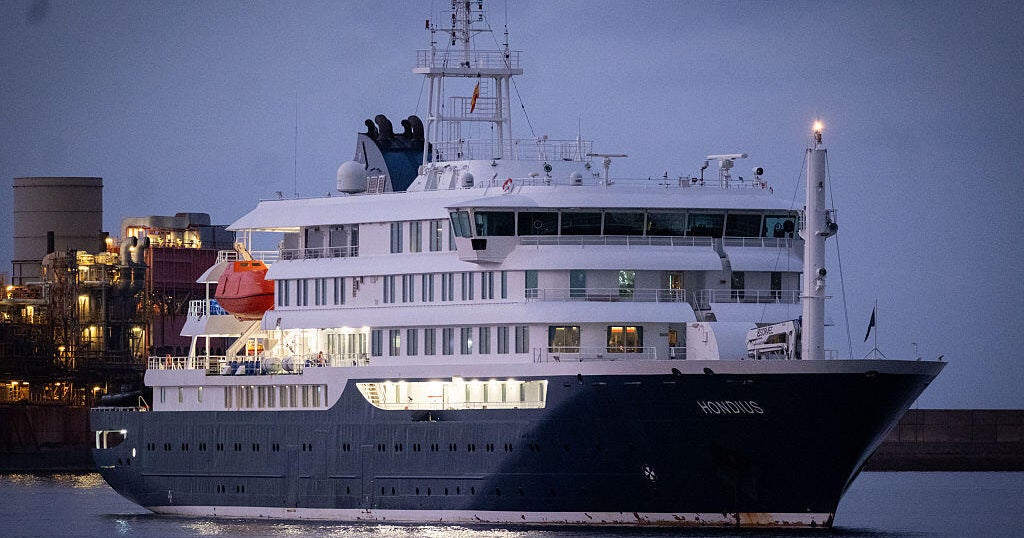
A hantavirus outbreak on the Dutch-flagged MV Hondius cruise ship has killed three people and sickened at least 10 others, but infectious disease specialists and public health officials say the risk to the public remains extremely low.
"This is not another COVID," World Health Organization Director-General Dr. Tedros Adhanom Ghebreyesus told CBS News on Sunday. Asked about his message to concerned Americans, he added, "Based on scientific assessment and based on evidence ... the risk is low. So they shouldn't worry."
Eighteen American passengers who returned to the U.S. early Monday are under monitoring at specialized medical facilities. Sixteen of them are at the University of Nebraska Medical Center, home to the National Quarantine Unit, while two others went to a facility in Atlanta.
CBS News medical correspondent Dr. Céline Gounder, an infectious disease specialist, compared COVID-19's early spread to conditions fueling a wildfire, while calling hantavirus more like "a wet log in a stone fireplace."
"If you're a fire chief and you see dry forest, no rain in days, 40 mph winds, and a small fire — that's going to turn into a wildfire," Gounder said. "If you see a wet log in a stone fireplace, that's going to smolder a little bit and then it's going to die out."
She noted that COVID came from a brand new virus that experts learned about in real time, but hantavirus has been studied for decades. "This is not infectious in the way COVID was, or is. The incubation periods are different, and that's actually helpful for us in containing it," Gounder said.
The virus infects deep inside the lungs, not the upper respiratory tract, making it harder to transmit through coughs or breaths.
Hantavirus typically spreads from rodents in dry climates. The Andes virus strain linked to the outbreak occurs in South America and is the only one known to pass from person to person. It appeared in areas visited by a Dutch couple before they boarded the ship in Ushuaia, Argentina, in April. The husband fell ill first and died weeks before his wife.
"This is not COVID. This is not influenza. It spreads, very, very differently," Maria Van Kerkhove, WHO director of epidemic and pandemic preparedness and prevention, said at a May 7 briefing. "I want to be unequivocal here. This is not SARS-CoV-2. This is not the start of a COVID pandemic. This is an outbreak that we see on a ship. This is a confined area."
Unlike COVID, the virus needs prolonged physical contact to spread, Van Kerkhove said. The U.S. Centers for Disease Control and Prevention states on a new webpage that the risk of a pandemic from this outbreak and the overall risk to Americans and travelers is extremely low. Transmission usually involves close contact with symptomatic people, such as prolonged direct physical contact, time in enclosed spaces, or exposure to saliva, respiratory secretions, or bodily fluids.
Former FDA Commissioner Scott Gottlieb said on Face the Nation with Margaret Brennan that the outbreak "is not going to spread like a pandemic virus, like COVID" because it spreads far less efficiently.
Admiral Brian Christine, assistant secretary for health at the Department of Health and Human Services, made the same point at a Monday briefing at the University of Nebraska Medical Center. "Let me be crystal clear: The risk of hantavirus to the general public remains very, very low," he said. "The Andes variant of this virus does not spread easily, and it requires prolonged close contact with someone who is already symptomatic. Even so, we have taken this situation very seriously from the very start."
The incubation period for Andes virus runs two to six weeks. Gounder said this lengthier window gave officials more time to respond, unlike COVID's shorter period. Passengers repatriated recently will likely hit the peak of the incubation cycle this week, Gottlieb said Sunday. Those exposed are nearing the end of the transmission window.
What's Your Reaction?
 Like
0
Like
0
 Dislike
0
Dislike
0
 Love
0
Love
0
 Funny
0
Funny
0
 Wow
0
Wow
0
 Sad
0
Sad
0
 Angry
0
Angry
0










Comments (0)