

US Officials Ditch Phones for Clean Devices on Trump China Trip to Avoid Surveillance

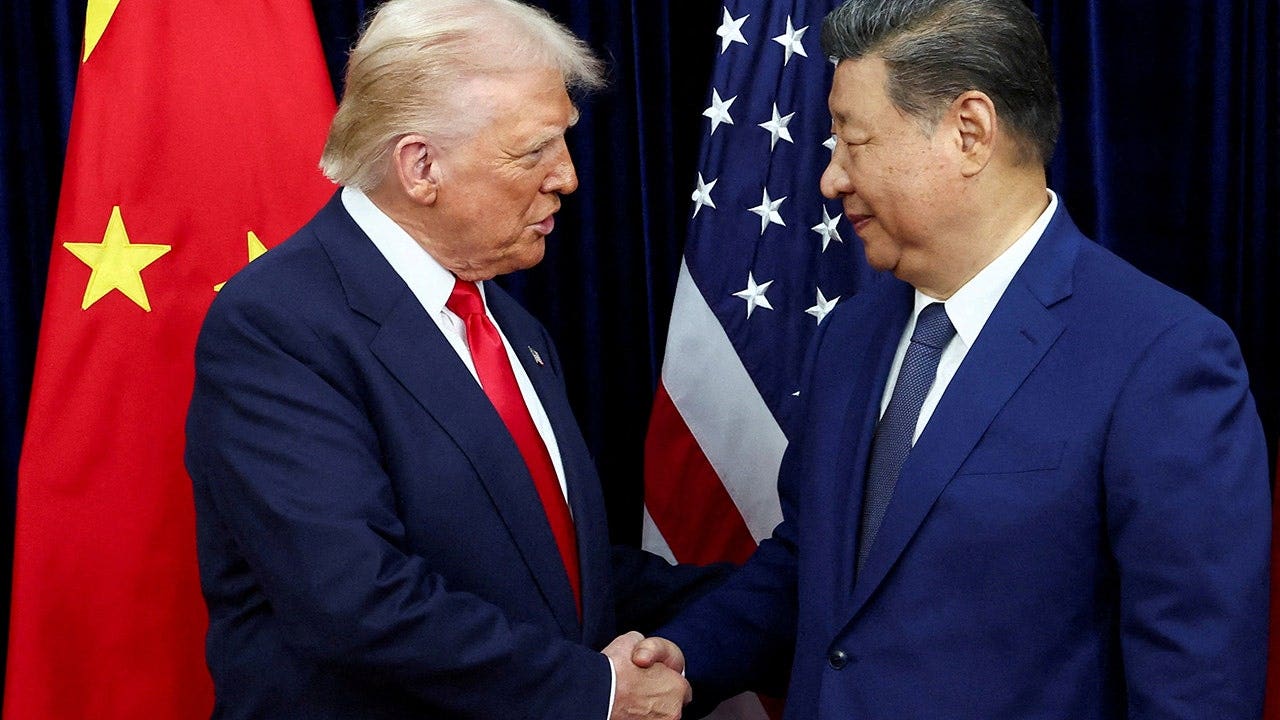
President Donald Trump and hundreds of aides, security personnel and officials will leave behind everyday cellphones when traveling to China.
Officials entering the country often carry stripped-down "clean" devices, temporary laptops and tightly controlled communications systems. These steps aim to reduce risks of surveillance, hacking or data collection in one of the world's most aggressive cyber environments, according to U.S. officials.
The measures turn routine tasks into logistical challenges. Messages that normally move instantly through encrypted apps or synced devices instead go through controlled channels, temporary accounts or in-person relays.
Contacts vanish. Cloud access gets limited. Some officials go days without their usual digital footprint.
Current and former officials say the practices rest on a long-held U.S. government view: anything taken into China — phones, laptops, tablets or hotel Wi-Fi — must be treated as potentially compromised.
"China is a mass surveillance state," said Bill Gage, a former Secret Service special agent and now director of executive protection for Safehaven Security Group. "Briefings for U.S. officials begin well before the president arrives, and they make clear that everything is monitored."
"We always tell people to assume everything you say and do — both in person and digitally — could be monitored," said Theresa Payton, former White House chief information officer and CEO of cybersecurity firm Fortalice Solutions. "And to conduct themselves accordingly."
Ahead of Trump's meetings with Chinese President Xi Jinping, the digital steps reflect broad mistrust between Washington and Beijing. Cybersecurity, espionage and surveillance issues now affect nearly every official interaction.
The precautions will apply beyond government officials. Trump's delegation includes executives from Apple, Boeing, Qualcomm and BlackRock, firms central to U.S.-China economic and technological ties.
In Washington, officials often leave phones behind at the Chinese Embassy. Those worries grow in China itself, where U.S. officials assume devices, networks and hotel rooms face monitoring.
Even phone charging raises security issues. Federal guidance warns against unknown USB ports or untrusted chargers, as compromised hardware can extract data or install malware — known as "juice jacking."
Travelers to high-risk countries thus carry approved chargers, external batteries and government gear instead of local options.
"There are no safe electronic communications in China," Gage said. Officials get advice to limit digital activity to mission essentials.
The Chinese government denies improper surveillance. "In China, personal privacy is protected by law," Chinese Embassy spokesperson Liu Pengyu told Fox News Digital. "The Chinese government places a high priority on protecting data privacy and security in accordance with the law. It has never required — and will never require — enterprises or individuals to collect or store data in violation of the law."
Payton said officials may receive temporary devices with known "golden images." Security teams check these before and after trips for tampering.
"You may see executives issued loaner phones with a known ‘golden image,’ meaning security teams can compare the device before and after use to see if it’s been tampered with," she said.
"There may be controlled ‘safe zones’ set up where officials can communicate back to the U.S., but everything is tightly managed," Payton added.
For sensitive talks, U.S. officials use temporary sensitive compartmented information facilities, or SCIFs. These secure spaces block electronic surveillance and eavesdropping, often set up in hotels during diplomatic trips.
"The White House Military Office and communications teams create controlled spaces where they can monitor both physical and digital access to ensure sensitive conversations remain secure," Payton said.
The steps create an analog feel for the modern delegation. Paper documents increase, digital access shrinks, and aides rely on controlled channels.
The White House did not immediately comment.
U.S. officials have warned for years about Chinese cyber espionage against government agencies, critical infrastructure, defense contractors and telecom networks.
Intelligence officials blame Beijing-linked hackers for breaching federal systems, power grids and water utilities. The hackers also target senior U.S. officials and policymakers.
"China will conduct extensive research on every member of the U.S. delegation — from senior officials down to junior personnel," Gage said.
Payton noted that a presidential visit draws extra attention. "This is a well-publicized event, so you have to assume everything from nation states to opportunistic actors may be trying to listen in," she said.
The issue gained notice in 2023 when a suspected Chinese surveillance balloon crossed the U.S. before the military shot it down. U.S. officials called it part of a Beijing-linked effort.
Recently, officials highlighted China-linked groups like Volt Typhoon and Salt Typhoon. U.S. authorities say these targeted critical infrastructure and telecoms for potential espionage or conflict disruption.
What's Your Reaction?
 Like
0
Like
0
 Dislike
0
Dislike
0
 Love
0
Love
0
 Funny
0
Funny
0
 Wow
0
Wow
0
 Sad
0
Sad
0
 Angry
0
Angry
0








Comments (0)