

UK Local Elections Test Labour-Conservative Duopoly Amid Rising Challengers

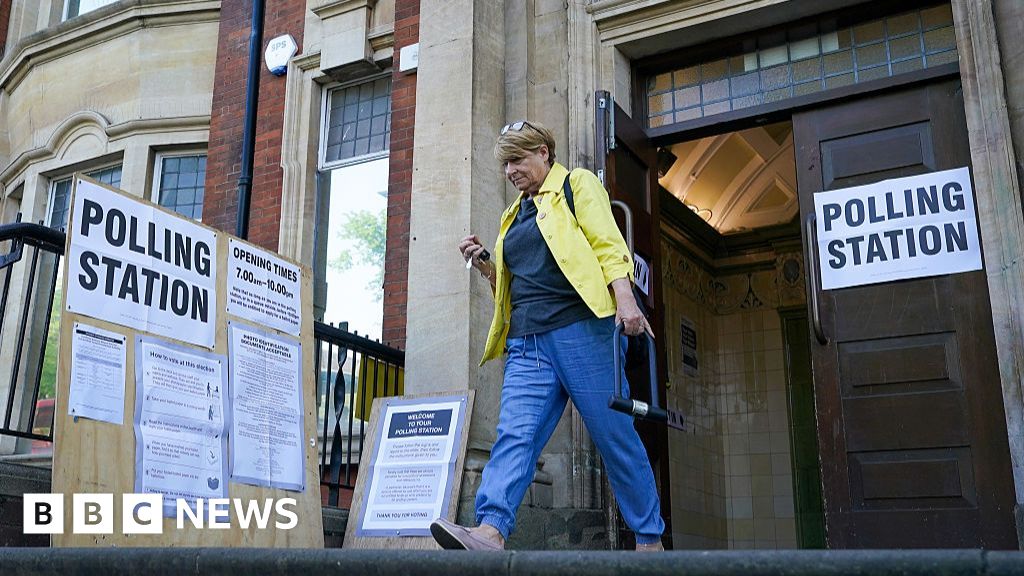
Britain faces a critical set of elections on Thursday that will decide who controls billions of pounds in taxpayers' money and affect the fortunes of political leaders in local councils, Holyrood, the Senedd and Westminster.
Leaflets have piled up on doormats for weeks in many areas, while TV and social media overflow with campaign promises. Postal votes have circulated for some time. Voters in Northern Ireland and parts of England without contests this year sit them out.
Labour and the Conservatives once dominated British politics. They were not the only parties, but they towered over rivals in Westminster most of the time. Now politics looks different almost everywhere.
English local elections feature Liberal Democrats, Reform UK, the Green Party of England and Wales, and competitive independents alongside Labour and Conservatives. Wales brings Plaid Cymru, which seeks an independent Wales. Scotland has the Scottish National Party and Scottish Green Party, both pushing for Scottish independence.
These parties have existed for years, except newer Reform UK. What changed is their greater competitiveness in more places. This shift matches a rare spell when both Labour and Conservatives lack popularity.
The last general election two years ago showed the split, though the House of Commons makeup did not fully capture it. Labour took a huge seat majority on its smallest-ever vote share for a government with an overall majority. Conservatives fell below 30% for the first time since 1832.
Party fortunes rise and fall. In 2017, Labour and Conservatives claimed 82.4% of the vote. But the long-term pattern is clear. A House of Commons Library briefing notes that from 1945 to 1970, Conservatives and Labour held nearly all seats and took nine of every 10 votes in general elections.
Professor Sir John Curtice, the BBC's lead elections analyst, told The Times: "We're going to see records tumble. We are living in unprecedented circumstances. The opinion polls suggest that the traditional Conservative-Labour duopoly is facing its biggest challenge since its advent in the 1920s."
He added: "The basic assumptions of British politics - there isn't enough space for a party to the right of the Tories or the left of Labour - have gone. British politics looks more fundamentally different than it has done at any time in postwar history."
Activists from all parties report shock or thrill at the volatility. Labour and Conservative backers feel more horror; others, excitement. Tribal ties have weakened for many, and more options mean voters switch parties without sentiment, like trading a Mazda for a Renault.
A report found that recent years brought unending crises and dissatisfaction for many Britons. "A large share of the public do not feel that we have an economic or social model that works for ordinary people or a politics that delivers for them," its authors concluded.
Labour insiders have used "May" as shorthand for months to voice fears that unpopularity in polls will turn into votes. Plaid Cymru and Reform UK vie for dominance in Wales, where Labour risks its first loss in a century. Independents on varied platforms, including some focused on Gaza and Middle East policy, could gain in Muslim areas of Lancashire, Birmingham and east London.
What's Your Reaction?
 Like
0
Like
0
 Dislike
0
Dislike
0
 Love
0
Love
0
 Funny
0
Funny
0
 Wow
0
Wow
0
 Sad
0
Sad
0
 Angry
0
Angry
0



Comments (0)