

Trump’s Iran Policy Shifted Power but Left Regime Intact

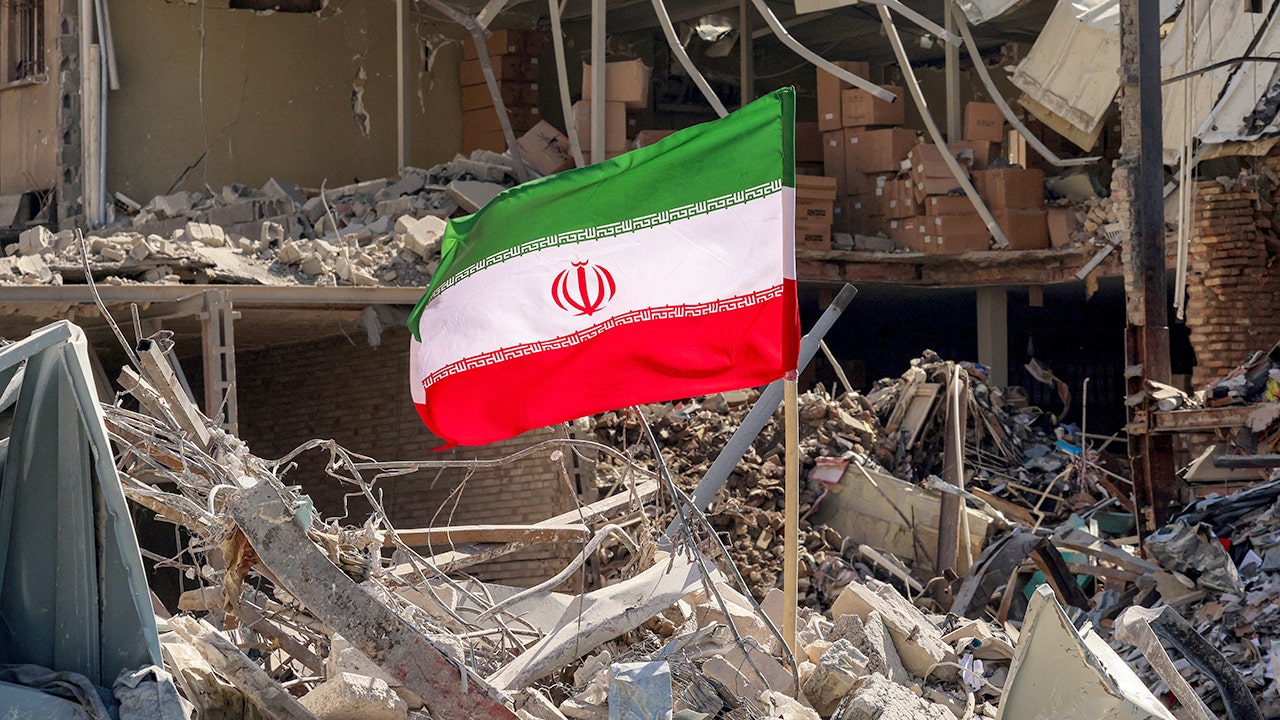
Reports of a possible new phase of confrontation between the United States and Iran have revived a familiar question in Washington: whether the ruling system in Tehran believes President Donald Trump is ready to move beyond pressure and change the balance of power.
History remembers leaders who confronted and dismantled the ideologies that produced crises, not those who merely managed them. Nazism, fascism and communism once looked permanent, yet each collapsed under sustained pressure. The Islamic Republic of Iran belongs in that category. It is not a state that evolves toward moderation. It is an ideological system that sustains itself through repression, deception and expansion.
The roots of the challenge trace to the 1979 revolt. The removal of Shah Mohammad Reza Pahlavi, America’s main regional ally during the Cold War, left a vacuum filled by a radical clerical movement whose nature was neither fully understood nor seriously examined. Warnings were dismissed and the ideological foundations of Khomeinism were underestimated.
What followed was not a transition but a consolidation of theocratic power built on absolutism, coercion and perpetual ideological expansion. Successive U.S. administrations tried to manage the problem through engagement, negotiation or strategic patience. The result was the steady growth of a destabilizing force across the region.
From Iraq to Lebanon, Syria to Yemen, Iran built a transnational network of militias and proxies that formed what became known as the Shia Crescent. The war on terror, launched in 2001, did not confront the central engine of that instability.
Trump broke the pattern. He refused to treat the Islamic Republic as a state actor open to reform through diplomacy. He saw it as the center of a transnational ideological project rooted in coercion and permanent conflict, and he acted on that view.
The killing of Iranian Maj. Gen. Qasem Soleimani was more than a tactical strike. Soleimani had built and directed Iran’s regional proxy network from Baghdad to Beirut. Removing him disrupted operations and challenged the regime’s sense of impunity. For the first time in years, the system centered in Tehran was pushed onto the defensive.
Trump followed that action by designating the Islamic Revolutionary Guard Corps as a terrorist organization. The move exposed the IRGC as a transnational instrument of ideological warfare rather than a conventional military force.
For millions of Iranians living under repression, the policy shift was not abstract. It aligned American strategy with the reality they faced. Trump came to represent, for many, the possibility of breaking the grip of a regime that has held the country for decades.
The story remains unfinished. Pressure alone is not resolution. Signals of negotiation and pauses in escalation gave time back to a system that survives on time. The Islamic Republic has always proved adaptive.
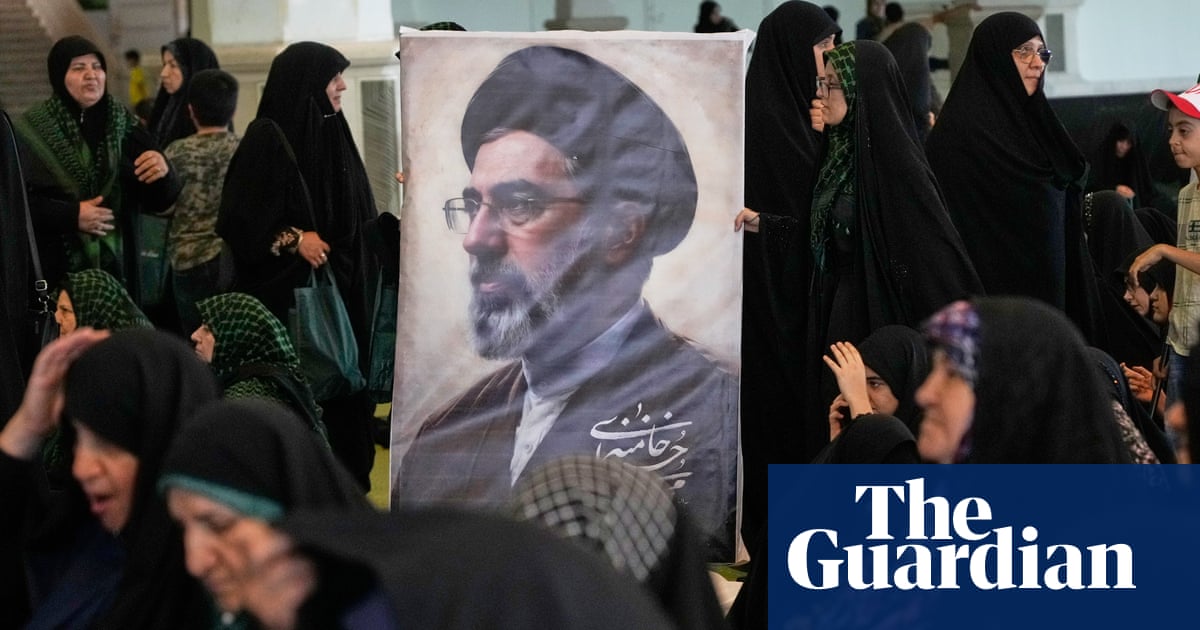
Leadership change does not alter the structure. The ideological foundation—hostility toward the United States and Israel, reliance on proxy warfare and internal repression—remains unchanged. Whether authority passes to Mojtaba Khamenei or another insider after Ali Khamenei, the machinery of control will endure.
Partial measures have failed. Remove a figure and another emerges. Strike a facility and it is rebuilt. Sign an agreement and it is reinterpreted. The system absorbs impact unless something deeper breaks.
Inside Iran, the regime faces mounting pressure. Economic collapse, systemic corruption and environmental stress have become structural realities. Public anger is cumulative. Anti-regime uprisings were suppressed, but that is compression, not stability.
Outside Iran, the pattern is consistent. Influence expands where institutions weaken and states fragment. This is not opportunism. It is doctrine. Iran is not a normal geopolitical competitor. It is a system engineered for confrontation.
Trump’s cooperation with Israeli Prime Minister Benjamin Netanyahu and engagement with Saudi Crown Prince Mohammed bin Salman and UAE President Sheikh Mohammed bin Zayed Al Nahyan pointed toward a different regional order. That order would prioritize stability, economic development and strategic cooperation over ideological conflict.
Four decades of policy have shown the limits of half-measures. Containment delays. Negotiation without leverage extends. Pressure without conclusion stabilizes nothing. The system in Tehran does not need victory. It needs survival.
Transition carries risk. Collapse would not be orderly. Networks would fragment. Power vacuums invite conflict. Coordination between the CIA and regional allies would be critical in managing such a shift. A credible national alternative, such as Iranian Crown Prince Reza Pahlavi, could provide continuity at a moment when fragmentation is most likely.
A stable, sovereign Iran integrated into the international system would reduce proxy conflicts and strengthen economic ties. Continuation of the current regime guarantees ongoing instability and strategic tension.
If Trump moves from pressure to decisive structural change, his legacy will be measured alongside those who dismantled the defining threats of their era. If not, the opportunity may pass. The regime of Shia clerics will endure, and the cost will be measured in continued instability and conflict.
For many Iranians, Trump has become a symbol of resistance to a regime they have long sought to see end. Iran stands at a crossroads, and so does history. Crossroads do not determine outcomes. Decisions do.
To hide the scale of its abuses, the clerical regime imposed near-total internet blackouts and sweeping censorship. Trump repeatedly drew attention to the suffering inside Iran. Millions remain cut off and silenced. When the internet flickers back, it feels like a fragile signal from a society still struggling to be heard.
Trump also understands that the Iranian people should not be left alone against figures such as judiciary head Gholam-Hossein Mohseni-Eje'i and IRGC commander Ahmad Vahidi, whose machinery of repression continues to operate. That is why Trump’s name carries weight in the Iranian public imagination.
The leadership in Tehran still appears convinced that Washington fears escalation more than the regime fears collapse. That assumption may become the most dangerous miscalculation in the modern Middle East.
If the Islamic Republic continues testing American resolve, the next confrontation may no longer resemble calibrated deterrence. It may become the moment that determines whether Trump’s Iran policy was merely pressure or the beginning of historic change.
What's Your Reaction?
 Like
0
Like
0
 Dislike
0
Dislike
0
 Love
0
Love
0
 Funny
0
Funny
0
 Wow
0
Wow
0
 Sad
0
Sad
0
 Angry
0
Angry
0


Comments (0)