

Trump to Discuss $14 Billion Arms Sale with Xi as Taiwan Tensions Rise

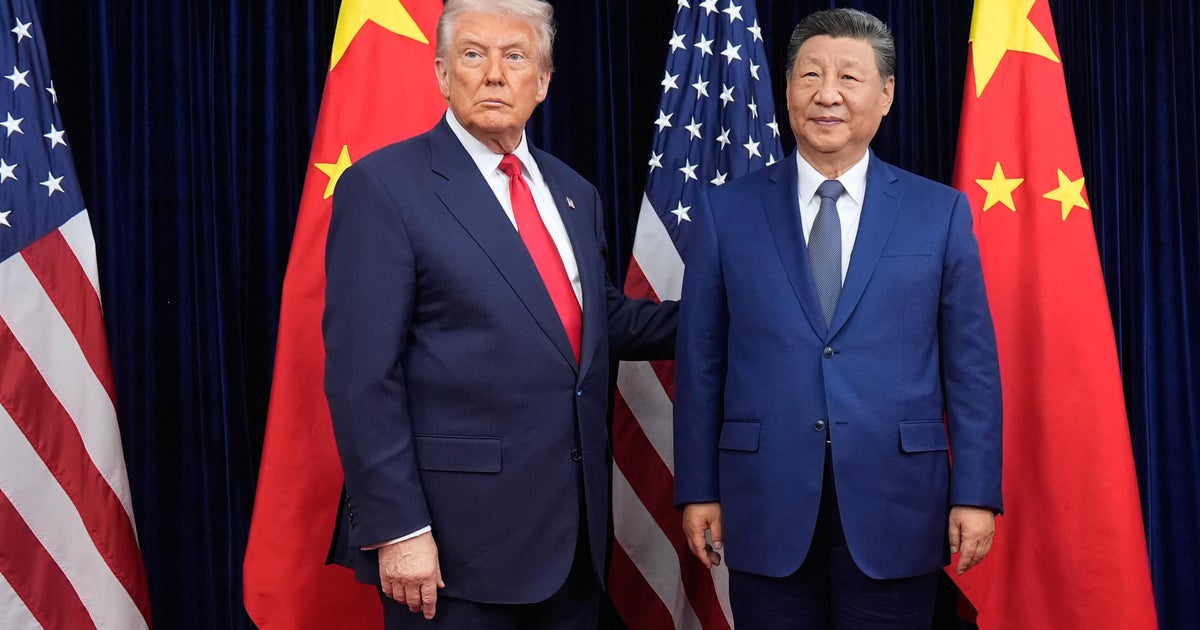
President Trump will arrive in Beijing on Air Force One for a summit with President Xi Jinping. Taiwan tops Xi's agenda, not global fallout from the Iran war or the Strait of Hormuz bottleneck.
China claims the island democracy in the western Pacific as its own. Control of Taiwan drives U.S.-China relations. The U.S. has followed a policy of strategic ambiguity on Taiwan for decades. It refuses to say if it would fight if China attacked. Still, the U.S. sold more than $50 billion in arms to Taiwan for defense. Those sales let Taiwan build capabilities against China.
Last year, the U.S. approved a record $11 billion arms sale to Taiwan. That angered China. Now a $14 billion package sits on Trump's desk. Trump said he will take it up with Xi. No other U.S. president has done that. It breaks Ronald Reagan's 1982 commitments to Taiwan.
Trump's remarks worry officials in Taipei. They fear he might cut a deal with Xi. China wants the U.S. to shift its stance. It seeks language change from not supporting Taiwan independence to opposing it. That diplomatic tweak could affect Taiwan's people.
Taiwan Deputy Foreign Minister Chen Ming-chi told CBS News he trusts the U.S. as a dependable ally. The partnership brings mutual gains. Taiwan holds a key spot in geopolitics and supply chains. It makes 90 percent of high-end semiconductors for AI and defense.
"The U.S. can count on us as much as we can count on the U.S.," Chen said. "Do we believe in the U.S. commitment? Yes. They are our reliable partner. Probably the most reliable partner."
Xi calls Taiwan reunification with mainland China unstoppable. China offers one country, two systems, like in Hong Kong and Macau. Xi has not ruled out force. He may not need it if the U.S. grants concessions.
Chen pointed to China's aggression in the South China Sea and East China Sea. Its military grows fast with daily drills. Xi once ordered readiness for Taiwan by 2027. A March U.S. intelligence report said no invasion this year. Dr. Liang-Chih Evans Chen, a military analyst at the Institute for National Defence and Security Research, said purges in China's command have delayed Xi.
"We won't face the problem now, but we might in a few years," he said. "I believe the threat remains."
Deputy Foreign Minister Chen said most Taiwanese reject reunification. They want peace. Since democratization, Taiwan has freedom of speech, democracy and a diverse society.
"We've been through an authoritarian past. We see democracy as something we achieved," Chen said. "Taiwanese people cherish that very much. So we will never accept one country, two systems."
China's crackdown on Hong Kong protests in 2019 revealed its stance, Chen said.
"What happened in Hong Kong was not convincing to Taiwanese people," he said. "Those who want to speak up got brutally repressed. The Communist Party is not going to allow freedom of speech, human rights and societal diversity."
"The people of Taiwan have not lived one single day under Chinese Communist Party rule," Chen added. "How come we are part of them?"
What's Your Reaction?
 Like
0
Like
0
 Dislike
0
Dislike
0
 Love
0
Love
0
 Funny
0
Funny
0
 Wow
0
Wow
0
 Sad
0
Sad
0
 Angry
0
Angry
0

Comments (0)