

Trump Presses China on Aid to Iran and Russia Before Xi Summit

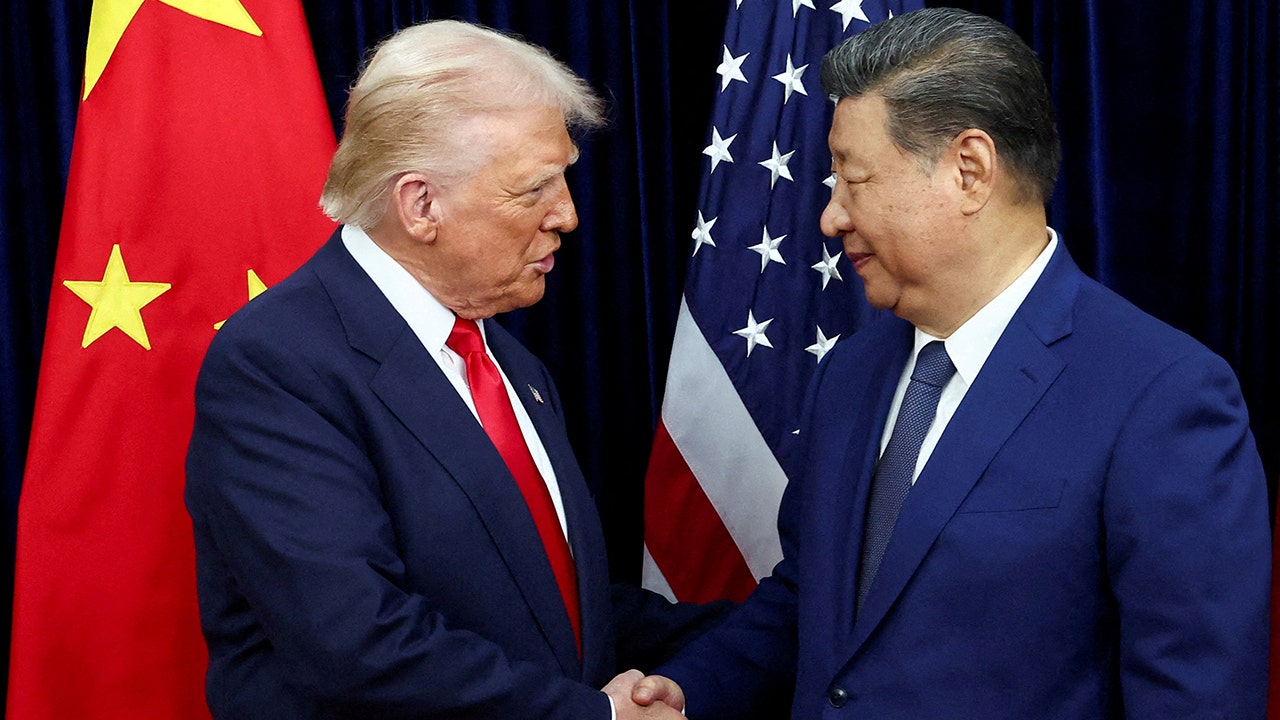
The Trump administration is increasing pressure on China over Beijing's economic and material support for Iran and Russia ahead of President Donald Trump's summit with Chinese President Xi Jinping.
A senior administration official told reporters Sunday that Trump has spoken multiple times with Xi about the revenue China provides to those regimes, as well as dual-use goods, components and parts, and potential weapons exports.
"I expect that conversation to continue," the official said on a White House preview call ahead of Trump's trip to Beijing.
The comments highlight how Iran and Russia have become linked to the broader U.S.-China relationship. The administration now frames Beijing as a critical enabler of adversarial regimes, not just an economic competitor.
"You've seen some actions, meaning sanctions coming out from the U.S. side just in the last few days that I'm sure will be part of that conversation," the official added.
China ordered firms in early May to ignore U.S. sanctions targeting Iranian oil. On Sunday, China's Commerce Ministry issued a new directive invoking a 2021 blocking statute that prohibits firms from complying with foreign sanctions deemed illegitimate. The order targets several Chinese refiners accused by the U.S. of buying Iranian crude, including major independent processors known as teapot refineries.
The move marks a shift from years of opaque workarounds to explicit state-backed resistance. Beijing signals it will not cooperate with U.S. efforts to cut off a key revenue source for Iran.
U.S. officials have accused China of sustaining Iran's military and economic capabilities through oil purchases, dual-use exports and networks tied to Tehran's drone and missile programs.
Chinese Embassy spokesperson Liu Pengyu pushed back. "China always acts prudently and responsibly on the export of military products, and exercises strict control in accordance with China's laws and regulations on export control and due international obligations," he said.
"China opposes groundless smear and ill-intentioned association," Liu added. "The pressing priority is to make every effort to prevent by all means a relapse in fighting, rather than exploiting the conflict to maliciously smear other nations."
Liu said China is prepared to work with the United States to expand cooperation and manage differences in the spirit of equality, respect and mutual benefit.
"China, let's see them step up with some diplomacy and get the Iranians to open the strait," Scott Bessent said in a Fox News interview on May 4.
"Iran is the largest state sponsor of terrorism. China has been buying 90 percent of their energy, so they are funding the largest state sponsor of terrorism," he added.
Chinese officials have defended Beijing's trade with Iran as normal economic cooperation and criticized U.S. sanctions as unilateral measures that interfere with legitimate trade.
China has become Iran's largest economic lifeline, purchasing most of its oil exports despite U.S. sanctions. Those purchases generate billions of dollars in revenue that fund the regime's military activities and regional proxy networks, according to analysts and U.S. government reports.
The Treasury Department has sanctioned Chinese and Hong Kong-based companies accused of helping Iran procure materials and components for ballistic missiles and drones, including parts for the Shahed drone program. U.S. officials have raised concerns about dual-use goods such as electronics, industrial equipment and missile-fuel precursor chemicals.
While Beijing curtailed overt state-to-state arms sales to Iran years ago under international pressure, U.S. officials and analysts say Chinese firms and intermediaries continue supplying sensitive technologies and materials through commercial channels and sanctions-evasion networks.
The leaders are expected to discuss Taiwan, cybersecurity, artificial intelligence and rare earth supply chains at the summit.
The White House previewed talks on a potential U.S.-China Board of Trade and Board of Investment as government-to-government mechanisms for managing trade and investment issues.
Administration officials stressed no change in longstanding U.S. policy toward Taiwan, while noting increased American arms sales to Taipei and calling for Taiwan to boost defense spending.
Artificial intelligence is a growing focus. Officials said Trump and Xi could discuss a formal communication channel on AI-related security concerns as both countries develop advanced systems with military and cyber implications.
Discussions also cover rare earth supply chains and access to critical minerals used in defense systems, electronics and advanced manufacturing.
What's Your Reaction?
 Like
0
Like
0
 Dislike
0
Dislike
0
 Love
0
Love
0
 Funny
0
Funny
0
 Wow
0
Wow
0
 Sad
0
Sad
0
 Angry
0
Angry
0

Comments (0)