

Trump Heads to Beijing for Two-Day Summit with Xi Jinping Amid Iran War Fallout

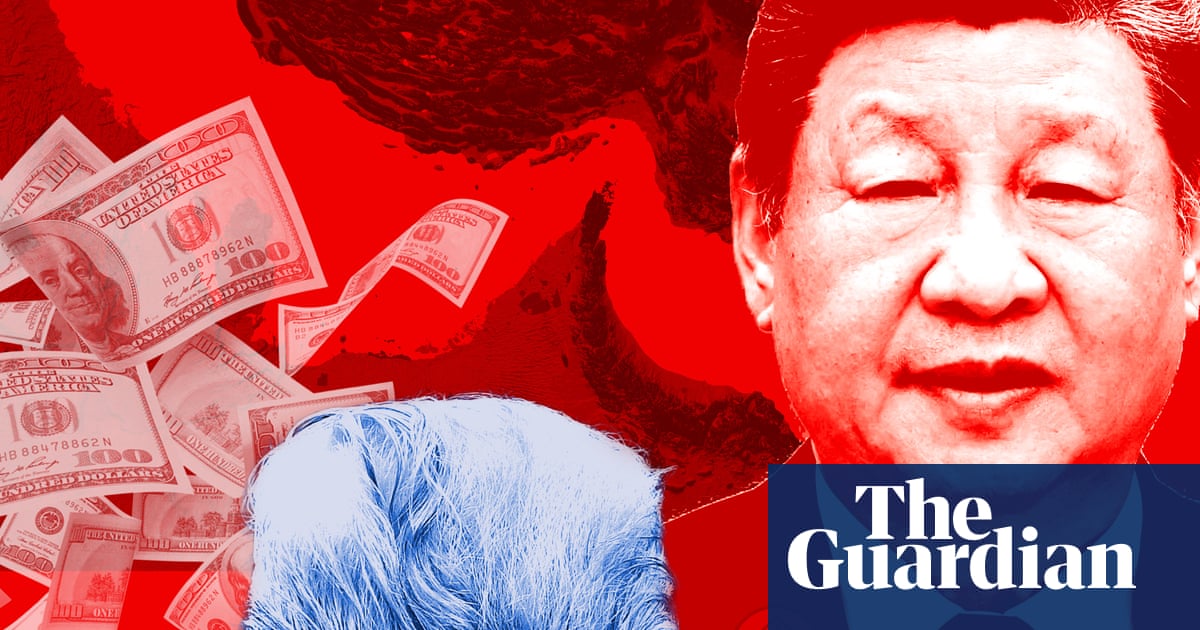
Donald Trump plans to arrive in Beijing on Wednesday for a summit with China's leader Xi Jinping, if preparations proceed as expected. The trip would mark the first visit to China by a U.S. president in nearly a decade. Trump last visited in 2017 during his first term.
Beijing hosted Trump and his wife, Melania, lavishly that year. They received a private tour of the Forbidden City, the palace complex that housed Chinese emperors for centuries, and attended a Peking opera performance. Chinese officials called it a "state visit-plus".
The past nine years have brought a trade war, a global pandemic, rising U.S. concerns over Chinese military activity, and a second trade war. Trump's current trip has been delayed by his attack on Iran, which exposed limits on U.S. power, and trimmed to two days.
"The idea of an American president going to a summit with our foremost competitor at a time where he has just experienced the most catastrophic strategic debacle in recent memory is going to be a striking moment," Suzanne Maloney, vice president and director of foreign policy at the Brookings Institution in Washington, told reporters Thursday. "From a U.S. perspective, this absolutely changes the sense of our ascendance at this point in time and what it means for the relationship."
Observers will scrutinize the summit's optics. Trump, less aggressive toward China than in his first term, enjoys diplomatic pageantry and often praises his personal ties with Xi, unlike his sharp tone with traditional U.S. allies. Xi may flatter Trump while underscoring U.S. weaknesses and Chinese strengths, similar to displays by leaders like King Charles III.
Frictions will simmer beneath any rapport during the 48-hour summit between leaders who oversee more than 40 percent of global economic activity. Middle East tensions have sharpened divides. Zhao Minghao, a professor of international studies at Fudan University, cited "very prominent mutual distrust" between the countries. "Both sides still have profound disagreements on a number of issues, economic and trade issues, military-to-military relations, and Taiwan-related issues."
Trade, Iran, and Taiwan top the agenda in the world's key bilateral relationship.
The path to the summit began in Busan last October. The U.S. and China then agreed to a temporary trade war truce after tariffs on China hit 145 percent. The measures risked devastating China's economy amid pandemic recovery and demographic woes. China countered by curbing rare earth exports, critical for global supply chains and U.S. military tech, halting some American factories.
Jake Werner, East Asia director at the Quincy Institute for Responsible Statecraft, said the Busan meeting built mutual respect. "Trump came into office last year, with the sense that he was going to reduce the Chinese and force them to acknowledge his power over them," Werner said. "He discovered that he could not do that because the Chinese were able to fight back effectively."
Ahead of November midterm elections, the Trump administration has invited executives from Nvidia, Apple, Exxon, and others to join the president. Boeing CEO Kelly Ortberg and Citigroup leader Jane Fraser will attend.
China wants to extend the trade truce, keep U.S. technology access, and ease export controls. It may offer major U.S. investments, like past deals with Japan and South Korea. Beijing is negotiating with Boeing for 500 737 Max jets and dozens of wide-body planes, its first big order since 2017. Washington seeks commitments for 25 million tonnes of soybeans yearly for three years, plus more U.S. poultry, beef, coal, oil, and natural gas.
China could stabilize rare earth supplies for U.S. firms via a long-term deal, barring military uses.
The Iran war has upended summit dynamics and consumed Trump's focus. It closed the Strait of Hormuz, through which one-fifth of world oil flows, threatening China's economy and Gulf ties. Trump's shifting statements, from declaring victory to threats of destruction, have rattled diplomats. Pakistani officials claimed Thursday that the U.S. and Iran near a ceasefire deal.
U.S. Treasury Secretary Scott Bessent urged China to "step up with some diplomacy," while trade representative Jamieson Greer said Trump would raise China's Iranian oil buys. As Iran's top customer, China holds sway but maintains a delicate tie. "It would be too much to say that China could cajole or twist the arm of Iran," said Dali Yang, political science professor at the University of Chicago.
Xi visited Iran in 2016 but shared a sofa with then-President Hassan Rouhani during a meeting with Supreme Leader Ayatollah Ali Khamenei, an apparent slight. "China knows that the Middle East is not an easy place to try to get things done," Yang said. Wang Wen, a professor at Renmin University, added: "China cannot control Iran, nor does it possess the absolute power to unilaterally dictate the course of the Hormuz crisis."
Beijing views the Iran war as a U.S.-created problem distant from its borders.
Xi prioritizes Taiwan, China's claimed territory of 23 million. Foreign Minister Wang Yi called it the top U.S.-China risk. The U.S. arms Taiwan despite not recognizing it formally. Trump has softened on Taiwan, calling it an economic rival in semiconductors, not a democratic partner. An $11 billion arms package is reportedly stalled.
Beijing may press for U.S. rhetoric changes, like opposing Taiwanese independence outright. Mira Rapp-Hooper, a former top White House Asia adviser under Joe Biden, said allies will watch for Trump concessions on Taiwan prerogatives or arms sales. Other topics include fentanyl cooperation and human rights cases like Jimmy Lai and Pastor Jin Mingri.
The U.S.-China AI race raises safety fears as both prioritize speed. Xi may pitch global standards cooperation.
With 62 percent domestic disapproval and Middle East entanglement, Trump negotiates from weakness. A warm summit could alarm observers. Jonathan Czin, a former CIA China expert now at Brookings, said: "I actually think that a very positive, adulatory meeting could be the worst possible outcome in some ways because it'll spook the rest of the region – it means that we've made some kind of accommodation. If Beijing is very happy with how the meeting has gone, that's probably a worrisome sign in some way for the United States and our position going forward."
What's Your Reaction?
 Like
0
Like
0
 Dislike
0
Dislike
0
 Love
0
Love
0
 Funny
0
Funny
0
 Wow
0
Wow
0
 Sad
0
Sad
0
 Angry
0
Angry
0






Comments (0)