

Hantavirus-Afflicted Cruise Ship Docks in Canary Islands for Evacuation

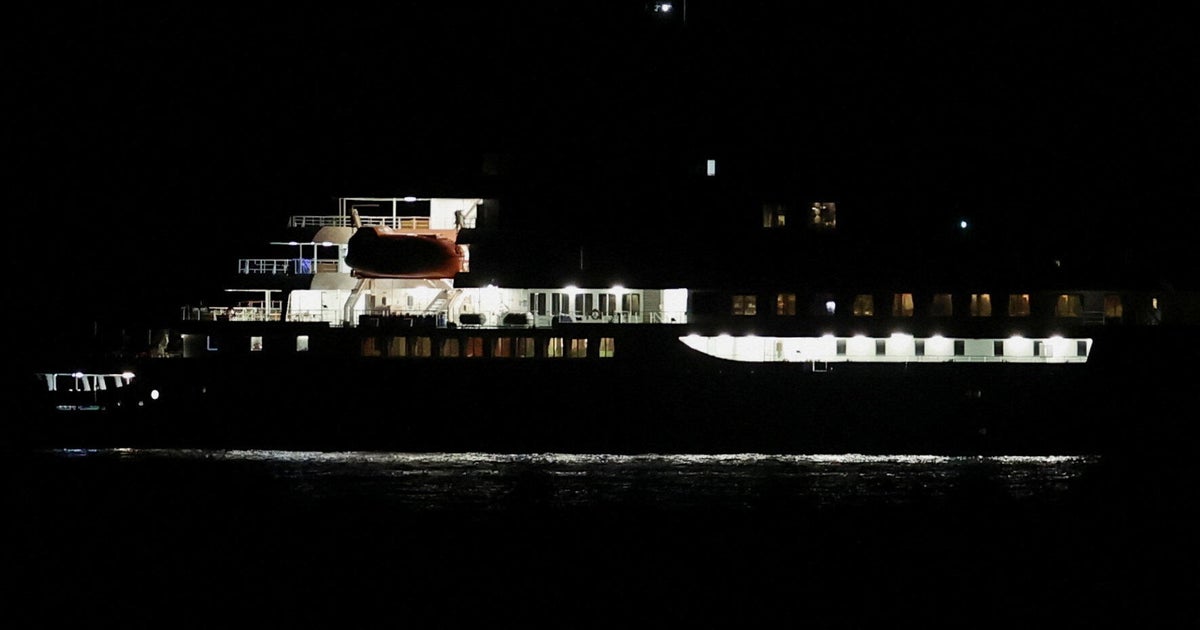
A Dutch-flagged cruise ship struck by a deadly hantavirus outbreak arrived at Spain's Canary Islands early Sunday, where health officials will start evacuating passengers and most crew members before sending them home.
The MV Hondius carries nearly 150 people from more than 15 countries, including 17 Americans. It left Cape Verde earlier this week for Granadilla port on Tenerife, the largest Canary Island, after Spain agreed to accept the vessel.
Reuters video showed the ship near Granadilla, escorted by a Spanish Civil Guard vessel, according to Agence France-Presse journalists.
The World Health Organization reported no symptoms among those still aboard. At least nine confirmed or suspected hantavirus cases tie to the outbreak, including three deaths: a Dutch couple and a German woman.
Oceanwide Expeditions, the operator, said all passengers and some of the roughly 60 crew will leave Sunday via launch boats holding five to 10 people. The WHO and other health groups are coordinating. WHO Director-General Tedros Adhanom Ghebreyesus went to Tenerife before the ship arrived.
A skeleton crew will resupply and sail to Rotterdam, Netherlands, a trip expected to take five days, the company said.
Americans will fly to the U.S. on a plane from the Centers for Disease Control and Prevention and the Department of Health and Human Services.
The CDC is sending epidemiologists and medical professionals to the Canary Islands to conduct exposure risk assessments for each American passenger and recommend monitoring levels.
The flight will land at Offutt Air Force Base in Omaha, Nebraska. Passengers will go to a biocontainment unit at the University of Nebraska Medical Center.
Michael Wadman, medical director of the National Quarantine Unit there, said each American will get their own room for quarantine of an unspecified duration.
Hantaviruses spread from rodents to people via urine, droppings or saliva, the CDC said. Symptoms can take up to eight weeks to appear.
The WHO said only the Andes strain from Latin America transmits human-to-human. Ghebreyesus rated public risk low, as did acting CDC Director Dr. Jay Bhattacharya.
"Hantavirus is not spread by people without symptoms, transmission requires close contact, and the risk to the American public is very low," Bhattacharya said Wednesday.
Investigators seek the outbreak's source. The Dutch couple who died, a 70-year-old man and his 69-year-old wife, had traveled weeks in Argentina, Chile and Uruguay on a bird-watching trip through areas with Andes virus-carrying rodents, Ghebreyesus said.
The man fell ill April 6 and died aboard April 11. No samples were taken as his symptoms resembled other respiratory viruses and hantavirus was not suspected, WHO said.
His wife went ashore at St. Helena, a British territory. She showed severe symptoms on an April 25 flight to Johannesburg, South Africa, and died there April 26. Tests confirmed hantavirus.
The German woman developed symptoms April 28 and died May 2 aboard, WHO said.
Three other patients flew to the Netherlands for care this week. A Swiss man who fell ill after leaving is treated in Zurich. A British man went to South Africa for evacuation, and another British national who disembarked is hospitalized on Tristan da Cunha, another British territory.
Oceanwide said 32 passengers from about a dozen countries left at St. Helena, including the Dutch woman. Americans who returned home before the outbreak was found are monitored by state health agencies in California, Georgia, Texas, Virginia and Arizona.
The Hondius sailed April 1 from Ushuaia, Argentina, visiting South Atlantic islands including South Georgia and South Sandwich Islands, Tristan da Cunha, Gough Island and St. Helena from April 21 to 24.
It anchored off Cape Verde, west of Africa, for several days before heading to the Canary Islands.
What's Your Reaction?
 Like
0
Like
0
 Dislike
0
Dislike
0
 Love
0
Love
0
 Funny
0
Funny
0
 Wow
0
Wow
0
 Sad
0
Sad
0
 Angry
0
Angry
0










Comments (0)