

Trump Arrives in Beijing for Talks with Xi on Taiwan, Trade and China Support for Iran, Russia

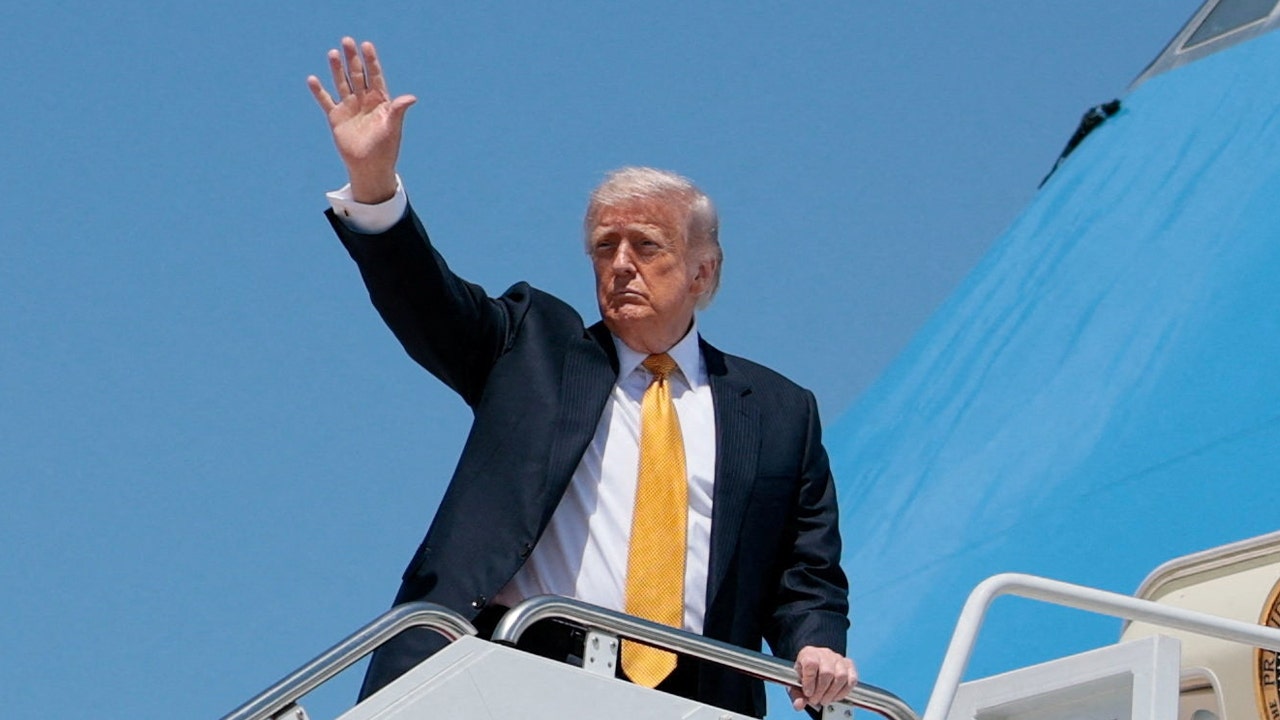
President Donald Trump arrives in Beijing on Wednesday for high-stakes talks with Chinese President Xi Jinping. The two leaders will negotiate issues including Taiwan, trade and a U.S.-China relationship strained by military tension and economic rivalry between the world's two largest powers.
The meeting occurs as a U.S.-Iran ceasefire faces growing strain after recent military exchanges near the Strait of Hormuz.
Trump plans to press Xi on China's economic and strategic support for Iran and Russia, such as oil revenue, dual-use components and potential weapons transfers, senior administration officials said.
Top U.S. business executives are accompanying Trump, including leaders from Apple, Boeing, Tesla, BlackRock and Goldman Sachs. Their presence underscores the administration's push for economic deals alongside strategic discussions.
White House officials outlined talks on artificial intelligence, cybersecurity and China's expanding nuclear program. They noted deep mistrust and limited progress in these areas despite open communication channels.
Economically, the focus falls on targeted trade arrangements, including a proposed U.S.-China Board of Trade to manage commerce in non-sensitive goods. Officials said the framework could initially cover trade worth double-digit billions, targeting agriculture and aerospace.
This marks the second meeting between Trump and Xi in Trump's second administration. Their prior face-to-face came at the Busan Summit in South Korea in October 2025. It is Trump's first state visit to China since 2017.
The summit follows more than a year of tariff escalations and uneasy truces between Washington and Beijing. Both sides seek to stabilize trade amid export controls, rare earth disputes and retaliatory duties.
Trump took office pledging an aggressive trade stance toward China. He imposed broad tariffs and export restrictions, prompting Beijing's retaliation and market disruptions. A temporary trade truce from 2025 Busan talks eased some pressure, but core disputes persist.
Administration officials expect Beijing discussions to address extending rare earth export arrangements, plus more Chinese purchases of U.S. agricultural products and aircraft.
What's Your Reaction?
 Like
0
Like
0
 Dislike
0
Dislike
0
 Love
0
Love
0
 Funny
0
Funny
0
 Wow
0
Wow
0
 Sad
0
Sad
0
 Angry
0
Angry
0








Comments (0)