

Supreme Court to Rule on Birthright Citizenship, Transgender Athletes and More

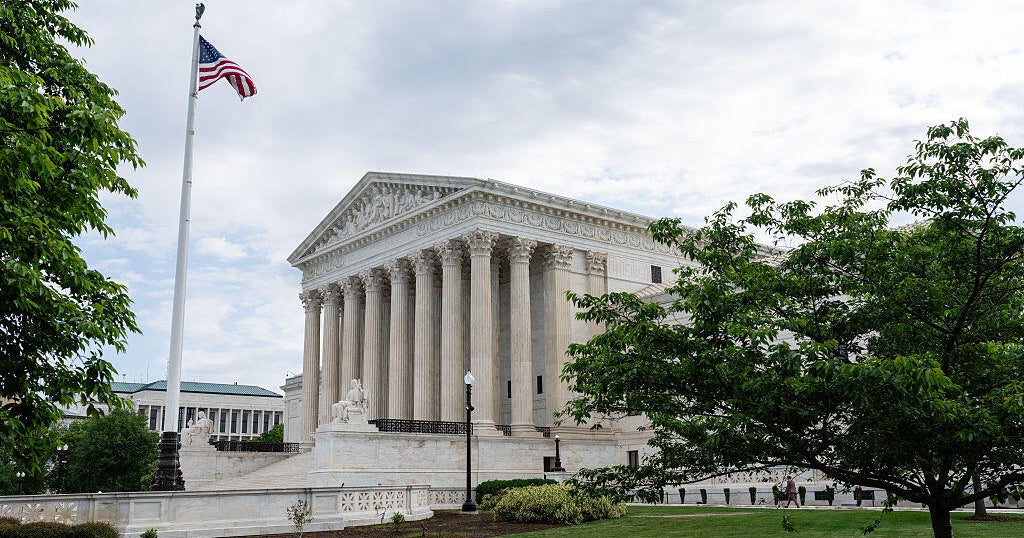
Washington — The Supreme Court is set to issue decisions in several major cases before the justices leave for the summer.
The court has already struck down President Trump's broad tariffs and weakened the Voting Rights Act. Before July, the justices will also rule on state laws that bar transgender athletes from girls' and women's teams, Mr. Trump's executive order on birthright citizenship, and his efforts to remove members of independent agencies.
Birthright citizenship
Trump v. Barbara
On his first day back in office, Mr. Trump signed an order that aimed to end birthright citizenship for children born to parents who are in the country illegally or on temporary visas. Lower courts blocked the order, finding it likely unconstitutional.
The case asks whether the order complies with the Citizenship Clause of the 14th Amendment and the Immigration and Nationality Act. If the court upholds the order, it would change more than a century of precedent that grants citizenship to nearly all people born on U.S. soil. The justices heard arguments in April and appeared likely to reject the order.
State laws banning transgender athletes from girls' and women's sports
Little v. Hecox and West Virginia v. B.P.J.
Twenty-seven states have passed laws that bar transgender athletes from competing on girls' and women's teams. The court is reviewing challenges to laws in Idaho and West Virginia.
Idaho was the first state to enact such a ban. A federal appeals court ruled last year that the law is likely unconstitutional. Lindsay Hecox, the transgender woman at the center of the Idaho case, later asked to drop her claims.
West Virginia's law was challenged by Becky Pepper-Jackson, a transgender high school student who began socially transitioning in third grade and has taken puberty-delaying medication and hormone therapy. A federal appeals court found the law unlawfully discriminated against her. The justices heard arguments in January and appeared likely to uphold the bans.
Removal of members of certain independent agencies
Trump v. Slaughter
Mr. Trump has moved to fire members of multimember boards and commissions without cause. One of those removed was Rebecca Slaughter, a member of the Federal Trade Commission. She sued, citing a 1914 law that limits removals to cases of inefficiency, neglect of duty or malfeasance.
A federal appeals court allowed her to stay in the job while the case moved forward. The Supreme Court later let Mr. Trump fire her and agreed to decide whether the removal protections violate the separation of powers. The court also will consider whether to overrule its 1935 decision in Humphrey's Executor v. United States. The justices heard arguments in December and appeared likely to side with the president.
The firing of Fed Governor Lisa Cook
Trump v. Cook
Mr. Trump also tried to remove Lisa Cook from the Federal Reserve Board of Governors. No president had attempted to fire a Fed governor in the central bank's 112-year history. Bill Pulte, who heads the Federal Housing Finance Agency, accused her of misrepresentations on mortgage filings. Mr. Trump said he had sufficient cause to remove her.
Cook denied wrongdoing and has not been charged with a crime. She sued, arguing that Mr. Trump violated the Federal Reserve Act. Lower courts and the Supreme Court have allowed her to remain on the board while the case proceeds. The justices heard arguments in January and appeared ready to let her keep her job.
Late-arriving mail ballots and the meaning of Election Day
Watson v. Republican National Committee
The court will decide whether states can count mail ballots that are postmarked by Election Day but arrive later. Fourteen states and the District of Columbia accept such ballots. The Republican National Committee argues that these grace periods conflict with federal law that sets Election Day as the Tuesday after the first Monday in November.
A federal appeals court struck down Mississippi's five-day grace period. The justices heard arguments in March. The Trump administration backed the Republican National Committee.
Temporary deportation protections for Syrians and Haitians
Mullin v. Doe and Trump v. Miot
The Department of Homeland Security has moved to end Temporary Protected Status for more than 356,000 immigrants from Syria and Haiti. The Supreme Court has kept the protections in place while it reviews the cases.
The main question is whether federal courts can review the secretary's decisions to end the program. The justices heard arguments in April. A ruling could affect more than one million immigrants from 13 countries.
Federal limits on coordinated spending between candidates and party committees
National Republican Senatorial Committee v. Federal Election Commission
The court is weighing whether federal limits on coordinated spending between candidates and party committees violate the First Amendment. The case was brought by then-Senate candidate JD Vance, then-Rep. Steve Chabot of Ohio and two Republican committees. A federal appeals court upheld the limits. The justices heard arguments in December.
Gun possession by marijuana users
United States v. Hemani
Federal law makes it a crime for an unlawful user of a controlled substance to possess firearms. Ali Hemani, a Texas man, was charged after using marijuana. A federal appeals court ruled that the law violated the Second Amendment as applied to him because the government did not show he was intoxicated when he had the gun. The Trump administration urged the Supreme Court to uphold the law. The justices have not yet heard arguments.
What's Your Reaction?
 Like
0
Like
0
 Dislike
0
Dislike
0
 Love
0
Love
0
 Funny
0
Funny
0
 Wow
0
Wow
0
 Sad
0
Sad
0
 Angry
0
Angry
0




Comments (0)