

Supreme Court Speeds Up Louisiana Map Ruling as Justices Clash on Election Timing

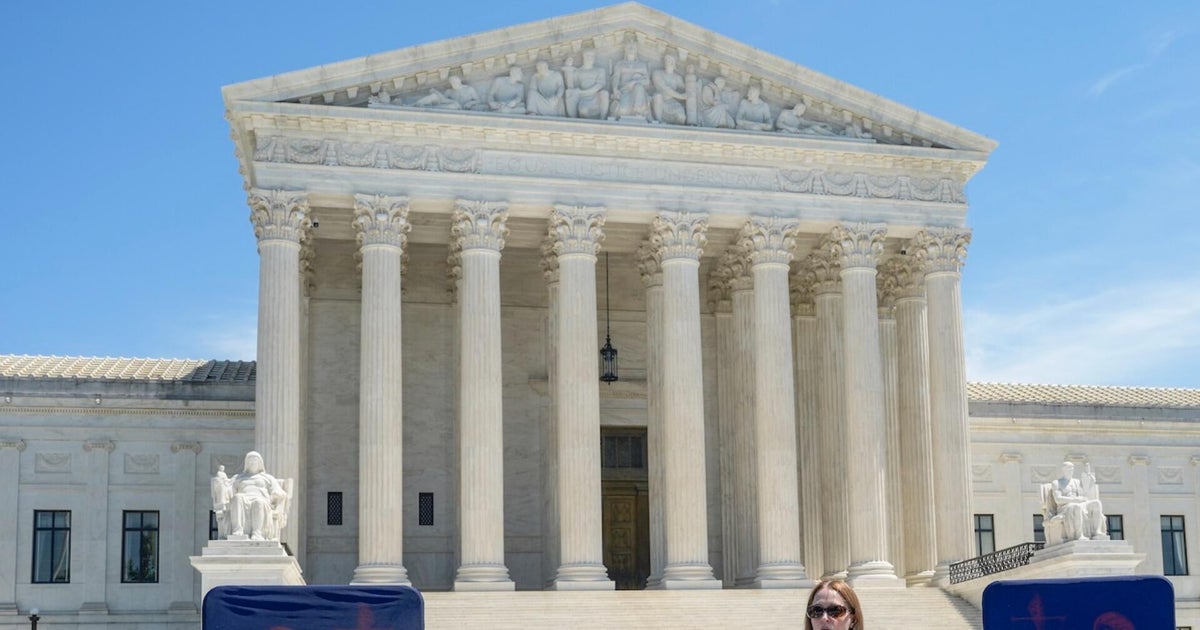
The Supreme Court on Monday allowed its landmark decision from last week, which struck down Louisiana's congressional map, to take effect right away. Republican state officials moved quickly to redraw the map ahead of this year's elections, sparking a heated exchange between two justices.
The court ruled 6-3 in Louisiana v. Callais that the state's U.S. House map, which has two majority-Black districts held by Democrats, violates the Constitution. Louisiana officials responded by suspending this month's House primaries and starting work on a new map.
Voters who first challenged the map asked the justices last week to shorten the usual 32-day delay between a ruling and its formal issuance to a lower court. They said time is of the essence with elections nearing and urged return to district court to oversee an orderly fix of the maps.
The high court granted the request Monday. It said the typical 32-day period is subject to adjustment by the justices.
Justice Ketanji Brown Jackson, one of the court's three liberals, attacked the move as unwarranted and unwise. She said it amounted to letting Louisiana cancel its primaries and ram through a new map. Jackson pointed to continuing fights over the suspended primaries as part of the chaos from the Callais ruling.
She argued the court should stay on the sidelines to avoid any appearance of partiality, noting its usual caution before elections. "And just like that, those principles give way to power," she wrote.
Justice Samuel Alito, who wrote the majority opinion in Callais, fired back in a concurrence joined by Justices Clarence Thomas and Neil Gorsuch. He called Jackson's bias worries baseless and insulting. He said letting the old map stand by running out the clock might itself look partial.
Alito rejected her claim that the court was ditching its principles as groundless and utterly irresponsible. "What principle has the Court violated?" he asked. "The principle that Rule 45.3's 32-day default period should never be shortened even when there is good reason to do so? The principle that we should never take any action that might unjustifiably be criticized as partisan?"
Alito said Jackson basically wanted to force Louisiana to use a map the court had ruled unconstitutional. In a footnote, Jackson denied that and said her preference was for the court to stay out by following default procedures.
The clash underscores the stakes in Callais, with effects beyond Louisiana. Tennessee and Alabama started last-minute redistricting that could cut Democratic seats.
The ruling limited Section 2 of the 1965 Voting Rights Act, long used against maps seen as racially discriminatory. Southern states often drew majority-minority districts to meet the law and counter claims of vote dilution.
Alito wrote that maps break the law only with a strong inference that states drew districts to give minority voters less chance because of race. He said this matches Section 2's text and accounts for changes like higher Black turnout and the end of discriminatory voting laws.
Justice Elena Kagan dissented, saying the ruling eviscerates Section 2 and makes it all but dead letter. She called proving intentional discrimination in map drawing well-nigh impossible. "I dissent because the Court's decision will set back the foundational right Congress granted of racial equality in electoral opportunity," Kagan wrote, joined by Jackson and Justice Sonia Sotomayor.
What's Your Reaction?
 Like
0
Like
0
 Dislike
0
Dislike
0
 Love
0
Love
0
 Funny
0
Funny
0
 Wow
0
Wow
0
 Sad
0
Sad
0
 Angry
0
Angry
0








Comments (0)