

Study Urges Immediate Relocation from New Orleans as Sea Level Rise Nears Point of No Return

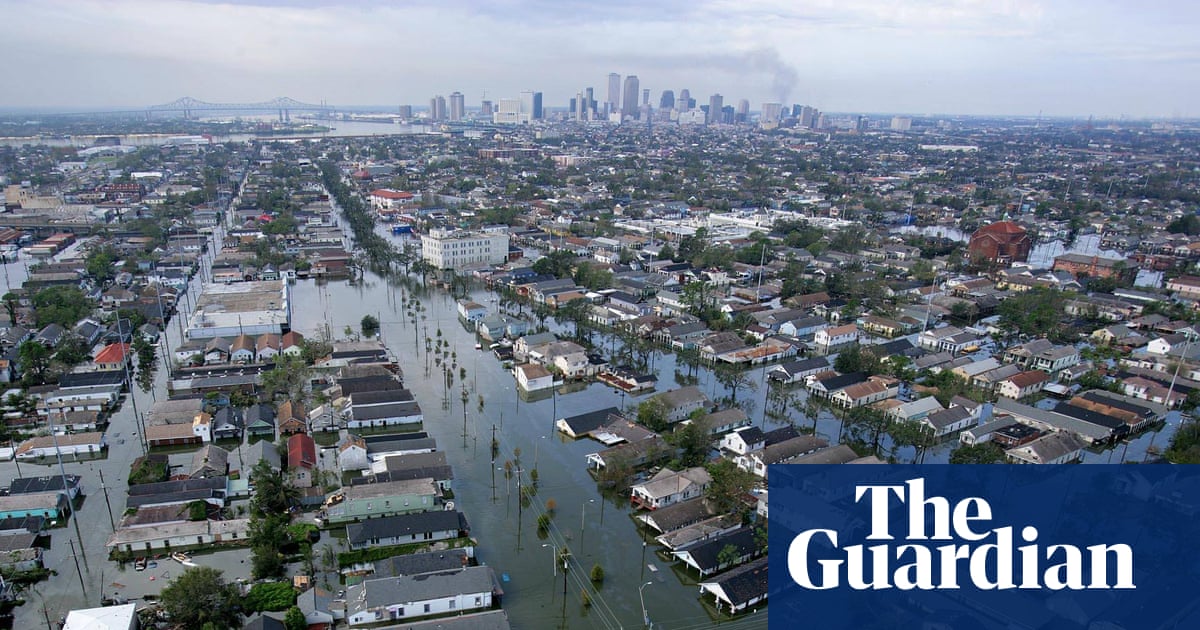
New Orleans has reached a point of no return from climate-driven threats and should begin relocating residents immediately, a new study concludes.
Ongoing sea level rise and rapid wetland erosion in southern Louisiana will surround the city with the Gulf of Mexico before the end of the century, according to the paper published in Nature Sustainability. The region faces 3 to 7 meters of sea level rise and the loss of three-quarters of its remaining coastal wetlands. That will push the shoreline 100 km (62 miles) inland, stranding New Orleans and Baton Rouge.
Researchers compared current global temperatures to conditions 125,000 years ago, when similar heat drove major sea level increases. Low-lying southern Louisiana confronts rising seas from global heating, stronger hurricanes and subsidence worsened by oil and gas operations. The study calls the area the most physically vulnerable coastal zone in the world.
New Orleans, with 360,000 residents, already saw population decline that will accelerate without action, the paper warns. Billions of dollars funded levees, floodgates and pumps after Hurricane Katrina in 2005, but they cannot hold back long-term threats despite needed upgrades.
"In paleo-climate terms, New Orleans is gone; the question is how long it has," said Jesse Keenan, a Tulane University climate adaptation expert and co-author. "How long is not certain but it's most likely decades rather than centuries. Even if you stopped climate change today, New Orleans's days are still numbered."
Keenan urged city, state and federal leaders to coordinate moves starting with vulnerable areas like Plaquemines Parish outside the levees. "New Orleans is in a terminal condition, and we need to be clear with the patient that it is terminal," he said. "There is an opportunity for palliative care, we can transition people and the economy."
Politicians avoid public talk of the crisis, he added. A separate study last week found 99% of New Orleans residents at major flood risk, the highest of any U.S. city.
"Even compared to all other US cities, New Orleans really stands out, which is alarming," said Wanyun Shao, a University of Alabama geographer and co-author. "There is no specific timeline to how long New Orleans has left but we know it's in big trouble." Shao endorsed managed retreat despite emotional ties.
Louisiana lost 2,000 square miles of land to erosion since the 1930s, equal to Delaware's size, with 3,000 more square miles projected gone in 50 years. A football pitch vanishes every 100 minutes.
The state shifted to sediment diversion using Mississippi River flows after past levees starved wetlands. The Mid-Barataria Sediment Diversion, started in 2023 and funded by a BP Deepwater Horizon settlement, aimed to create 20 square miles of land over 50 years.
Governor Jeff Landry canceled it last year, citing $3 billion costs and risks to fishing. "This level of spending is unsustainable," Landry said. Critics called it a boneheaded decision that dooms coastal areas, including New Orleans.
A Supreme Court ruling this month let fossil fuel firms challenge a $740 million Chevron verdict for wetland damage. "The combination of these decisions is driving a scenario where the state has stopped trying to build land," Keenan said.
The U.S. never relocated a major city but has moved smaller communities. Keenan suggested building north across Lake Pontchartrain. "That exodus has already begun, so if nothing is done, people will just trickle out over time and it will be an uncoordinated mess."
Timothy Dixon, a University of South Florida coastal expert not involved, praised the paper. "New Orleans is not going to disappear in 10 years or anything like that, but policymakers really should've thought about a relocation plan a century ago," he said.
What's Your Reaction?
 Like
0
Like
0
 Dislike
0
Dislike
0
 Love
0
Love
0
 Funny
0
Funny
0
 Wow
0
Wow
0
 Sad
0
Sad
0
 Angry
0
Angry
0









Comments (0)