

Sofia Coppola produces Fairyland, a film drawn from her friend’s life

Sofia Coppola logs on to a video call while her friend and fellow filmmaker Andrew Durham describes being nine or 10 and accidentally outing his father as gay.
“Have you heard this story, Sofia?” he asks from Los Angeles. “About Pietro? The Italian guy that my dad was maybe having an affair with when we lived in England?” At home in New York, Coppola furrows her brow. “Uh, yeah. A long time ago, I think. I forgot.”
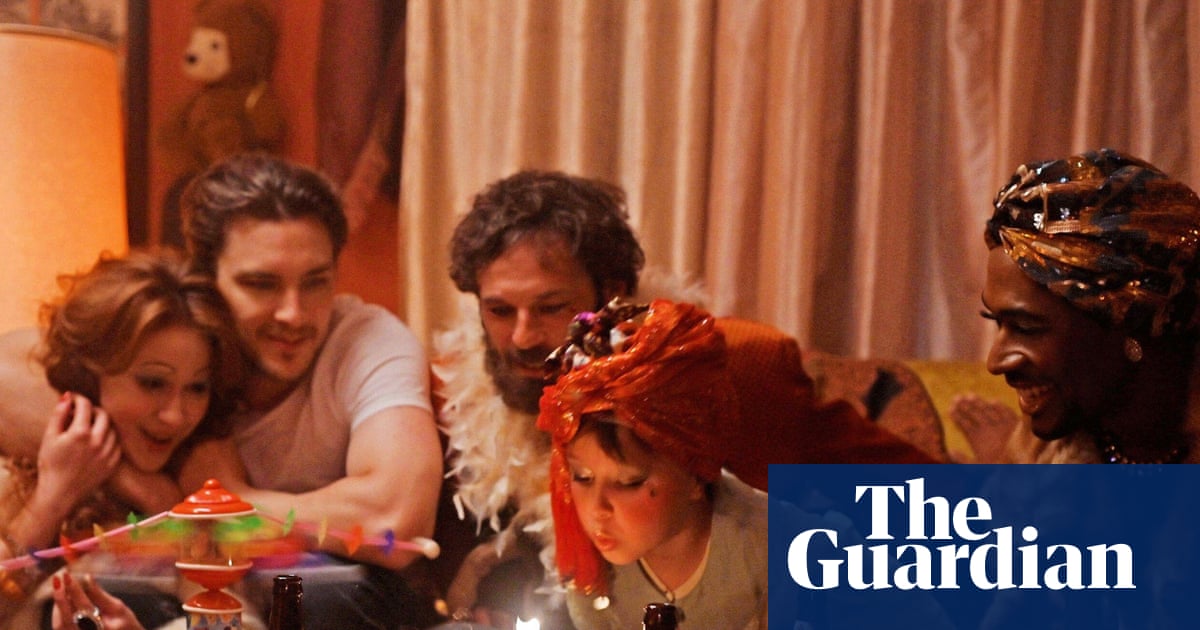
Their movie is adapted from Alysia Abbott’s 2013 book Fairyland: A Memoir of My Father. The story follows Abbott’s childhood and adolescence with her gay father, the writer and poet Steve Abbott, played by Scoot McNairy, who came out after her mother’s death. Alysia, played first by Nessa Dougherty and later by Emilia Jones, grows up among her father’s friends and lovers in a swirl of glitter and feather boas. At one birthday party, she blows out the candles while the adults take acid.
The story overlaps with Durham’s own life. Like Abbott, he grew up in the Bay Area in the 1970s. After his parents separated, he spent weekends with his father, Jerry, a museum curator. In later years, Durham cared for his father after he contracted HIV. Both Steve and Jerry died in 1992.
Coppola, who optioned the book, thought Durham would be a good choice to direct. They have known each other since the 1990s, when Durham produced her TV show Hi-Octane and her first short, Lick the Star. He has also served as the on-set photographer for most of her films. “Her taste and sensibility haven’t fluctuated with the times,” he says. “That’s the sign of a true auteur.”
Coppola never considered directing Fairyland herself. Durham suggests that Abbott was disappointed to learn this. Coppola says she told Abbott that Durham would direct even though he had never made a feature before. “At first, she was a little like ‘Errr …’ But they really hit it off,” she says. Durham adds: “We’d dealt with the same stuff in our lives. I always thought it was just me. I never ran into that many people who had gay dads who died of Aids.”
This is Coppola’s first time producing another filmmaker’s work. She says she enjoyed following the example of her father, Francis Ford Coppola, who ran the production company Zoetrope. Fairyland is a Zoetrope production and opens with the company’s original 1970s logo. “One thing Sofia and I have in common is we hate a bad logo,” Durham says.
The film continues a pattern of father-daughter stories in Coppola’s work. Somewhere, On the Rocks and Lost in Translation all explore that relationship. Coppola recalls her own childhood in San Francisco, where her parents included her and her brothers in their lives rather than sending them off with nannies.
Durham had a similar upbringing. When he was seven, his father moved the family from Palo Alto to Guildford in Surrey while working at the V&A museum in London. Durham believes that period helped shape his father’s sexuality. “My dad grew up on a cattle ranch in Wyoming,” he says. “I think it was on that trip to the UK where he met a lot of other gay people.”
Durham recalls a man named Pietro who wrote his father love letters. “We all loved him. He had a great house with these big gardens where we played croquet,” he says. After the family returned to California, Durham found one of the letters crumpled in the trash and showed it to his mother.
Once his parents divorced, Durham and his brother spent weekends with their father in San Francisco. “Not only was it mostly men around but there were these fabulous parties and we were going to the theatre and the hottest new restaurants,” he says.
Durham says he rebelled by dyeing his hair blue and joining the punk scene. Coppola declines to detail her own teenage behavior for print. In the film, the teenage Alysia stays quiet when classmates make homophobic jokes. Durham says he was fortunate to have accepting friends, though some parents were uneasy about their children visiting his father’s house.
Revisiting his father’s death while filming the final scenes was difficult. “It’s still a weird trigger for me,” he says. He added details not in Abbott’s book, including the memory loss Steve experiences at the end. “I remembered that you get this kind of dementia when the virus attacks your brain,” he says.
One scene about the early HIV drug AZT came from a conversation Durham had with his father. “I was so concerned about AZT because it seemed to be killing everybody,” he says. “I told my dad, ‘You’ve got a compromised immune system. I don’t think you should be on this.’ And he said, ‘I’m not taking it for me. I’m taking it because we’re the guinea pigs. We have to take it for your generation, and the ones after that.’”
Coppola and Durham say the film’s themes remain relevant amid current debates over LGBTQ rights. “It’s pretty shocking,” Coppola says. “That’s why I thought it was so important in the film to show all kinds of families, because there’s so much prejudice now.”
What's Your Reaction?
 Like
0
Like
0
 Dislike
0
Dislike
0
 Love
0
Love
0
 Funny
0
Funny
0
 Wow
0
Wow
0
 Sad
0
Sad
0
 Angry
0
Angry
0




Comments (0)