

SNP Wins Fifth Straight Scottish Parliament Election but Misses Majority

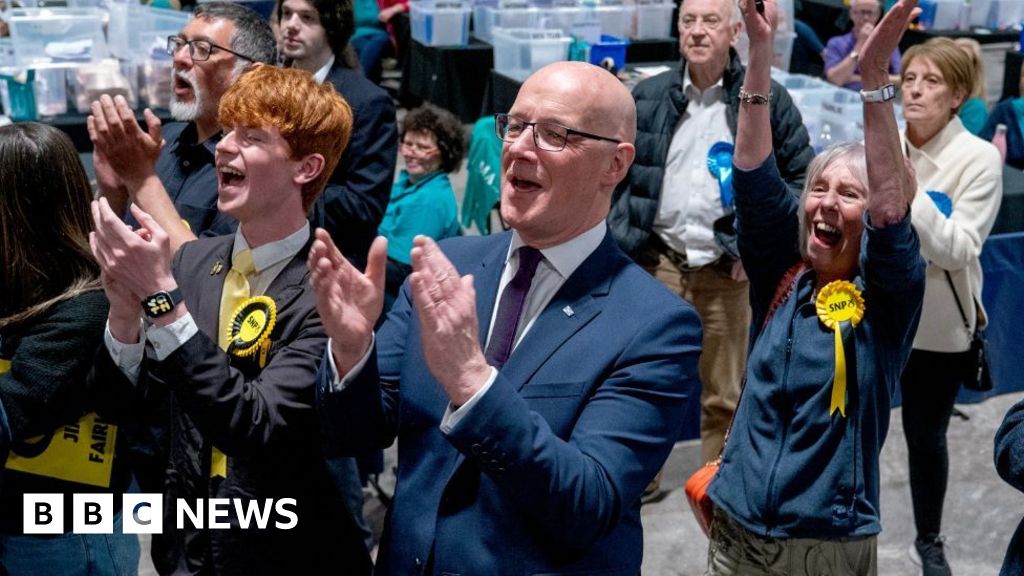
The SNP claimed a fifth consecutive victory in the Scottish Parliament election but failed to reach an overall majority at Holyrood.
The party took 58 seats, falling three short of the 65 required for control.
Labour placed a distant second with 17 seats, matching Reform's total in the party's electoral debut in Scotland.
The Scottish Greens set a record with 15 seats, including their first constituency wins ever.
The Conservatives dropped to 12 seats, their worst Holyrood result and a loss of their status as the largest opposition party. The Liberal Democrats returned 10 MSPs.
SNP leader John Swinney had argued that a majority would open the door to another independence referendum. Pro-independence parties now command 73 of the 129 seats, with the SNP and Greens combined.
The SNP will form the next government but must depend on other parties to pass laws and confirm Swinney as first minister.
Swinney told BBC Scotland News his party won the election "hands down." He said the "commanding position" meant "the public expectation will be for me to be returned as first minister and to lead a government."
Reform UK, led in Scotland by former Tory peer Malcolm Offord, was forecast to emerge as a force at Holyrood. The party, which pledged tax cuts and immigration controls, had no MSPs before; past ones defected from other parties.
Reform came closest to a constituency win in Banffshire and Buchan Coast, losing to the SNP by 364 votes. The party fared better on regional lists, which favor proportionality.
Offord, elected on the West of Scotland list, told BBC Scotland News he targeted more than 20 MSPs but saw the result as "a really good group to establish a base inside Holyrood." He called Reform "challengers and scrutineers" of the government and said the party would push Holyrood to focus on devolved issues like schools and roads.
Reform's rise split the unionist vote and aided SNP constituency holds despite a lower vote share than in 2021. The SNP took Shetland from the Lib Dems, who had held it since 1999.
The SNP lost the Western Isles to Labour plus seats in Edinburgh and Glasgow. SNP heavyweight Angus Robertson fell to former Green co-leader Lorna Slater in Edinburgh Central, the Greens' first constituency victory there. The Greens added Glasgow Southside, once Nicola Sturgeon's seat, and 13 list MSPs.
Green co-leader Ross Greer described it as a "historic day."
Scottish Labour leader Anas Sarwar conceded defeat early, after seven seats, citing a "national wave of disappointment." He said, "My party is hurting today and it's my job to hold it together."
Deputy Jackie Baillie kept Dumbarton, her seat since 1999. She supported Sarwar's leadership but noted voters' views were "coloured" by the UK Labour government's record.
The Conservatives lost their decade as top opposition to Reform's inroads, dropping to fourth. Leader Russell Findlay, elected on the West of Scotland list, said, "While I'm pleased that we won the bulk of the constituencies we were defending, I'm disappointed to have lost so many excellent parliamentary colleagues."
Findlay blamed Reform as "a gift to the SNP," letting them win seats without constituency victories.
The Lib Dems lost Shetland but gained seven constituencies, including a turnaround in Skye, Lochaber and Badenoch after Kate Forbes stepped down. Leader Alex Cole-Hamilton said his MSPs would "deliver change with fairness at its heart."
The Scottish Greens celebrated first constituency wins and list seats across Scotland. The Lib Dems rebounded from Shetland's loss with gains from rural Highlands to central belt. All three parties eye greater sway over the next five years.
What's Your Reaction?
 Like
0
Like
0
 Dislike
0
Dislike
0
 Love
0
Love
0
 Funny
0
Funny
0
 Wow
0
Wow
0
 Sad
0
Sad
0
 Angry
0
Angry
0




Comments (0)