

Sánchez Leads Progressive Internationalism as Backlash to Trumpism Gains Ground

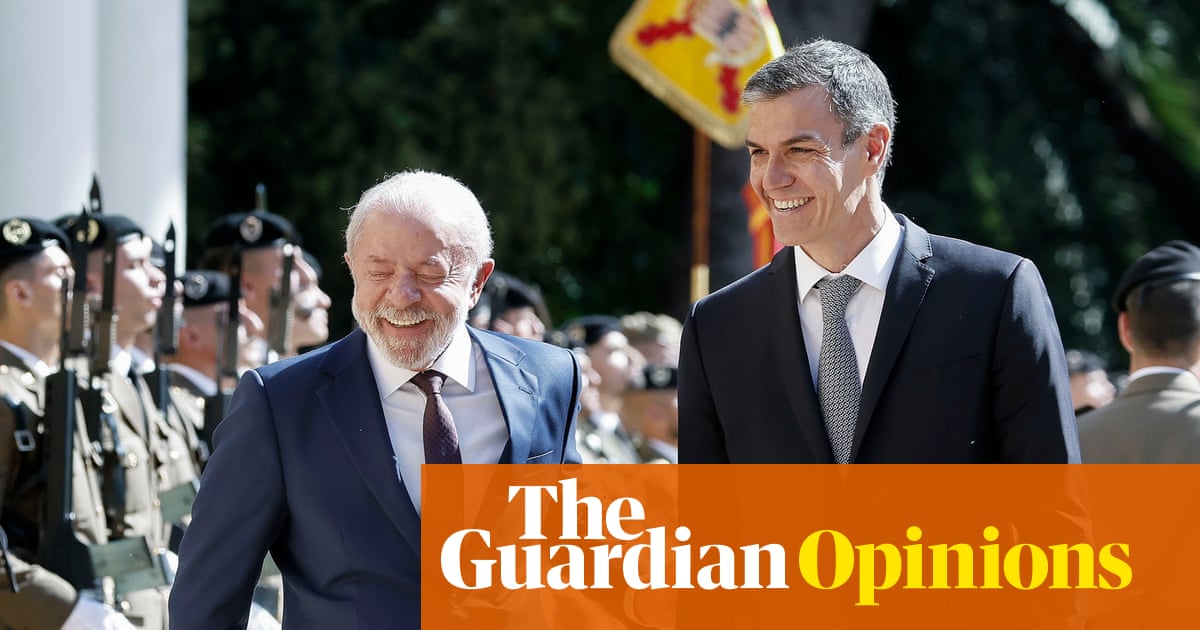
If Donald Trump represents the backlash against the liberal rules-based order, then a backlash to that backlash may now be underway. Spanish Prime Minister Pedro Sánchez addressed this in a recent speech. "They scream and shout not because they are winning, but because they know their time is running out," he said of those seeking to undermine international law and normalize the use of force. As the Trump administration and its allies try to remake the world, alternative visions of the international order are taking shape.
Canadian Prime Minister Mark Carney laid out vulnerabilities in a world of "rupture" during his January Davos speech. Middle powers must act together, he said, because "if we’re not at the table, we’re on the menu." The path forward keeps globalization but remakes it: preserving openness, upholding a rules-based order, and avoiding over-reliance on one country.
French President Emmanuel Macron's push for EU "strategic sovereignty" reflects the same idea in Europe: openness with guardrails. This hardened liberalism suits a contested geopolitical environment.
Another response to Trumpism and nationalist great-power politics emerged last month in Barcelona. Sánchez and Brazilian President Lula da Silva co-hosted a gathering of global progressives and center-left leaders to craft a progressive internationalism for the 21st century.
The project reinterprets the backlash against globalization, which brought growth but left wages stagnant, inequalities entrenched, and regions behind. The Barcelona summit aimed to fill a void for the center-left since the 2008 financial crisis. After bailing out the financial sector, championing unchecked globalization failed working-class voters, the center-left's base.
Nearly two decades and a far-right surge later, the center-left offers a matching response. First, redistribute globalization's gains through taxes on billionaires, global finance reform, and more development investment. Second, reshape globalization's conditions by strengthening multilateral institutions, reforming the UN, regulating big tech, and imposing democratic and social constraints.
Third, it places peace at the center of cooperation. Amid rising conflict, progressive internationalism stresses diplomacy, de-escalation, and international law for markets, digital platforms, and political systems. Erosion of democracy or rule of law anywhere threatens stability everywhere.
More than 40 countries from Europe, Africa, and the Americas join this movement, reviving global north-south dialogue from the Cold War era. Sánchez's leadership and progressive energy from the U.S., including politicians like Zohran Mamdani, drive it forward. Sánchez rallies support despite his fragile coalition at home.
Like Willy Brandt and Olof Palme, Sánchez bridges north-south divides and translates southern demands for western action. Brandt, former German chancellor, and Palme, two-time Swedish premier, led European social democracy in the 1970s and 1980s. They pushed a fairer order: the 1980 Brandt Report called for wealth transfers and reforms for developing countries. Palme advocated disarmament, anti-colonial solidarity, and dialogue. They made north-south dialogue a progressive foreign policy pillar.
This new internationalism echoes them but adds reclaiming democratic control over economic, digital, and geopolitical systems that nationalists challenge. Redistribution, peace, and dialogue alone fall short today.
The momentum reflects fractures in transatlantic national-populist alignments, like Viktor Orbán's electoral defeat in Hungary, once a reference for Trump and right-wing leaders.
Progressive internationalism builds legitimacy for the rules-based order; strategic liberalism manages risks and preserves openness.
Limits appear, though. European leaders face realpolitik. Germany's Vice-Chancellor Lars Klingbeil, SPD leader, stresses security and a strong Germany for a strong continent. Sánchez speaks on Gaza but less on Ukraine; geography, history, and politics divide views. For Keir Starmer, the task is repositioning Britain in Europe post-Brexit between sovereignty and cooperation.
Some seek radical change, others increments; crises vary; views on U.S. recovery differ. Unity amid differences will matter as the counter-Trumpian effort grows.
What's Your Reaction?
 Like
0
Like
0
 Dislike
0
Dislike
0
 Love
0
Love
0
 Funny
0
Funny
0
 Wow
0
Wow
0
 Sad
0
Sad
0
 Angry
0
Angry
0




Comments (0)