

Rand Paul Cites YouTube and Google Experience in Shift on Platform Liability; Lawmakers Push to Reform Section 230

In the mid-1990s, the internet took off with GeoCities pages, Hotbot searches and Ask Jeeves, well before Google and AI tools arrived. Congress stood ready to pass a major telecommunications law to shape the digital world for decades.
President Bill Clinton signed the Telecommunications Act of 1996 and said it would build "a superhighway to serve both the private sector and the public interest." Lawmakers debated free speech rules as the U.S. celebrated its Cold War victory and a booming economy.
Should the Federal Communications Commission regulate online posts like it did TV and radio? The National Security Agency's Clipper Chip for phone surveillance in the early 1990s fueled worries about government monitoring of internet content.
Congress chose to give internet companies wide latitude for free speech. Telecom firms won legal protections so carriers faced no responsibility for questionable customer posts. "We said that the FCC would not regulate either the content or the character of the internet," then-Rep. Chris Cox (R-Calif.) said in a 1995 floor debate. "We can’t have the government in the interest of uniformity coming up with standards to regulate this industry."
Cox helped craft the 1996 law, along with then-Rep. Ron Wyden (D-Ore.). "The internet is the shining star of the information age," Wyden said in 1996. The Oregon Democrat noted early internet problems. "My wife and I have seen our kids find their way into these chat rooms which make their middle age parents cringe," he said. But like Cox, he opposed censorship that could harm the internet's potential.
They secured Section 230 in the law, which grants immunity from lawsuits and charges over user posts. Rep. Jay Obernolte (R-Calif.) explained the idea. "If you, as a public service, put up a billboard in a hall and someone puts something on the billboard that says, ‘Congressman Obernolte beats his wife,’ the owner of the billboard is not responsible for the content of that message,"
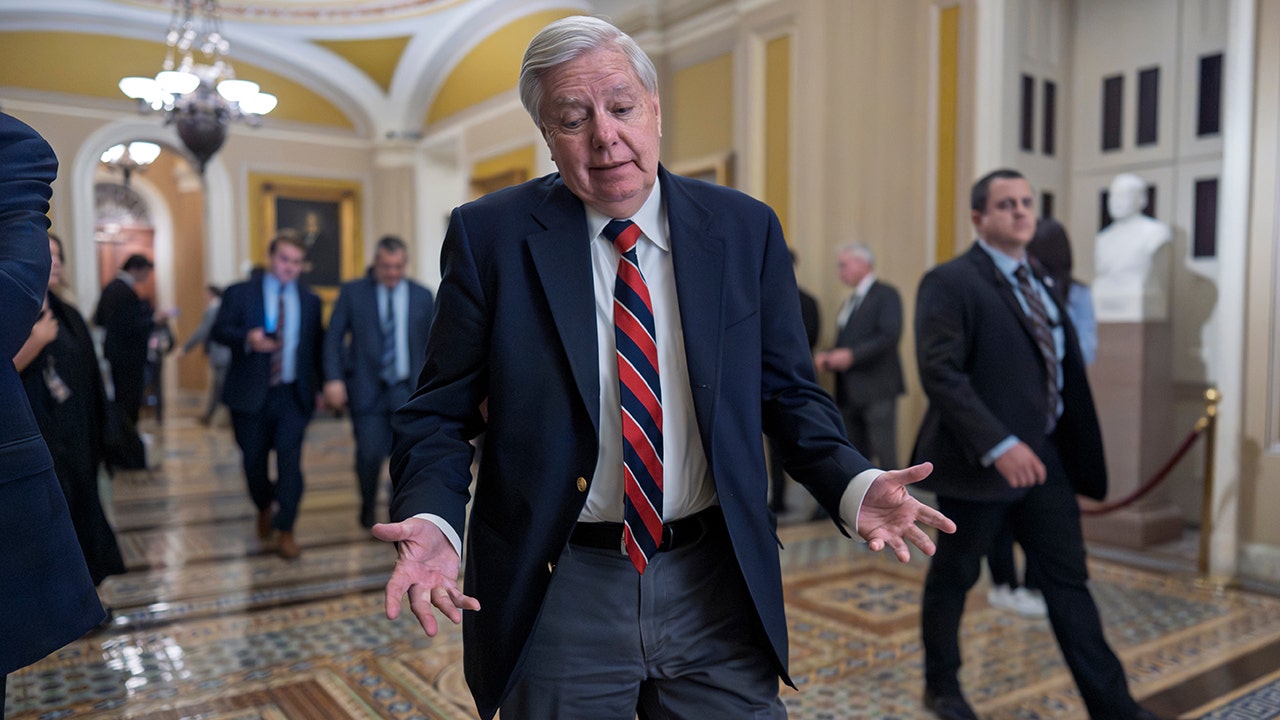
Today, some lawmakers seek to scale back Section 230. "Section 230 is absolute liability protection, immunity for the largest social media companies in the world. It's driving people to suicide. It is ruining our society," Sen. Lindsey Graham (R-S.C.) said. "If you buy a bad car, you can sue. Every product you buy, the company has to stand behind it. This is the only area of the law I know where the largest companies in the world have absolute legal immunity."
Graham called online content and social media use "as dangerous as drinking." Sen. Richard Blumenthal (D-Conn.) agreed. "It’s putting profits over people," he said. "(Social media) should not have this absolute shield when it is destroying the lives of young people by driving toxic content at them through its algorithms."
Bipartisan frustration grows over user posts that escape consequences, a problem Congress helped create. "As long as these companies believe they're immune from liability, they're going to tell all of us to go to hell," Graham said. Sen. Josh Hawley (R-Mo.) wants to let victims sue over child abuse material. "What we ought to do is start by allowing victims of child porn and other child abuse material and sexual abuse material to sue these companies,"
Lawmakers in 1996 bet that free speech and markets would build a strong online space. "Government is going to get out of the way and let parents and individuals control it rather than government doing that job for us," Cox said in 1995. Now some see digital harms and phone addiction. "You talk to people and they're scared to death of social media. They're scared to death of AI," Sen. Rick Scott (R-Fla.) said.
Rep. Ro Khanna (D-Calif.) said free speech protections apply to people, not algorithms that curate content. "If you just have an algorithm spewing all this information... The First Amendment doesn't protect an algorithm."
Wyden, who warned in 1996 that "censorship could really spoil much of (the internet’s) promise," still defends Section 230 in 2026. He credits it for Wikipedia and Bluesky. "To get rid of (Section) 230, you're going to have to roll over me," he said this year.
What's Your Reaction?
 Like
0
Like
0
 Dislike
0
Dislike
0
 Love
0
Love
0
 Funny
0
Funny
0
 Wow
0
Wow
0
 Sad
0
Sad
0
 Angry
0
Angry
0






Comments (0)