

Putin and Trump trapped in unwinnable wars by their own delusions

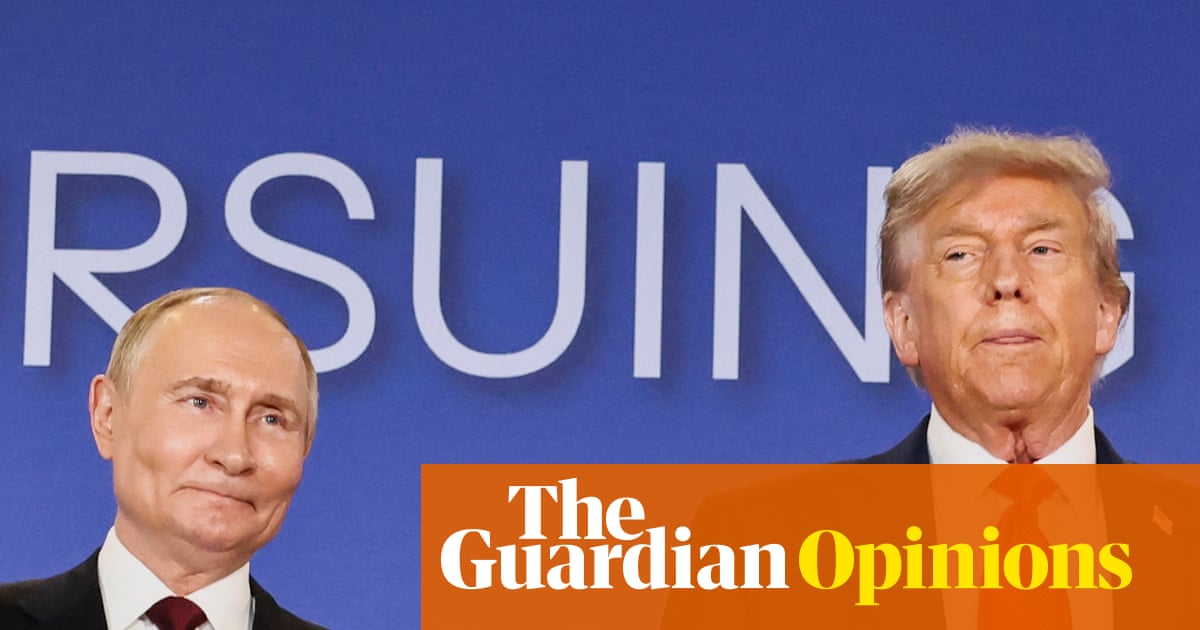
A strongman president who casts himself as the redeemer of national glory is trapped in a conflict he cannot win but does not know how to end without appearing defeated. A cult of infallibility stops the leader from admitting a strategic blunder even to himself. The description fits both Donald Trump and Vladimir Putin, though the conflicts and regimes differ in important ways.
Russia’s campaign to eliminate a neighbouring democracy is harsher in design and bloodier in practice than the failed US attempt to remove a dictatorship in Tehran. It has also lasted far longer. The First World War ended sooner than Russia’s “special military operation,” which was meant to take Kyiv in weeks. The Soviet Red Army drove back the Nazi invasion and reached Berlin faster than Putin’s forces have secured a slice of eastern Ukraine, where they are making no major gains. The war has consumed trillions of roubles and hundreds of thousands of lives with no clear gain in national standing.
The scale of failure is too large for Kremlin propaganda to conceal. Civilians far from the front line see smoke from oil refineries hit by Ukrainian drones. They feel the effect of inflation on their wages. They saw that last month’s Victory Day parade was unusually small because the usual display of tanks and missiles was cancelled over fears of Ukrainian drones above Red Square.
State-run opinion polls show a dip in support for Putin, though from very high levels to still high ones. Because the polling agencies are controlled by the state, the shift is best read as a sign of internal competition for influence. Civilian officials may have used the data to signal presidential weakness to hardliners in the security services. The numbers later returned to their usual levels after a pause for “methodological” changes.
Any Russian effort to end the war runs into Putin’s view of the conflict as an existential fight to restore national honour against a treacherous West. He presents himself as the embodiment of Russia’s historic destiny and its claim to supremacy over neighbouring lands. Such a leader does not easily accept negotiating with Volodymyr Zelenskyy as the equal head of an independent state.
Trump’s outlook is shaped more by personal vanity than by historical myth, but the result is similar. He shares Putin’s belief that major powers can override the sovereignty of smaller neighbours. He accepted the claim that Ukraine’s cause was lost and that Putin held all the cards, because it suited his sense of his own stature to dismiss Zelenskyy’s position.
Had Trump examined Ukraine’s defence, he would have seen how drones have allowed a smaller force to blunt a larger attack. He might have considered the same imbalance when weighing whether Iran could be forced to surrender by bombing alone. Advisers in the State Department and CIA who studied an all-out campaign against Iran under earlier administrations concluded that regime change could not be achieved from the air and that Iran could close the Strait of Hormuz, causing severe economic damage.
Trump sees no separation between his personal power and that of the United States. He treats every contest as zero-sum. Accepting Iranian advantages would mean acknowledging limits to his own strength, which he will not do.
Like Putin, Trump is isolated by advisers who will not challenge his view of events. For the Russian leader, any satisfaction from seeing the United States struggle in the Middle East is limited. Higher oil prices have been offset by the cost of Ukrainian strikes on Russian energy facilities.
A US administration occupied with talks in Tehran has little time for Ukraine. That weakens Putin’s hope that the White House can pressure Zelenskyy into giving up territory Russian troops have not captured. It also opens room for European allies to take a larger role. They see a more immediate need to counter Russian aggression than Washington does.
That task has grown easier since Viktor Orbán lost Hungary’s election earlier this year. With Orbán gone, European aid to Kyiv moved forward. EU foreign ministers have discussed who might lead talks with Moscow. This week Keir Starmer hosted Zelenskyy, Germany’s Friedrich Merz and France’s Emmanuel Macron for a summit in London.
These steps do not close the gap between the weapons Ukraine needs and what Europe is prepared to supply. It remains unclear what a coalition of willing European states would actually do to maintain peace without US involvement. Putin’s expectation that the West would tire first has not been met.
Putin and Trump, and the nationalist movements around them, share a view of Europe as a fading civilisation weakened by immigration and liberal values. Similar arguments are made by nationalists and conservatives across Europe, helped by online influence operations from Russia and the United States.
The claim underestimates liberal democracy’s strength: its ability to absorb disagreement through open institutions. An authoritarian leader who equates his will with the nation’s treats dissent as a threat to his power. He builds a system that rewards loyalty over accuracy until reality is excluded from his circle.
In the United States, elections, courts, a free press and constitutional checks can still correct that process. Russia has no such safeguards. European democracies must therefore show that their system is stronger in practice as well as in principle, and they do so by treating Ukraine’s defence as their own.
What's Your Reaction?
 Like
0
Like
0
 Dislike
0
Dislike
0
 Love
0
Love
0
 Funny
0
Funny
0
 Wow
0
Wow
0
 Sad
0
Sad
0
 Angry
0
Angry
0

Comments (0)