

England, Wales and Scotland to offer meningitis B vaccine to a million young people

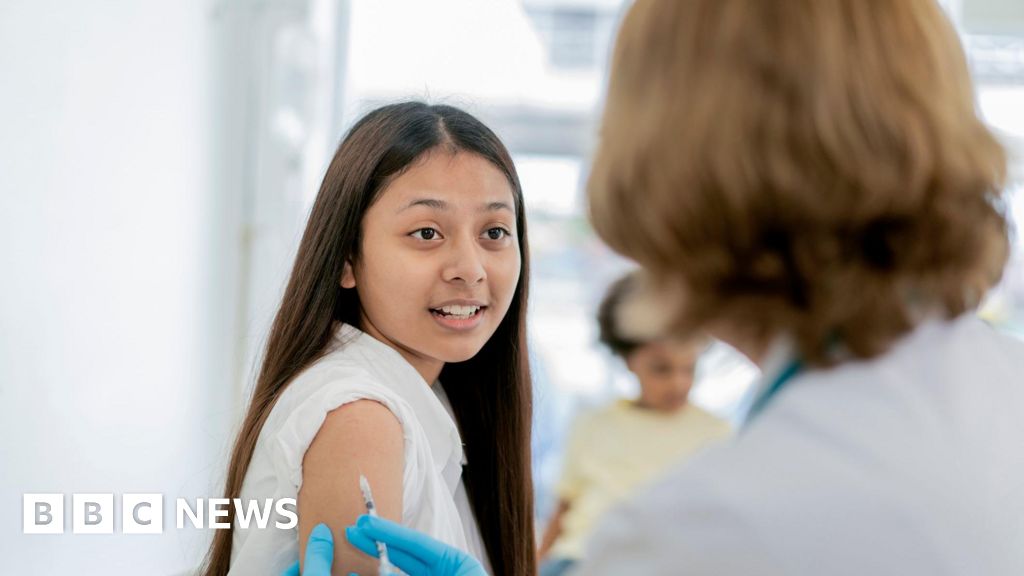
A million young people in England, Wales and Scotland will be offered a vaccine to help protect against meningitis B.
The one-off programme has been launched after concerns over the UK's largest and fastest growing meningitis B outbreak to date in Kent this year and two further unusual clusters in Weymouth in Dorset and Reading in Berkshire.
The two-dose vaccine will be available to pupils currently in their last year of secondary school and those aged 18 to 25 heading to university or residential further education for the first time this autumn.
Officials say the programme will help protect those at highest immediate risk. Meningococcal disease can lead to life-threatening illness.
Aaron Mills from Kidderminster in Worcestershire was 18 years old when he died from meningitis in January 2026. He had recently started as a student at John Moores University in Liverpool and was home for the Christmas holidays. He had mild flu-like symptoms and on 30 December he went back to bed with a headache. Thirty minutes later his family heard screaming from his room.
"His eyes were open but he was fitting and unresponsive, he didn't know we were there," his mother told the BBC. Aaron's father said: "When the hospital told us it was meningitis I was confused, because I thought Aaron had been vaccinated, and we checked and he was. But we didn't know until afterwards that there are different strains of meningitis."
Currently a separate vaccine covering different strains, the MenACWY vaccine, is offered routinely to teenagers aged 14.
"The impact this has had on the family and friends is horrific. The pain is unbearable."
Meningitis B bacteria spread through close contact, for example through kissing, sharing vapes and drinks or living in close quarters with a person with the bug. UK health officials say the risk to 18-year-olds or those entering university for the first time is higher than to many of their peers because of increased mixing of social groups and shared accommodation.
While each nation has slightly different plans, the one-off MenB vaccination programme will broadly be available to most pupils completing year 13 or S6 in the summer of 2026, irrespective of their education plans, and to young people aged 18-25 starting university or moving into residential further education settings for the first time in autumn 2026. Two doses are required for maximum protection, given at least 28 days apart.
In England these will be offered in July and August through community pharmacies and there will be no need to go to the same pharmacy for both jabs. Year 13s will be contacted directly through the NHS app, text, email, or letter depending on health records. Meanwhile under-25s who are starting university for the first time will be able to book appointments directly with pharmacies. International students under 25 entering their first year of university should receive their first dose before arriving for their studies, where possible, according to the UK Health Security Agency.
In Wales the vaccine programme will run from July to December. Those aged 17-18 will receive a letter from health boards from early July. Those aged 18 to 25 who are entering higher education will need to contact their health board later in July. In Scotland the programme will also start in July. Northern Ireland is set to run a similar programme in due course, UK health officials say.
Secretary of State for Health and Social Care in England, James Murray, said: "The Kent outbreak and recent clusters indicate a possible change to the way MenB affects people. While we assess the latest evidence, we are acting now to help protect young people at highest immediate risk as they enter university and residential colleges this autumn. By offering two doses of the jabs ahead of the academic year, we will help reduce the risk of serious illness and larger outbreaks of this horrendous disease."
The decision for the one-off programme follows three rather unusual clusters of MenB disease and concerns that we might be going through a period where we might start seeing more meningococcal disease activity in the coming years, according to Prof Shamez Ladhani of the UKHSA.
In March this year there were 21 cases of meningitis B confirmed in an outbreak in Kent, with two deaths. This outbreak was seen as unprecedented because of the number infected in such a short space of time. There was also a cluster of three cases of meningitis B amongst young people in Weymouth in April this year. In Reading one person died with the illness and a further three cases were confirmed in students.
Prof Ladhani said: "So far the number of cases this year is no different to the case numbers that we've seen in the last few years, but given that we are seeing these cases in young adults, action is being taken to protect those who are at highest risk immediately." While investigations were ongoing, he said one of the most likely explanations for the unusual outbreak in Kent was linked to the natural pattern of meningitis B, which cycles through years of low activity followed by higher activity. We've had a honeymoon period of 25 years of low activity, he said, which means there hasn't been as much exposure to the bacteria, leaving populations potentially more susceptible now.
Dr Tom Nutt, of charity Meningitis Now, said: "Today's announcement will be welcomed by all those who have fought for better protection for precious young lives. It represents real progress and has significant potential to prevent cases of meningitis. There is still more work to do to ensure everyone at risk is protected, including those already at university and younger teenagers. We will also continue to campaign for the MenB vaccination to become part of the UK's routine immunisation programme." He added that while vaccination was the best defence against meningitis, people should continue to be aware of the signs and symptoms of meningitis and seek urgent medical help if they are concerned.
What's Your Reaction?
 Like
0
Like
0
 Dislike
0
Dislike
0
 Love
0
Love
0
 Funny
0
Funny
0
 Wow
0
Wow
0
 Sad
0
Sad
0
 Angry
0
Angry
0







Comments (0)