

Pentagon's 2026 Strategy Prioritizes US Homeland, China Over Europe

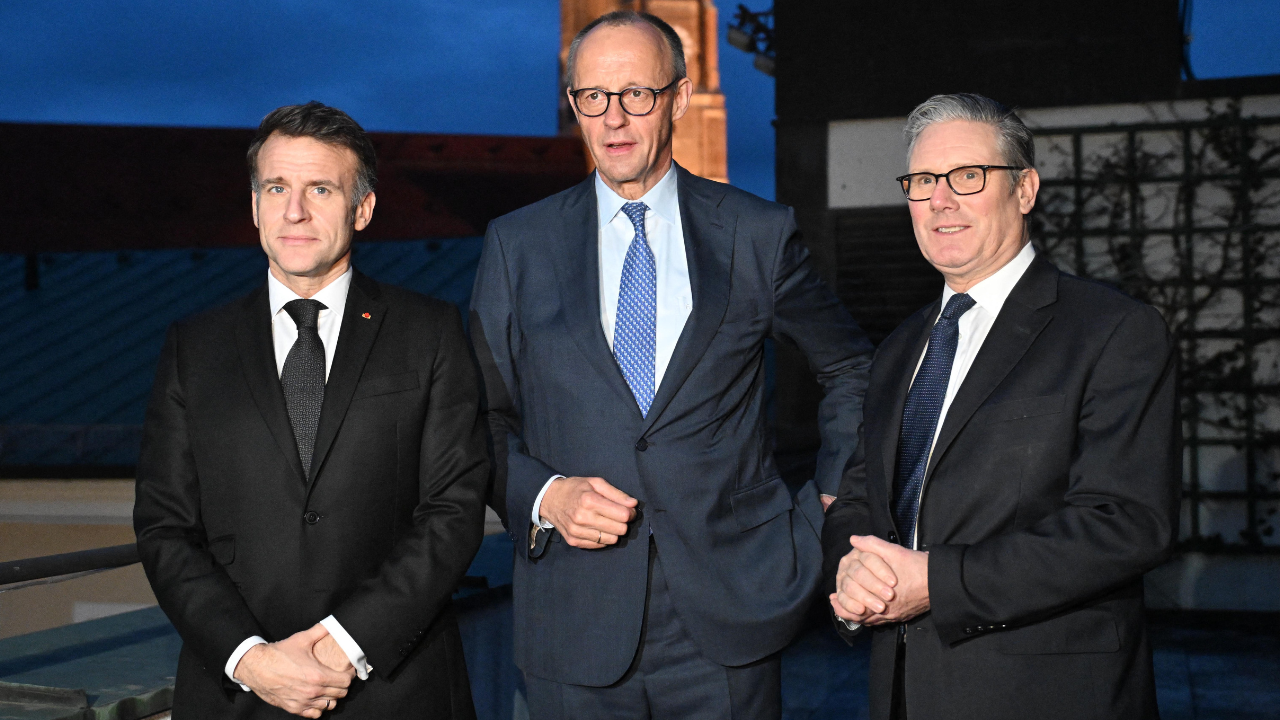
The most important line in the transatlantic debate comes from the Pentagon, not Brussels, Ottawa, Paris or Berlin.
The 2026 National Defense Strategy states that America is changing its bargain with allies. The United States will stay engaged abroad but will no longer treat every theater as its first responsibility. The new hierarchy calls for defending the homeland, deterring China in the Indo-Pacific, increasing allied burden-sharing and rebuilding the defense industrial base.
That shift drives Europe's sudden defense awakening.
European leaders blame an unpredictable President Donald Trump. After Trump announced plans to withdraw 5,000 U.S. troops from Germany, lawmakers feared a more unpredictable and transactional approach to alliances amid Iran war tensions.
Trump signaled this change in his first term and with renewed force since returning to office in 2025. The administration has now made it doctrine. The strategy lists four priorities: defending the American homeland, deterring China in the Indo-Pacific, increasing allied burden-sharing and rebuilding the U.S. defense industrial base. It describes Russia as a serious but manageable threat. European allies must assume primary responsibility for conventional defense with critical but more limited U.S. support.
The strategy aims to strengthen incentives for allies to take primary responsibility for their defense in Europe, the Middle East and Korea, with critical but limited U.S. support. Washington will prioritize cooperation with model allies that spend what they need and act against regional threats.
This is prioritization, not unpredictability. The Iran war accelerates it. The Strait of Hormuz crisis provided the first live demonstration. Iran responded to U.S.-Israeli attacks with drones, missiles and mines that closed the channel for tankers carrying about a fifth of global oil and liquefied natural gas.
EU foreign ministers discussed expanding the Aspides naval mission toward Hormuz. Kaja Kallas said there was a clear wish to strengthen Aspides due to insufficient naval assets but no appetite to change the mandate.
Europe needs security but lacks organization and willingness to provide it at scale. Autonomy requires ships, mandates, stockpiles, command structures and political will to accept risk.
Kallas's language shows the shift. In 2025, leaders saw strategic autonomy as an aspiration. By January 2026, after Washington clarified priorities, she said Europe was no longer Washington's primary center of gravity. The shift was structural, not temporary. NATO needed to become more European to stay strong.
NATO Secretary General Mark Rutte told lawmakers that if anyone thinks Europe can defend itself without the United States, they should keep on dreaming.
In February, Pentagon policy chief Elbridge Colby told NATO defense ministers that NATO 3.0 requires allies to step up and assume primary responsibility for Europe's conventional defense. Europe should field most forces needed to deter or defeat aggression there. Rutte called the meeting pivotal with a real shift in mindset toward stronger European defense in NATO.
EU defense commissioner Andrius Kubilius told lawmakers Europe depends on U.S. strategic enablers like space intelligence and air-to-air refueling. Europe must replace them with its own as a priority and strengthen its NATO posture.
For decades, Europe relied on U.S. nuclear deterrence, intelligence, logistics and high-end capabilities while underinvesting in defense.
The new U.S. strategy ends the subsidy model. Europe is now acting on it across military and industrial spheres.
What's Your Reaction?
 Like
0
Like
0
 Dislike
0
Dislike
0
 Love
0
Love
0
 Funny
0
Funny
0
 Wow
0
Wow
0
 Sad
0
Sad
0
 Angry
0
Angry
0








Comments (0)