

Oprah Winfrey Selects Douglas Stuart's 'John of John' as Latest Book Club Pick

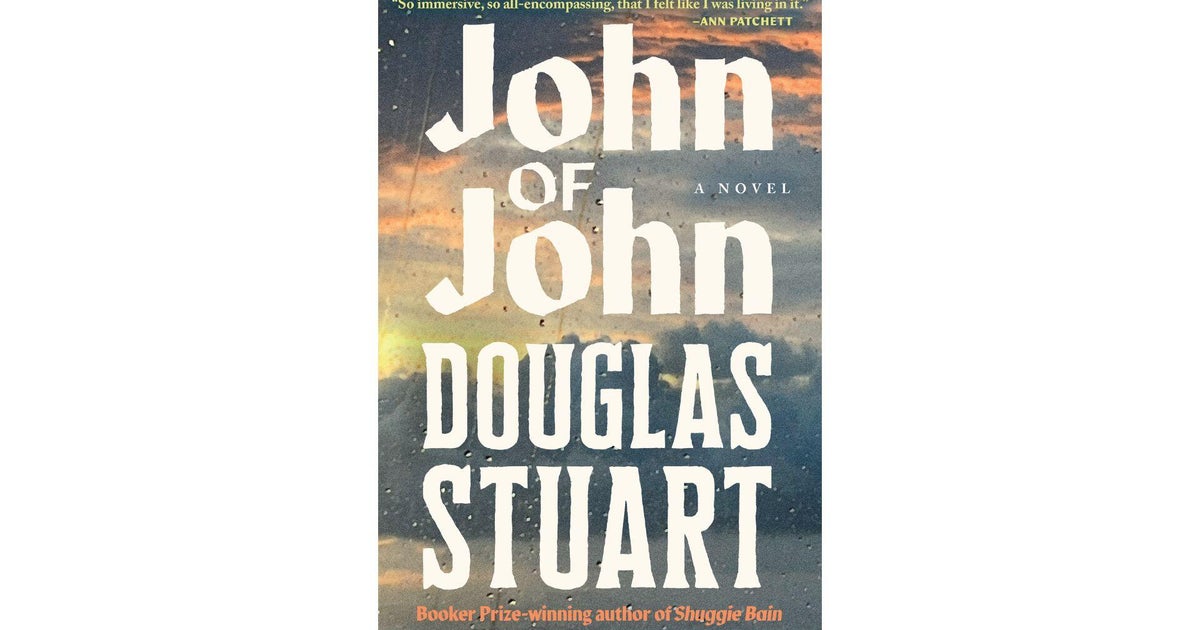
Oprah Winfrey named Douglas Stuart's "John of John" as her latest book club pick. A reader's guide by Paula Cooper provides questions to shape discussions of the novel.
The story opens in a solitary red phone box in Edinburgh. Cal McLeod gets a summons home to Harris after four years in art school from his strict Calvinist father, John. Cal's life in Edinburgh after graduation seems bleak. Returning to his sternly pious father after tasting modernity and freedom holds even less appeal. Readers may question Cal's choice to go back to Harris. Would they stay in Edinburgh in a similar spot?
The Isle of Harris offers a hypnotic yet severe setting of hard stone, dark skies, scabbed hillsides, and black tar roads. These elements shape the mood of nearly every scene. John and Cal, traditional Scottish home weavers, see the world in vivid colors despite their cold relationship. Their shared sensitivity to color stands out against their difficulties.
Doll rates himself harshly. He tells of island girls who see him as "a life sentence." As the only Macdonald son, he gets his mother's favor but faces a lifetime tied to the croft and boat. Bound to land he will never own, he faces dying poor in an emptying village. Readers might compare this to current family or work traps in the United States, thirty years later.
Gaelic and English mark relationships in the book, signaling intimacy, distance, respect, exclusion, or ownership. Gaelic's beauty and rhythm soften scripture's cruelty. Shifts between languages or mixes of them affect readers. Some express surprise at which characters grasp Gaelic.
Back at the family croft in Falabay, Cal confronts unresolved childhood conflicts, including his father's closeted homosexuality. Readers learn the secret early. Cal discovers late that John has shared a relationship with neighbor Innes since before Cal's birth. Cal's blind spot draws notice through the story.
Cal's time in Edinburgh for college might suggest sexual freedom. His strict Calvinist roots and the AIDS crisis of his era complicate that. He briefly thinks of coming out to his father on the drive home. John lacks words for his lifelong love of another man, much less acceptance. Father and son handle sexuality in contrasting ways. Readers may recall similar generational gaps.
Cal's college debt overwhelms John. Piles of past-due bills and credit card statements land on the kitchen table. John suggests, "I was thinking we could take on more sheep." The line captures croft survival's thin edge and the clash between island subsistence and 1990s mainland Scotland's spending boom.
Water dominates "John of John." Cal never learns to swim in the sea. Islanders endure constant rain without falling ill. Water defines characters, like John as "a tireless tide" or Innes with "the quiet determination of water—he could flow around a thing, coming at it gently, insistently, until he got his way." Its role in mood and plot leaves a mark. Water's power over people stirs deep feelings.
During Cal and John's Sabbath clash over Cal's hair, Reverend Rose preaches on wickedness and fear. He knows the congregation self-polices through shame and neighborly payback. John may grip scripture for its broad, blind judgment over community scrutiny. Readers weigh which control works stronger.
Women face harsher judgment than men in failed marriages with kids. The novel treats Grace's exit with care, overshadowed by John's flaws and self-torment. Her finding John's secret may justify leaving. Views shift on learning how she left with young Cal.
The Macleods' bellwether ram, flock leader and omen-bearer, gets a fatal liver fluke infection. John puts it down. Lambing season, meant for renewal, brings lamb losses under harsh conditions. These dark signs shape the novel's feel and hint at coming events.
In the croft kitchen, Ella turns a worn sheet into a ghost costume. Cal refashions it into a Greek goddess robe, fitting it perfectly. The moment reveals Cal and Ella's bond.
John confuses his gay identity with acts like theft. He loves Innes deeply, sees his goodness, yet damns himself. He accepts Innes's homosexuality but not his own. Readers ponder why, and if another place or time might let him live differently.
John's affair with Anndra in Tolsta surprises some. It shows sides of John unseen before.
Doll's drinking, sexuality, and death stay open-ended. Unlucky with Falabay girls, his booze ties to shame over sex with Cal, Isla hints. Cal never pins if Doll loved him or not. Was Doll's drowning an accident?
Amid the book's dark ties, Cal and Isla's reunion brings easy friendship. Cal judges her harshly for pregnancy from a stranger after three encounters, despite earlier urging her to "get shagged rotten" safely. His views reflect community standards.
In the close, Cal shows clarity and generosity. All face hard truths about loved ones' pains. How forgiving would readers be in Cal's shoes? Does knowing John's reasons balance the hurt?
What's Your Reaction?
 Like
0
Like
0
 Dislike
0
Dislike
0
 Love
0
Love
0
 Funny
0
Funny
0
 Wow
0
Wow
0
 Sad
0
Sad
0
 Angry
0
Angry
0










Comments (0)