

Ivanpah Solar Plant Kills Thousands of Birds Yearly Without Fines or Enforcement

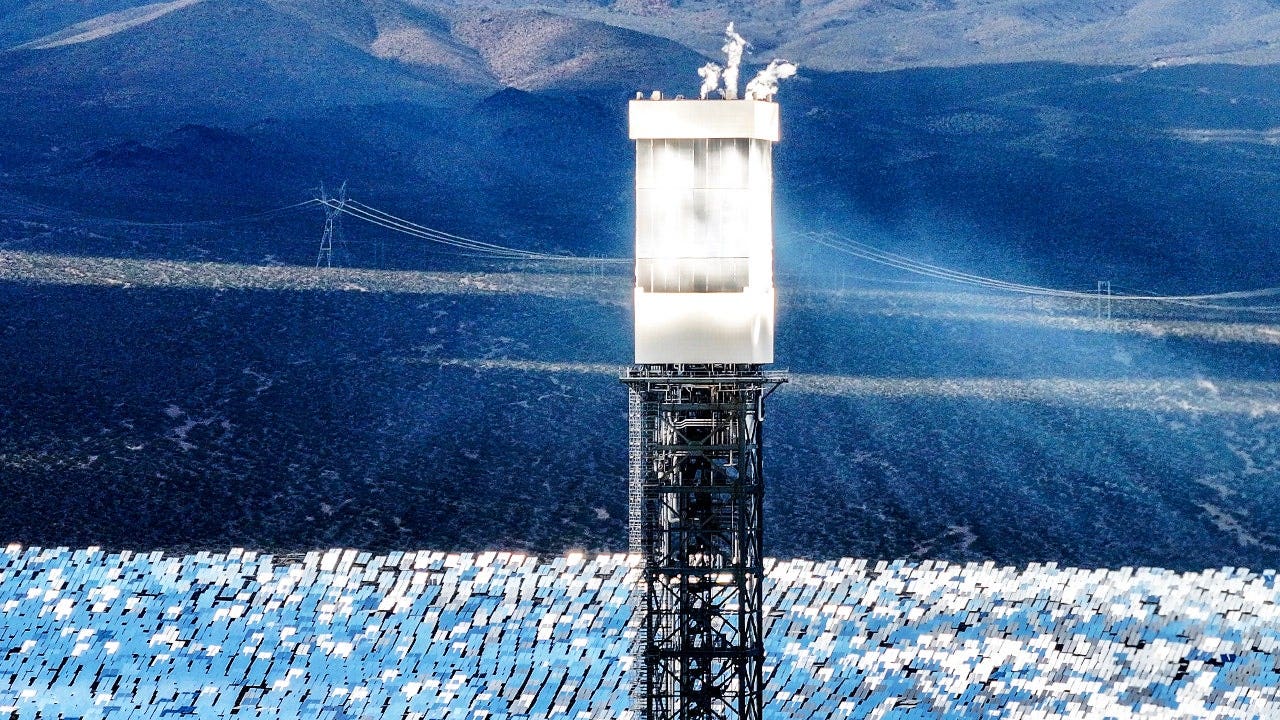
Regulators allow an Obama-era solar plant to keep running even though its reflected beams kill thousands of birds each year. No fines or enforcement actions have occurred since it opened, according to a Fox News Digital investigation.
The Ivanpah Solar Power Plant sits in the Mojave Desert near the California-Nevada border. Taxpayer money helped build the sprawling facility. Birds suffer burns, injuries or death when they fly through beams that concentrate sunlight on the plant's three central towers. The plant stays in compliance with regulations, so the documented wildlife deaths remain within permitted limits.
Regulators knew of these risks before approving the project amid a push for renewable energy. "Staff is not aware of any formal enforcement actions or fines issued by either the U.S. Fish and Wildlife Service or the California Department of Fish and Wildlife related to avian or wildlife mortality at the Ivanpah Solar Electric Generating System," the California Energy Commission told Fox News Digital. The commission oversees large energy projects in the state. It knows of no special exemptions for renewable projects on wildlife impacts. Approval came with requirements for monitoring and mitigation, anticipating some mortality.
The facility features three large towers that glow when operating. It gained approval during the Obama administration's drive to expand renewables after the 2008 financial crisis, aiming to cut emissions and fossil fuel use. The federal government gave a $539 million grant and a $1.6 billion loan.
Its technology soon lagged behind standard solar panels that absorb sunlight directly. Ivanpah produces more expensive power and uses natural gas for daily startups, emitting tens of thousands of metric tons of carbon dioxide each year.
Researchers note birds head to the bright towers and enter the solar flux, where they burn. The effect, called "streamers," appears in a U.S. Geological Survey video of a smoking bird. Dead songbirds, doves, warblers and other migrants turn up at the site.
Environmental reviews before construction flagged bird deaths from burns or collisions with the mirrors surrounding the towers. Concerns covered the 4,000-acre desert habitat and species like the endangered desert tortoise, dozens of which went missing early on. The Final Environmental Impact Statement noted climate efforts could reduce native biodiversity.
Regulators approved it anyway, relying on monitoring and mitigation instead of eliminating risks. A 2016 congressional review found no penalties for bird deaths, a pattern that persists.
The plant operates under a system that tracks deaths but skips automatic fines or shutdowns. Reports show hundreds of dead birds yearly, with estimates reaching thousands. Agencies share enforcement duties: U.S. Fish and Wildlife Service, California Department of Fish and Wildlife, and Bureau of Land Management.
The U.S. Fish and Wildlife Service reviews data and offers input but signals no enforcement on bird deaths. NRG Energy, the operator, has pledged renewable power but offered no further comment on environmental matters.
Permitting stresses monitoring over penalties, so documented harm does not prompt action. Federal law allows $15,000 fines per protected migratory bird, but prosecutions focus on intentional acts. A 2017 Interior Department shift limited penalties to deliberate killings, not incidental ones from industry. Courts backed this.
Efforts like deterrents and adjustments have not stopped deaths. Monitoring continues to record them. More than a decade on, Ivanpah runs as approved clean energy while killing wildlife and using fossil fuels, free of penalties.
What's Your Reaction?
 Like
0
Like
0
 Dislike
0
Dislike
0
 Love
0
Love
0
 Funny
0
Funny
0
 Wow
0
Wow
0
 Sad
0
Sad
0
 Angry
0
Angry
0






Comments (0)