

Netanyahu Says War with Iran Not Over, Pushes for Removal of Enriched Uranium

Suspected Iranian drone strikes tested the U.S.-Iran ceasefire in the Persian Gulf on Thursday, marking another flare-up in a war now in its 11th week that has spread from the Gulf to Lebanon. The hostilities complicate White House efforts to secure a deal reopening the Strait of Hormuz and steadying energy prices.
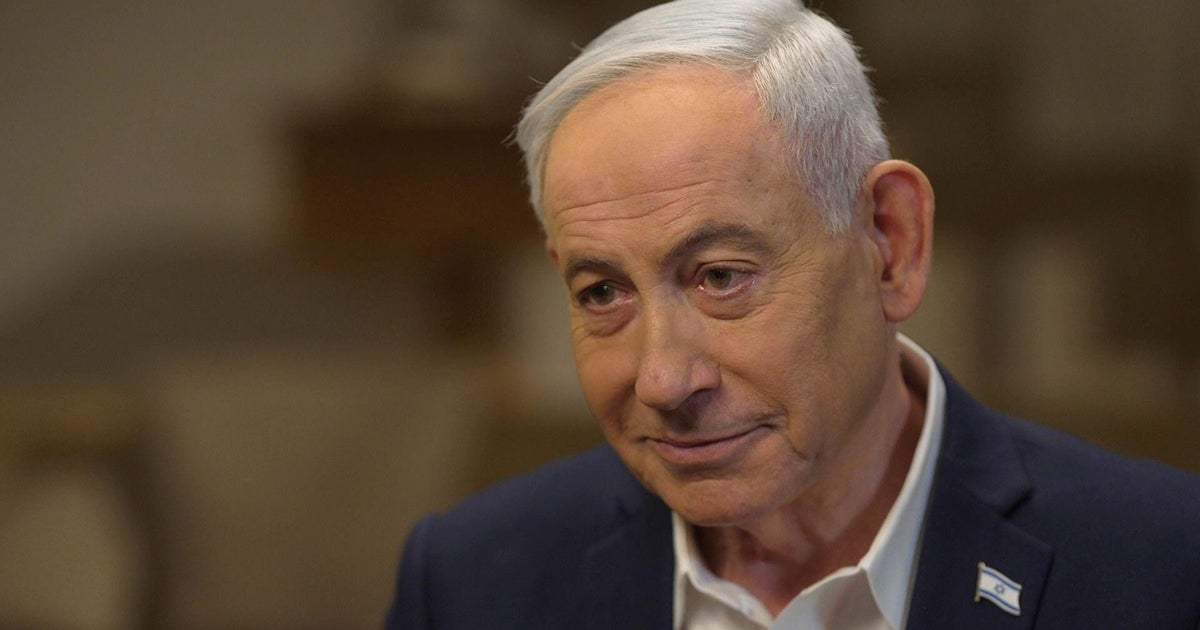
CBS News chief Washington correspondent Major Garrett interviewed Israeli Prime Minister Benjamin Netanyahu on Wednesday, his first U.S. broadcast appearance since the war started. Netanyahu chose his words carefully but offered clues on the conflict's direction.
Garrett asked if the war with Iran was over and who would decide. Netanyahu replied, "I think it accomplished a great deal, but it's not over, because there's still nuclear material, enriched uranium that has to be taken out of Iran. There are still enrichment sites that have to be dismantled. There are still proxies that Iran supports. There are ballistic missiles that they still want to produce. Now, we've degraded a lot of it. But all that is still there, and there's work to be done."
Garrett pressed on removing highly enriched uranium. Netanyahu said, "You go in, and you take it out." When asked if special forces from Israel or the United States would do it, Netanyahu avoided military details but noted President Trump had told him, "I want to go in there." He added, "I think it can be done physically. That's not the problem. If you have an agreement, and you go in, and you take it out, why not? That's the best way."
On taking it by force without an agreement, Netanyahu dodged, saying he would not discuss military plans. He called finishing the task a "terrifically important mission" but gave no timetable.
Hours before the interview, Israel struck Iranian-backed Hezbollah targets in Lebanon, the war's second front and more Israel's fight than America's. Garrett asked if the Iran war could end while the Hezbollah one continued as separate battlefields.
Netanyahu said they should be separate. Iran wants a linked ceasefire to let Hezbollah keep tormenting Lebanon and holding its people hostage, he said. He rejected accepting that, even if Trump asked, because Hezbollah rockets Israeli cities and communities. Trump understands, Netanyahu added.
The fighting could continue even after resolving Iran, Netanyahu said, but he hopes a weakened or toppled Iranian regime would end Hezbollah, Hamas and the Houthis by collapsing Iran's terrorist proxy network.
Garrett asked if toppling the regime was possible. "You can't predict when that happens," Netanyahu replied. "Is it possible? Yes. Is it guaranteed? No."
A New York Times report said Netanyahu told Trump on February 11 in the Situation Room that Iran was ripe for regime change and a joint mission could end the Islamic Republic. Netanyahu called that incorrect, denying he claimed it was guaranteed. Both men agreed on the uncertainty and risk, he said, with danger in action but greater danger in inaction.
The Times also reported Netanyahu's team outlined conditions for certain victory, saying a weakened regime could not choke the Strait of Hormuz. Netanyahu said they could not quantify it exactly but the Hormuz issue became clear as fighting progressed. Iran now grasps the risk, he added.
Iran's retaliation against Gulf states caused unexpected damage. Netanyahu said Arab states now want stronger ties with Israel, including alliances undreamed of before, in energy, AI and quantum fields to deter Iran.
Garrett noted Gulf monarchies' concerns over Israeli dominance. Netanyahu said he hears the opposite from some Arab countries.
A Trump-Xi Jinping summit looms this week. China, the top crude oil importer via Hormuz, gave Iran missile components, Netanyahu confirmed. "I didn't like it," he said.
U.S. military aid to Israel stands at $3.8 billion yearly amid shifting attitudes. Netanyahu wants to phase it to zero over the next decade, starting now. He has told Trump and Israelis.
A recent Pew survey shows 60% of U.S. adults view Israel unfavorably, up nearly 20 points in four years, linked to the Gaza war where over 70,000 have died per the Hamas-run Gaza Health Ministry.
Netanyahu blames social media, the war's "eighth front." He held up a phone, saying manipulators can paint anyone as a monster. Israel warns civilians via millions of texts, calls, pamphlets and leaflets, he said. Support erosion tracks social media's rise, driven by countries cleverly manipulating it.
Garrett asked if Israel made no tactical or strategic mistakes contributing to the bad impression. "No, of course not," Netanyahu said. Armies miss in war, civilians die by mistake, not deliberately. Israel struggles on the propaganda front.
The International Criminal Court, unrecognized by Israel or the U.S., accuses Netanyahu of Gaza war crimes. He has not disarmed Hamas yet. Someone must disarm, demilitarize and deradicalize Gaza, he said. Israel will if no one else will, choosing the time.
Netanyahu prefers the easy way, citing his war experience and family losses. He rejects perceptions of a hunger for conflict, noting his pre-October 7 restraint. That day, he saw Iran's axis trying to annihilate Israel. "We're going to change the Middle East," he told citizens on day two.
What's Your Reaction?
 Like
0
Like
0
 Dislike
0
Dislike
0
 Love
0
Love
0
 Funny
0
Funny
0
 Wow
0
Wow
0
 Sad
0
Sad
0
 Angry
0
Angry
0




Comments (0)