

London's Black Cab Drivers Face Competition From AI Robotaxis

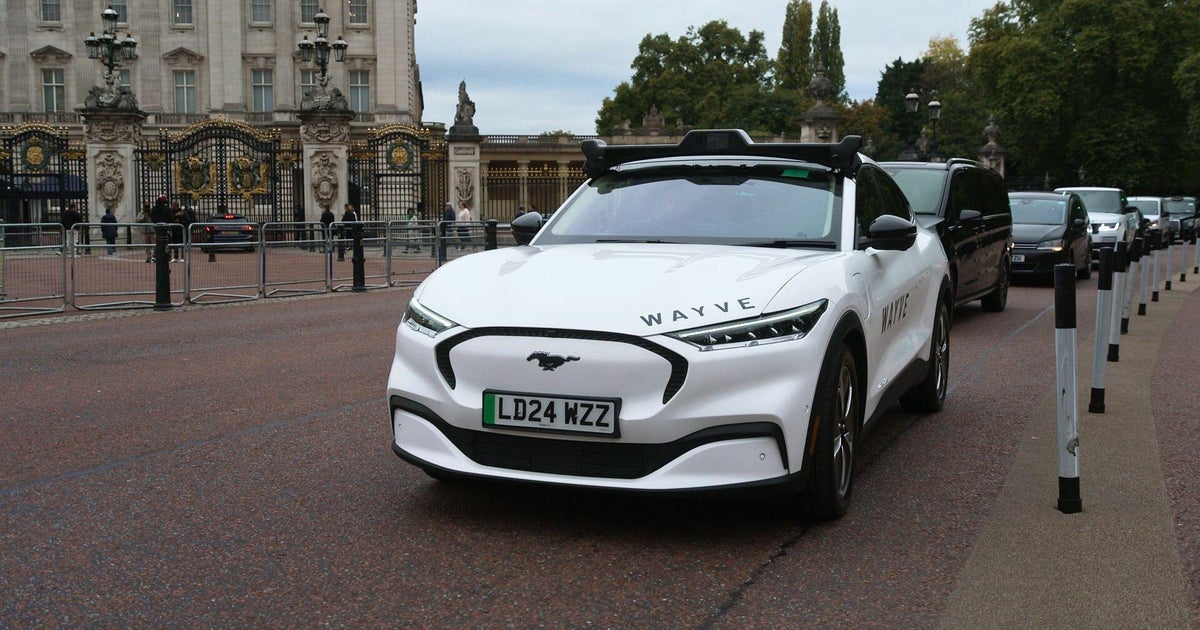
On ancient roads and in medieval alleyways in London, a very modern battle is brewing. Black cabs, which are as synonymous with that city as Buckingham Palace, will soon be competing with artificial intelligence-powered, autonomous taxis.
Tech companies promise these AI inventions, some of which are already operating in several American cities, are safer and smarter than human drivers. But London's cabbies aren't about to hand over their keys. After all, just to get a license, they've already proven their own kind of intelligence, studying, often for years, to pass a 161-year-old test called the Knowledge. There's nothing artificial about it. They just have to memorize 25,000 streets, and thousands of landmarks and businesses, and know the shortest routes between them all.
Tom Scullion has been driving one of London's famous black cabs for the past 34 years. He said the trust and confidence in cabbies here dates back to 1865 when the Knowledge exam was first introduced to London's horse-drawn cabmen.
At the Transport for London office, nervous, aspiring cabbies dress up in their Sunday best to take a series of oral exams known as appearances. Candidates are quizzed on how to get between two random points as examiners measure the distance, ensuring they're calling the shortest route.
For those who do pass the Knowledge, this memorization has proven to be so challenging it can change the structure of their brains. A study from University College London found cab drivers' posterior hippocampi, the part of the brain linked to memory, got bigger throughout their careers.
Steven Fairbrass has been trying to pass the Knowledge for eight years. Anshu Moorjani for five. They showed us the official study guide known as the Blue Book, which lists thousands of points of interest.
Now their knowledge is being tested like never before. Autonomous vehicles haven't been approved to pick up passengers in London yet, but several companies are already trying out their cars here. Wayve, a British startup backed by Nvidia and Microsoft, hopes to be operational later this year, as does Waymo, which is owned by Google's parent company, Alphabet.
Tekedra Mawakana is Waymo's co-CEO. She says putting more of its robotaxis on the roads can save lives by reducing the million traffic deaths worldwide each year. Waymo has already made significant inroads in the U.S. It first began offering rides to customers in a Phoenix suburb in 2020. Now millions of riders across 11 major U.S. cities are being driven by Waymos each month.
In San Francisco, we took a trip in one of its robotaxis with product manager Chris Ludwick. The car is outfitted with 29 cameras, six radars, five microphones, and five lidar sensors, which continuously pulse to measure distances, objects, and people as far as three football fields away.
Waymo says the data gathered from these sensors enables the AI to respond faster than a human. But Waymo's AI still makes some rookie mistakes. In Los Angeles, a Waymo drove through an active police scene. There have also been incidents of the robotaxis getting in the way of emergency responders and illegally passing stopped school buses, leading to a software recall and a federal investigation.
Back in London, Waymo's robotaxis have been driving the streets to build a detailed 3D map to train its AI, a company standard before operating in a new area. But it does have competition. Alex Kendall is Wayve's CEO. Unlike Waymo's, his artificial intelligence doesn't map out a city before driving in it.
Wayve's robotaxis are still in testing and not yet available to the public, but Kendall believes his AI will be able to more easily adapt to new environments. He took us to Westminster, a district in London that's home to some of the city's most historic landmarks, to show us where he's been training his fleet since Wayve's early days in 2019.
Aspiring cabbie Steven Fairbrass didn't seem too concerned about that. Anshu Moorjani, however, didn't seem so sure.
Over the last decade, London's black cab industry has seen a steep decline. The number of drivers has fallen from 25,000 to 16,000 today. So has their income, as Uber and other ride-hailing companies have been cutting into their business. Even so, hundreds still sign up for the Knowledge each year.
This was Steven Fairbrass' 20th attempt. He failed this round and will have to try again. For Anshu Moorjani, this was his 41st try. He passed. And just this week, after five years of trying, Moorjani finally completed the Knowledge and will now earn his license.
What's Your Reaction?
 Like
0
Like
0
 Dislike
0
Dislike
0
 Love
0
Love
0
 Funny
0
Funny
0
 Wow
0
Wow
0
 Sad
0
Sad
0
 Angry
0
Angry
0





Comments (0)