

King's Speech Outlines Starmer Government's Key Bills from Rail Investment to Police Reform

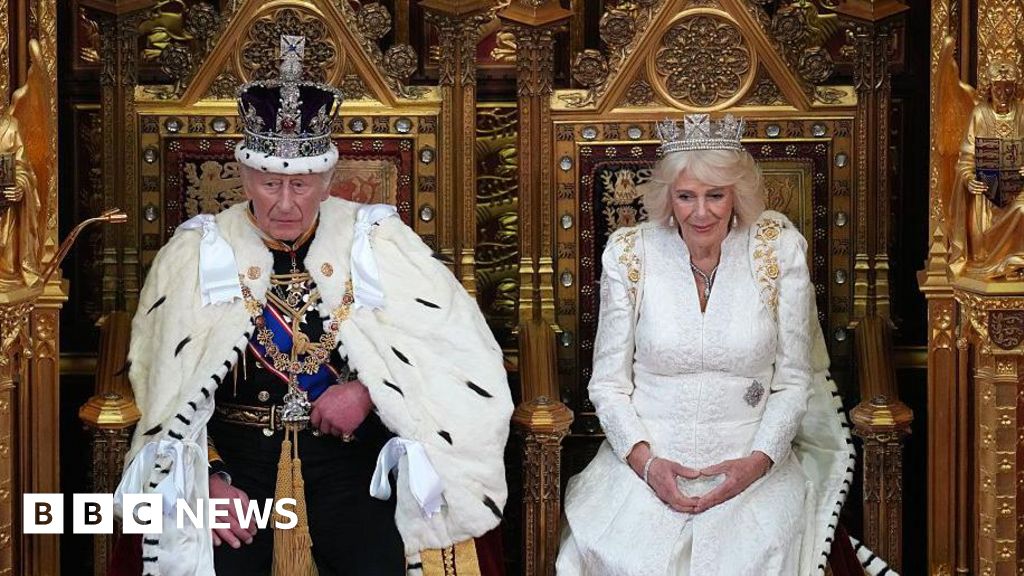
King Charles III outlined the UK government's legislative plans in a speech to Parliament on Wednesday. Prime Minister Sir Keir Starmer, facing questions about his leadership, said he would get on with governing. BBC correspondents examined major bills in the agenda for the next session.
Theo Leggett, international business correspondent, reported on the Northern Powerhouse Rail bill. It commits £45 billion to improve rail services between key northern England cities in three stages. First, routes between Leeds and Bradford, and Sheffield and York, will see electrification and upgrades. Second, a high-speed line will link Liverpool and Manchester through Warrington and Manchester Airport. Third, cross-Pennine connections will expand beyond current work.
The plan adapts the existing High Speed Rail (Crewe-Manchester) bill from 2024, after northern HS2 sections were canceled. Northern rail upgrades have been pledged for years with promises of economic gains, but little progress occurred. The current proposals are less ambitious, though Chancellor Rachel Reeves insists they will proceed.
Simon Jack, business editor, noted no shift on energy policy. The Energy Independence Bill reaffirms Labour's manifesto pledge to ban new North Sea oil and gas licenses and speed up renewables. It addresses how gas prices set electricity costs, since gas plants often balance supply and demand. The bill includes steps to loosen that link and fast-track energy infrastructure like substations, sea cables, and pylons, which could spark local opposition.
Opposition politicians, businesses, and Labour unions have pushed for more oil and gas exploration, but the speech showed no movement.
Zoe Kleinman, technology editor, covered the digital ID bill. The king described it as non-compulsory and helpful for those without passports or driving licenses. Starmer last year said it could cut costs for ID checks on mortgages, a comment that drew criticism from the verification industry. The idea dates to Tony Blair's national ID card plan in the early 2000s and persists despite public skepticism.
Simon Jack also reported on British Steel nationalization. Emergency legislation targets the Scunthorpe plant, which employs 2,700. The government assumed control in April 2024 to keep furnaces fueled after owner Jingye balked at investing alongside state aid. Talks collapsed, and Jingye's ownership blocked buyer searches.
This follows a 2019 collapse when the Insolvency Service ran the firm for nine months at £600 million cost to taxpayers. Current oversight has cost nearly £400 million. Without a buyer lined up, costs could continue.
Tarah Welsh, housing correspondent, detailed leasehold reforms. Commonhold tenure, where flat owners control their building and land, is expected in 2029. Ground rents will cap at £250 from 2028. Sebastian O'Kelly of the Leasehold Knowledge Partnership said freeholders will likely challenge the law in court. Converting existing leaseholds to commonhold is complex. Easier lease purchases and abolition of forfeiture will follow royal assent.
Simon Browning, business correspondent, highlighted the Overnight Visitor Levy for England, aligning it with Scotland and Wales. Regional mayors want it to fund local priorities and growth. European cities like New York, Amsterdam, and Rome use similar taxes on stays.
Daniel Sandford, UK correspondent, described significant police reforms as the biggest in decades. Plans create a National Police Service merging Counter Terrorism Policing, National Crime Agency, College of Policing, and organized crime units, resembling the US FBI. Fewer, larger forces would handle complex murders, sex offenses, and digital evidence. Police and Crime Commissioners, started in 2012, would end.
Zoe Kleinman noted the Cyber Security and Resilience Bill expands oversight to electric vehicle chargers, home heating suppliers, and data centers. Fines based on turnover target major threats to infrastructure and the economy. Anthropic's Mythos AI tool, which spots security flaws quickly, has heightened focus on resilience.
Hugh Pym, health editor, pointed to the NHS Modernisation Bill's single patient record for England, combining health and social care data accessible to clinicians and patients. A&E doctors often lack GP records, and NHS app information confuses users. Some GPs worry about data sharing.
Daniel Sandford covered the Tackling State Threats Bill, letting the home secretary ban state-linked groups like Iran's Islamic Revolutionary Guard Corps. It addresses foreign-sponsored crimes, including a Ukrainian warehouse arson in East London and attacks on Jewish targets in North London. MI5 reported a 35% rise in state threat investigations last year.
The National Security Bill creates a new offense for preparing mass casualty attacks without ideology, closing a loophole seen in the Southport incident where the attacker targeted children. It draws from terrorism laws.
Ian Youngs, culture reporter, said draft plans ban profitable resale of gig tickets and cap resale fees. Regulators could fine violators up to 10% of global turnover. From Labour's 2024 manifesto, it faces more consultation as a draft.
Zoe Conway, employment correspondent, observed no welfare reform bill despite Work and Pensions Secretary Pat McFadden's call for change. The government cites ongoing efforts like £3,000 payments to employers hiring long-term Universal Credit youth. Critics see weakness after abandoning a bill last year amid backbench revolt. Ministers await reviews on youth not in work or education and disability benefits. Chief Secretary James Murray told the BBC, "It's not a job done, there is work to do."
What's Your Reaction?
 Like
0
Like
0
 Dislike
0
Dislike
0
 Love
0
Love
0
 Funny
0
Funny
0
 Wow
0
Wow
0
 Sad
0
Sad
0
 Angry
0
Angry
0






Comments (0)