

Israeli Strike Kills Nine in Southern Lebanon Town Despite Ceasefire

An Israeli air strike hit a building in the southern Lebanese town of Saksakiyeh last Saturday at lunchtime without warning. The target housed a family displaced by the war. A ceasefire announced last month has not halted fighting between Israel and Hezbollah, the Shia Muslim armed group. In this region, Israeli attacks strike day and night.
Rescuers had finished searching the rubble by the time a reporter arrived. A man stood silently atop the debris. Neighbors pulled out a damaged children's bicycle and a dust-covered purple teddy bear.
Nine people died in the strike. The Israeli military said it targeted Hezbollah members operating from a building used for military purposes. Those members posed an immediate threat, the military added, without providing details. Relatives identified the victims as a woman in her 70s, one of her sons and his wife, another son, her four grandchildren and her two-year-old great-granddaughter. The Israeli military said it was reviewing reports of harm to uninvolved civilians.
Residents urged the reporter to leave as sunset approached. "That's when things get active in the sky," one said.
Southern Lebanon, heartland of the country's Shia community and a main base of Hezbollah support, faces constant Israeli bombardment. Hezbollah, the Iran-backed militia and political party, has launched rocket and drone attacks on northern Israel and Israeli troops who invaded during the war and remain in Lebanon.
The reporter visited southern towns and villages over the past two weeks. Countless buildings lie destroyed, and streets stay deserted as residents hesitate or cannot return. Some people expressed exhaustion from endless wars. Yet with Israeli attacks and occupation ongoing, many still saw Hezbollah as their sole defender.
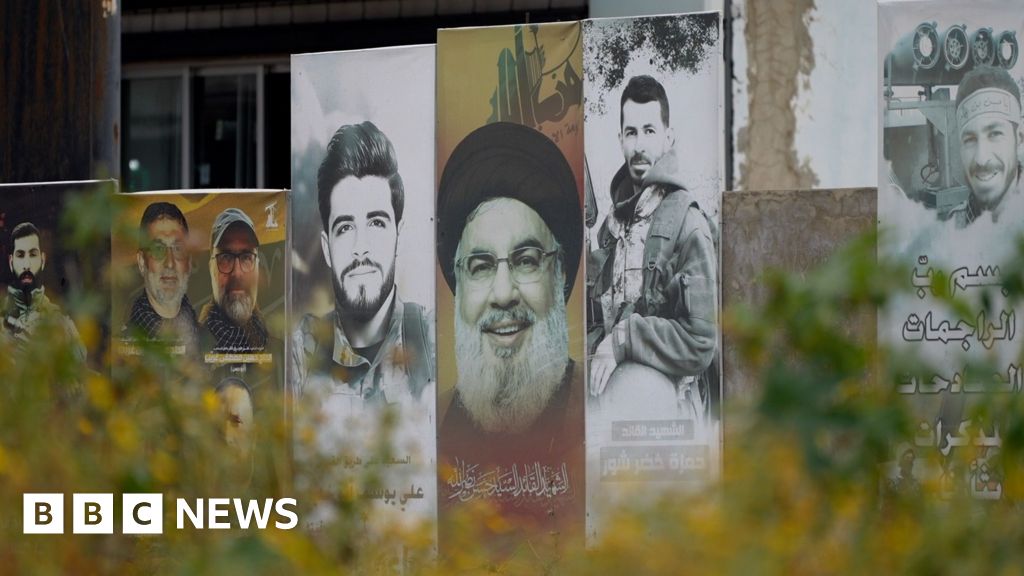
Arab Salim, a village of narrow alleys amid lush hills, features posters on walls and lampposts honoring fighters killed in battle. Its pre-war population of about 6,000 has shrunk to one-tenth. Travel required coordination with Hezbollah's media office, which did not interfere with reporting.
The drive passed wreckage from a pickup truck hit by an Israeli strike hours earlier. An Israeli drone buzzed overhead constantly, joined at times by fighter jets and distant explosions.
Life stood still. Ramadan decorations lingered on the main street, and most houses appeared abandoned. The village lay quiet but tense. Near the mosque, two cousins in their 80s, Fatmeh and Dunya, spoke outside a banner honoring the late Hezbollah leader Hassan Nasrallah, killed by Israel in 2024. "We've witnessed many wars. But we've never left," Fatmeh said. "Whatever happens we thought we'd die in our homes rather than leave."
More than one million Lebanese, or one in five of the population, remain displaced, mostly from the south, eastern Bekaa Valley and Beirut's southern Dahieh suburbs where Hezbollah holds influence. Many live in tents on streets and squares. "They're being humiliated," Dunya said. Asked about constant Israeli drones, Fatmeh replied, "I can't lie, I get a bit afraid. But then my nerves get steady. We're counting on God."
Farther along, 56-year-old Hussein Haydar stayed with his wife, son and one-year-old grandson. "When we hear bombs, we start laughing around him," Haydar said. "He thinks it's a game when he sees us laughing." A Hezbollah flag flew over the ruins of his grocery store, destroyed when a strike hit the building next door last month. Haydar suffered minor wounds. "The community supports Hezbollah because they're defending us," he said. "They're the only ones keeping us on our land."
During the meeting, the Israeli military issued evacuation warnings for three nearby villages, often signaling imminent attacks. The reporter left soon after. Strikes followed about half an hour later.
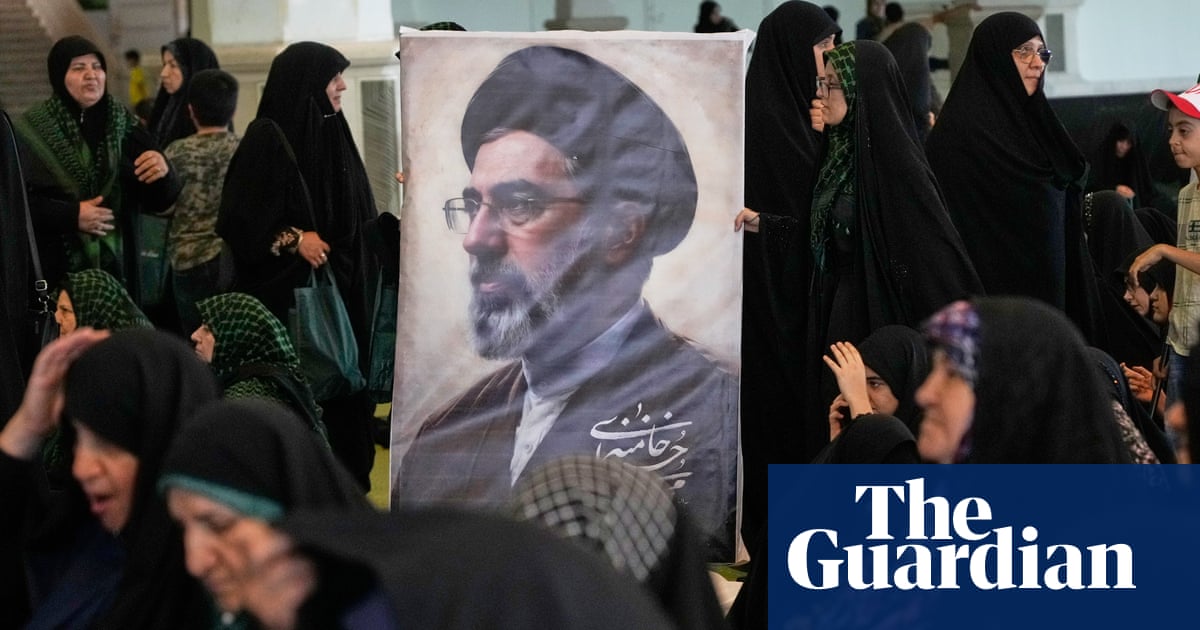
Hezbollah, or Party of God, formed in the 1980s amid Israel's occupation of Lebanon during the civil war. Iran has financed, trained and armed the group since its start. Destroying Israel counts among its official aims. The latest clashes began when Hezbollah fired rockets into Israel on March 2, after the killing of Iranian supreme leader Ayatollah Ali Khamenei amid a US-Israel war on Iran. Israel hit back with air strikes across Lebanon and another southern invasion.
US President Donald Trump announced a ceasefire between Israel and Lebanon on April 16. Hezbollah, labeled a terrorist group by the US and UK among others, signaled it would follow if Israel did. The pause ended quickly. Israel soon resumed southern strikes, blaming Hezbollah violations. Hezbollah restarted attacks on Israel and troops in Lebanon.
Lebanon's health ministry reports at least 2,800 deaths since the war began, more than 400 after the truce. The figures do not separate combatants from civilians. Israel says 18 soldiers and four civilians died.
Israel occupies about 5 percent of Lebanon, up to 10 km (six miles) from the border in places. There, as in Gaza, it has leveled villages with strikes and demolitions. The military says Hezbollah used the buildings. Human rights groups call the destruction of civilian sites potential war crimes.
Israeli authorities aim to create a Hezbollah-free security zone along the border to shield northern communities from rockets, drones and possible invasions. Last year, the military said Hezbollah planned a "Conquer the Galilee" attack like Hamas's October 7, 2023, assault on southern Israel, which sparked the Gaza war.
The reporter visited a Lebanese army checkpoint near occupied Khiam. The national army stays out of the conflict. Soldiers blocked the road with a garbage container and tires beside an abandoned gas station. One stopped the approach. Israeli troops occupied houses atop the overlooking hill and had fired toward the base, he said. They might shoot again if anyone neared. The reporter retreated.
A weakened Hezbollah faces domestic isolation. Lebanese President Joseph Aoun has pledged to disarm it. The group's arsenal long splits the country, but leader Naim Qassem refuses to yield weapons. Aoun, ex-army chief, says force risks alienating Shias and worsening sectarian divides.
Critics blame Hezbollah for pulling Lebanon into Iran's wars as part of Tehran's "Axis of Resistance." Supporters view it as vital defense against Israeli land grabs. Some even opposed striking Israel after Khamenei's death. Open criticism remains uncommon, though some supporters last year questioned long-held beliefs.
Hezbollah also functions as a political party in parliament and government, plus a social force running schools and hospitals where the state falls short. For its marginalized Shia base, it shapes daily life and identity.
In Tyre, southern Lebanon's largest city and one of the world's oldest, yellow Hezbollah flags with a rifle-holding hand lined the main road. A field near a roundabout served as a fighters' cemetery, with photos of the uniformed dead and open graves awaiting more.
In the city center by the Mediterranean, 52-year-old Rida Hijazi watched a bulldozer clear rubble from collapsed buildings. He endured Israeli occupation as a child in Tyre, plus attacks in 2006, 2023 and this year. "These wars have affected us deeply," he said. "We were people who had money. Now, we've fallen below zero."
A huge pre-ceasefire barrage destroyed his home and business, killing his brother and a dozen neighbors, all civilians, Hijazi said. The Israeli military offered no comment. "We've always supported Hezbollah because I grew up in this environment and saw things for myself. They were created to defend the land. Who is Hezbollah? It's me, you, and her," he said, pointing to a colleague.
Additional reporting by Angie Mrad, Riam El Dalati, Samantha Granville and Neha Sharma
What's Your Reaction?
 Like
0
Like
0
 Dislike
0
Dislike
0
 Love
0
Love
0
 Funny
0
Funny
0
 Wow
0
Wow
0
 Sad
0
Sad
0
 Angry
0
Angry
0


Comments (0)