

Ex-Ironman Triathlete's Vision Loss Reveals Stage 4 Lung Cancer

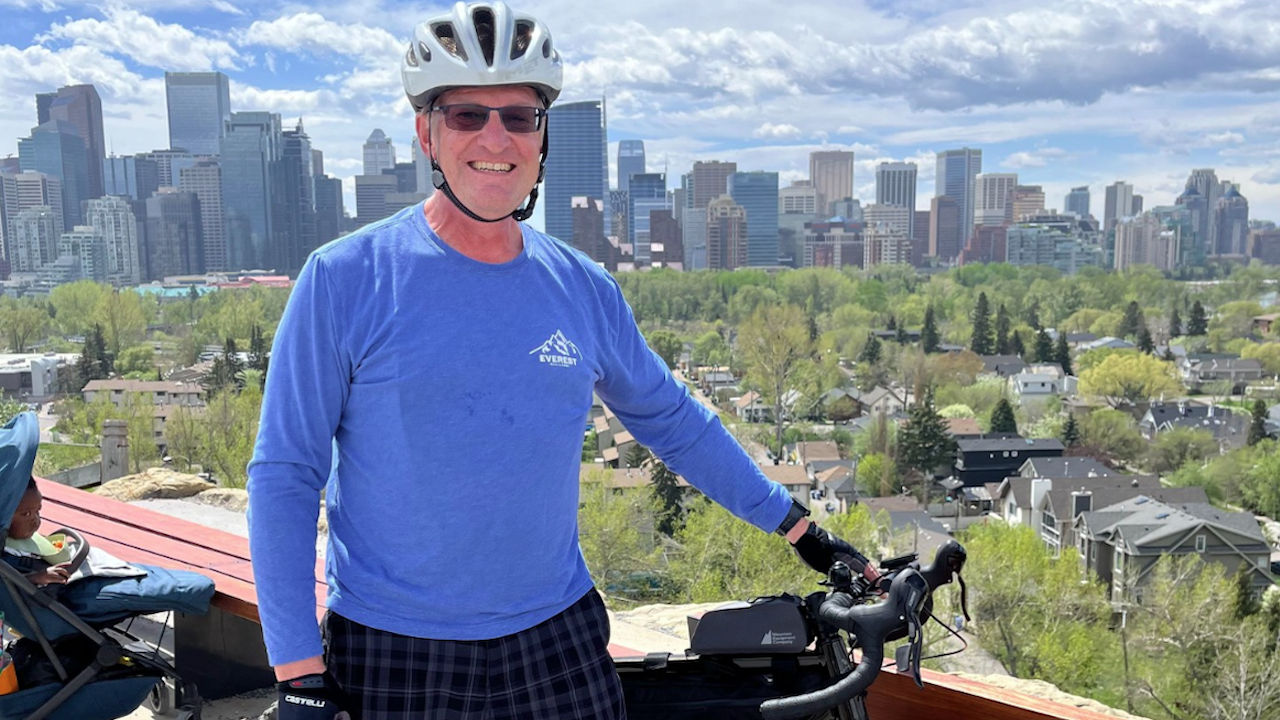
A former Ironman triathlete learned that vision trouble in his left eye signaled stage 4 lung cancer.
Dave Nitsche, 57, received an initial prognosis of 12 to 24 months to live. An experimental drug has allowed him to exceed that estimate by several years.
"In 2019, I noticed that I was having trouble seeing with my left eye," the Canadian told Fox News Digital. "I went to the optometrist, and they said it was probably a detached retina."
Scans showed fluid buildup and rising pressure in the eye. Doctors determined Nitsche had lost vision there and removed it. A biopsy found the fluid cancerous.
Specialists then drew fluid from his lungs for tests. "The next day, the oncologist told me that I had stage 4 lung cancer," he said.
His doctors expressed shock that eye problems stemmed from lung cancer, especially since Nitsche never smoked.
Azam J. Farooqui, a hematology and oncology physician at Ironwood Cancer & Research Centers in Chandler, Arizona, called the case very surprising. "Cancer can find its way to some very odd locations, but the eye is a very, very rare one," Farooqui, who did not treat Nitsche, told Fox News Digital. "Usually cancer will get there via a nerve channel or blood vessel, but it’s very uncommon."
The ex-triathlete, who completed multiple Ironman races, reported no other symptoms besides the eye issues. "I was running quite a bit at the time," he said. "I had a little bit of back pain here and there, but lung cancer definitely wasn’t on my radar."
Nitsche first received targeted therapy afatinib for about three months. Doctors found cancer spread to his brain, so he switched to Tegrisso (osimertinib), which crosses the blood-brain barrier.
After six years, when those failed, he began Rybrevant (amivantamab) via IV infusion every three weeks in a medical setting. The drug, made by Janssen Biotech, Inc. in Pennsylvania, has produced very good scans after a year, he said.
"There are days that you feel strong and there are days that you’re a little weaker, but you just adjust accordingly."
"Science is catching up to me perfectly with all these drugs that I'm on," Nitsche said. "Now, we'll just wait for the next thing to come along and we'll jump onto that. But for now, the Rybrevant is working perfectly."
He has faced skin irritation and fingernail infections but called the drug very tolerable overall. Farooqui agreed Rybrevant proves very manageable compared to full-dose chemo and other lung cancer treatments.
FDA prescribing information lists other side effects including infusion reactions, muscle and joint pain, mouth sores, swelling, fatigue, nausea, bowel changes, vomiting, cough, shortness of breath and low appetite. Rare serious effects can involve lung inflammation, blood clots, severe skin reactions and eye problems. Pregnant women should avoid it due to fetal risks.
"If somebody is having too many side effects, or if it is feeling too aggressive, we can do dose reductions," Farooqui said. "In my experience, we've had patients do really well on it, and we've been able to manage their side effects without any major concerns."
Rybrevant now treats certain non-small cell lung cancers in the U.S. and Canada. Some of Nitsche's friends take it too.
"Doctors gave me a year to two years – they told me to get my affairs in order. And it's been seven years now," he said. "I’ll take it."
"For almost any type of cancer, a diagnosis is not a death sentence."
Nitsche credits endurance training and fitness for aiding his survival. He plans a 600-mile biking expedition in June to raise lung cancer awareness.
"If you have lungs, you can get lung cancer – but at this point, for almost any type of cancer, a diagnosis is not a death sentence," he said. "They're doing so much research on it, especially with lung cancer … I've known people who have lasted 12 to 18 years, so for me, seven years is great. So I'll just keep going."
Farooqui stressed patients advocating for themselves to access the latest therapies.
What's Your Reaction?
 Like
0
Like
0
 Dislike
0
Dislike
0
 Love
0
Love
0
 Funny
0
Funny
0
 Wow
0
Wow
0
 Sad
0
Sad
0
 Angry
0
Angry
0









Comments (0)