

Doomsday Clock Set to Closest-Ever 85 Seconds to Midnight

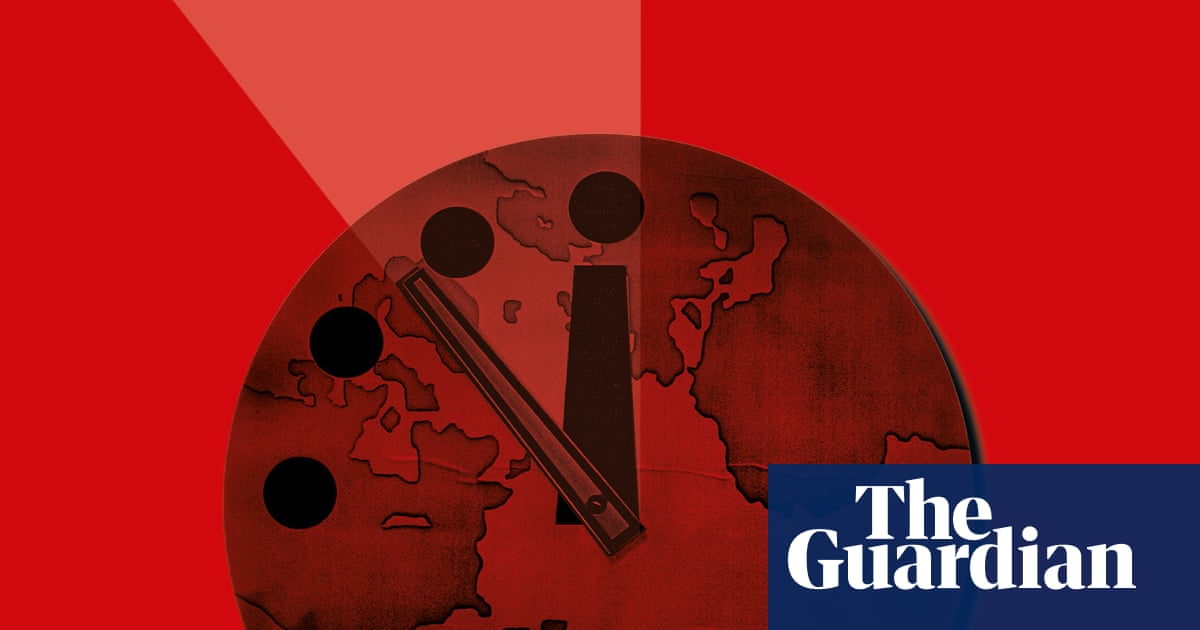
The Earth is warming. Wars rage in the Middle East and Ukraine, each raising the risk of nuclear conflict. Artificial intelligence permeates daily life despite its unpredictability and hallucinations. Scientists in labs risk unleashing pathogens deadlier than Covid, as pandemic readiness has declined. The Doomsday Clock, a symbolic quarter clock without numbers, ticks toward apocalypse. In January, it reached 85 seconds to midnight, the closest ever. Experts say humanity stands nearer the brink than at any point.
"What we have seen is a slow almost sleepwalk into increasing dangers over the last decade. And we see these problems growing. We see science advancing at a rate that defies our ability to understand it, much less control it," said Alexandra Bell, CEO of the Bulletin of the Atomic Scientists, the group that sets the clock. She cited a "complete failure in leadership" in the US and other nations, which do little against global threats even as they interconnect. Climate change fuels conflict, she noted, and AI in nuclear decisions is terrifying.
Bell spoke by video from her Washington DC office, adorned with a world map, Day of the Dead cushions and a framed Barbie-over-mushroom-cloud print, a colleague's gift tied to the Barbenheimer trend. She stressed that no nuclear bombs have detonated since 1945, fostering public complacency. "We've been lucky, because the odds are not in our favour. The more weapons that exist, for longer, the more likely it is something will go wrong," she said. Diplomacy and disarmament efforts also contributed, she added.
The Bulletin created the Doomsday Clock in 1947. Manhattan Project scientists launched it to alert the public and leaders to nuclear dangers after unleashing mass destruction. The Bulletin's science and security board, comprising top scientists, academics and diplomats, sets the time annually or as events demand, seeking consensus.
The clock symbolizes complex existential threats in simple terms. It aims to spur leaders and citizens to avert self-destruction. It has gained cultural status; the Bulletin website offers a playlist of inspired songs by the Clash, Pink Floyd, the Who, Bright Eyes, Linkin Park, Hozier and Bastille.
In 1947, after US atomic bombings of Hiroshima and Nagasaki, 200 University of Chicago Met Lab scientists formed the Atomic Scientists of Chicago. They warned of nuclear risks in their first bulletin in December 1945, urging international atomic weapons control. "All we can gain in wealth, economic security or improved health, will be useless if our nation is to live with the continuous dread of sudden annihilation."
The group expanded, dropped "Chicago" and made the bulletin a magazine with contributions from J. Robert Oppenheimer and Albert Einstein. Artist Martyl Langsdorf, wife of a Manhattan Project physicist, designed the clock for a 1947 cover at seven minutes to midnight for visual appeal. Eugene Rabinowitch, a former Met Lab biophysicist, set it for decades.
In 1949, after the Soviet Union's first nuclear test, Rabinowitch advanced it to three minutes to midnight. "Scientists are not intent on creating public hysteria," he wrote. He adjusted it sporadically: to two minutes in 1953 after the hydrogen bomb, back to seven in 1960 with Cold War cooperation, to 12 in 1963 after the Partial Test Ban Treaty, and again in 1972 after US-USSR missile reduction pledges. He died in 1973; a committee took over.
The clock reached its farthest point, 17 minutes to midnight, in 1991 as the Cold War ended. The board called it a new era with unexpected nuclear risk reductions; the original design capped at 15 minutes.
The Bulletin faced financial woes in the 1990s and early 2000s. In 2005, Kennette Benedict became executive director. She publicized clock updates, holding a 2007 press conference with Stephen Hawking and Martin Rees to set it at five minutes to midnight over North Korea's tests, Iran's program and climate threats. "It made a huge splash. People were hungry for this," she said.
Benedict made it annual, redesigned the clock as the logo and expanded scope to climate change and disruptive tech. Critics called it diluted. "All science and technology can be used for good or ill. They're dual use," she said in Chicago. She teaches nuclear policy at the University of Chicago, assigning John Hersey's Hiroshima. Nuclear arsenals fell from 70,000 to 10,000 or 12,000 since the Cold War, she noted.
In 2020, the clock moved to 100 seconds to midnight over arms control gaps, climate inaction, misinformation and AI. Rachel Bronson, Benedict's successor, likened it to a football two-minute warning. It has stayed in seconds since. "The more involved you are, the more optimistic you can be," she said in Chicago. "I'm so bullish on the science, but so pessimistic on the politics."
In January 2026, it advanced to 85 seconds to midnight. AI expert Gary Marcus later argued it was even closer after a White House-Anthropic clash showed Trump's push for unrestricted military AI. A study found top AIs chose nuclear options in 95 percent of war games. US and Israel strikes on Iran followed, heightening risks. "Further escalation or expansion of the conflict could lead to actions driven by miscalculation, misperception or madness," Bell warned. She became president in 2025.
Bell traced her drive to childhood outrage over the 1989 Exxon Valdez spill, when President George H.W. Bush dismissed her letter. "Elected leaders care about what their constituents call them about," she said. Public pressure shaped arms control.
Daniel Holz, University of Chicago astrophysicist and board chair, oversees consensus. He included Hiroshima and Nagasaki visits on a family Japan trip. The clock considers psychology to avoid paralyzing fear. Studying black holes gives perspective: humanity must save itself.
Dieter Gruen, 103, worked on the Manhattan Project in Oak Ridge, Tennessee. Still active on solar panels, he called current perils worse than the Cuban missile crisis amid Iran's uranium enrichment claims for 10 bombs. "I feel like I've never felt before," he said.
What's Your Reaction?
 Like
0
Like
0
 Dislike
0
Dislike
0
 Love
0
Love
0
 Funny
0
Funny
0
 Wow
0
Wow
0
 Sad
0
Sad
0
 Angry
0
Angry
0








Comments (0)