

Cuba's Power Grid Collapses, Blacking Out Eastern Provinces Amid Fuel Shortage

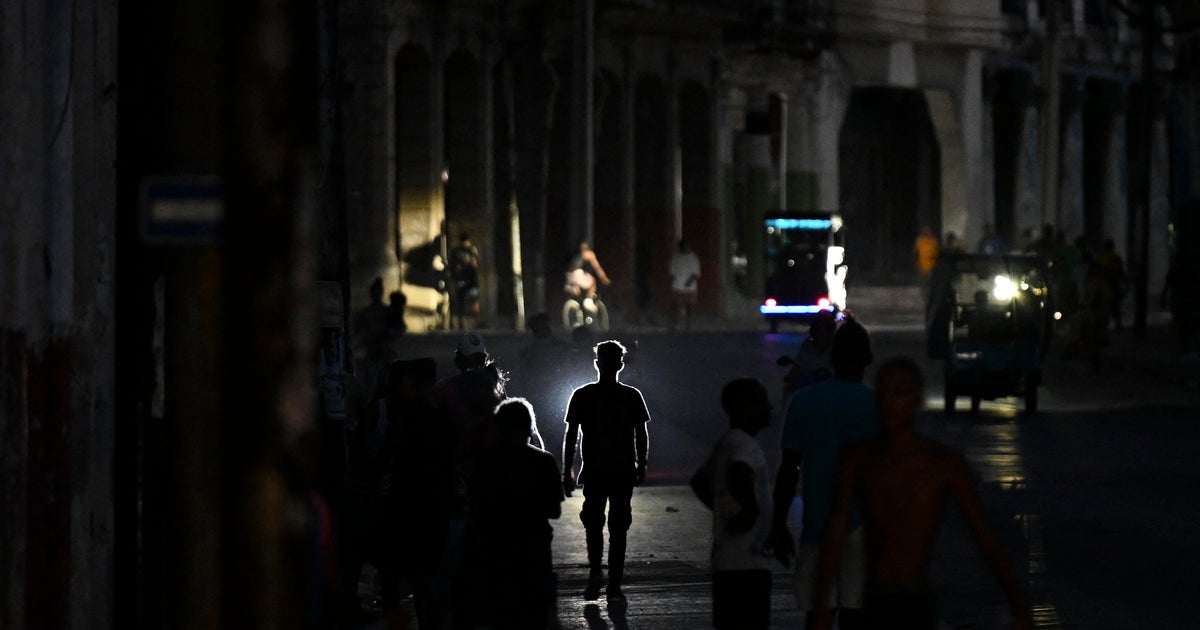
Cuba's national energy grid collapsed early Thursday, knocking out power across the island's eastern provinces, authorities reported. Residents in Havana meanwhile dealt with blackouts stretching 24 hours straight.
The outage hit as a U.S. delegation visited the island Thursday and met Cuban government officials. Cuba's aging grid has deteriorated amid a drawn-out economic crisis, aggravated by what officials call a U.S. energy blockade that has turned daily life into a struggle for many of the country's 10 million residents.
The state-run Electric Union said the failure affected every eastern province from Guantánamo to Ciego de Ávila. Crews worked to restore service, though no timeline was provided.
The day before, President Miguel Díaz-Canel called the energy situation "tense" after oil from a Russian vessel that arrived in late March ran dry. Cuba generates only about 40 percent of the fuel required to run its economy.
Russia plans to dispatch a second fuel ship in early April. Russian news reports said the tanker departed the Baltic port of Vysotsk in January but has lingered in the Atlantic Ocean for weeks.
Energy Minister Vicente de la O Levy told state media Wednesday that the island had "absolutely no fuel, and absolutely no diesel. We have no reserves."
Mexican President Claudia Sheinbaum announced Wednesday that her country sent a ship with humanitarian aid to Cuba. With Russia supplying oil, she said Mexico would focus on other support. Sheinbaum condemned the U.S. blockade: "We do not agree with it. We have never agreed with it, not since the very moment it was first imposed in 1962. Therefore, we will continue to send humanitarian aid to a people in need."
Associated Press journalists saw Havana residents Wednesday evening banging pots and pans and burning trash in protest of the blackouts. De la O Levy later went on television and labeled the energy crisis "critical."
The Cuban government said the U.S. delegation included CIA Director John Ratcliffe. It met with Cuba's interior ministry. A government social media post said the talks "made it possible to categorically demonstrate that Cuba does not constitute a threat to the national security of the U.S., nor are there legitimate reasons to include it on the list of countries that, allegedly, sponsor terrorism."
The State Department said Thursday it offered $100 million in direct humanitarian aid for distribution through the Catholic Church and other independent groups. "The decision rests with the Cuban regime to accept our offer of assistance or deny critical life-saving aid and ultimately be accountable to the Cuban people for standing in the way of critical assistance," it said.
The Cuban Embassy in the U.S. confirmed the offer but questioned its form. It remained unclear, the embassy said, whether the aid would come as cash or goods and target urgent needs like fuel, food and medicine. Still, "the Cuban government does not, as a matter of practice, reject foreign aid offered in good faith and with genuine aims of cooperation."
The embassy called for the aid to avoid "political maneuvering" and urged the U.S. to ease its "energy, economic, commercial, and financial blockade measures."
Díaz-Canel posted on social media: "If there is truly a willingness on the part of the United States government to provide aid in the amounts it announces and in full conformity with the universally recognized practices for humanitarian assistance, it will encounter no obstacles or ingratitude from Cuba."
"The damage could be alleviated in a much easier and more expeditious way by lifting or easing the blockade," he added.
The crumbling grid has prompted the government to fault U.S. sanctions. After former President Donald Trump warned in January of tariffs on nations selling oil to Cuba, the administration demanded Cuba free political prisoners and pursue political and economic reforms in exchange for eased penalties.
Blackouts have forced shorter work hours and spoiled food in refrigerators. Some hospitals have postponed surgeries.
What's Your Reaction?
 Like
0
Like
0
 Dislike
0
Dislike
0
 Love
0
Love
0
 Funny
0
Funny
0
 Wow
0
Wow
0
 Sad
0
Sad
0
 Angry
0
Angry
0

Comments (0)