

Bot Auto Autonomous Truck Completes First Fully Humanless 230-Mile Freight Run from Houston to Dallas

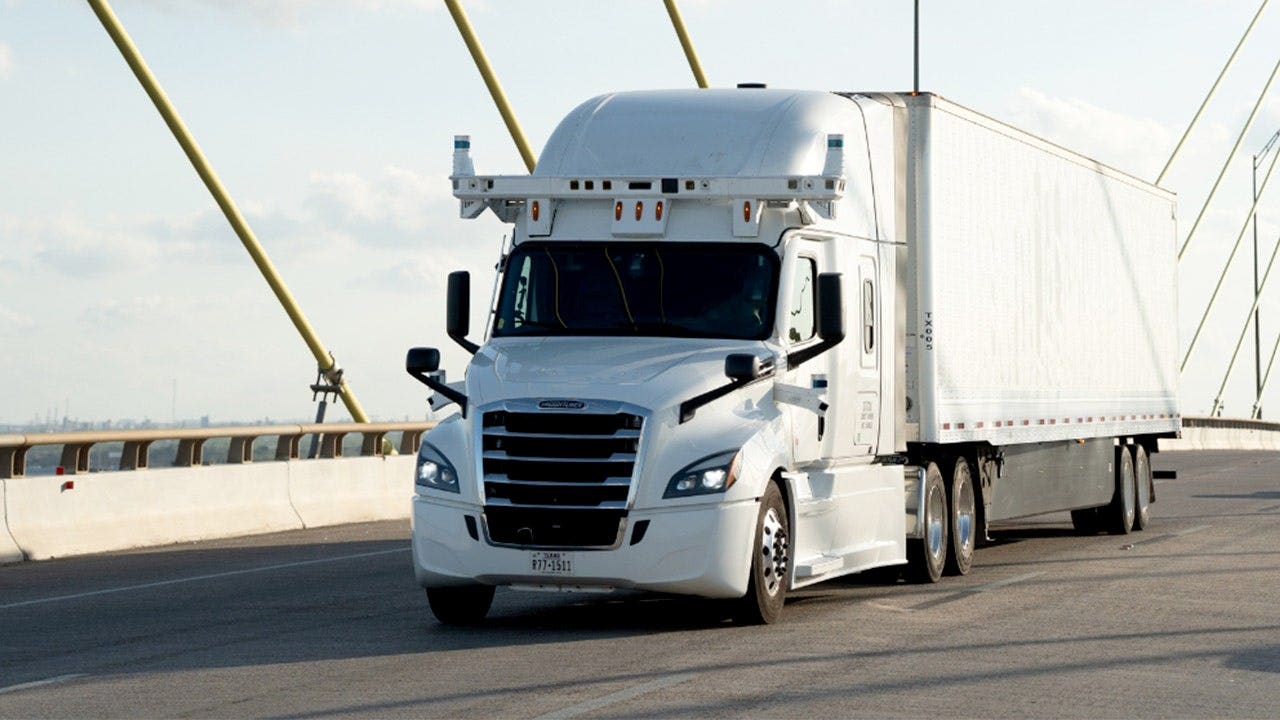
A driverless big rig departed Houston, Texas, late at night and completed a 230-mile delivery near Dallas by morning, right on schedule. No one rode inside, no backup operator watched from afar, and no remote human intervened.
Bot Auto called it the first fully humanless over-the-road commercial truckload in the U.S. The truck followed a real customer timeline and used the everyday freight network, not a controlled test.
Bot Auto CEO Xiaodi Hou detailed the run. "Our autonomous truck departed Riggy's Truck Parking in northeast Houston, headed to Hutchins, Texas, just south of Dallas," Hou said. "Departure was late at night as the shipper requested overnight service for this route. The truck ran 230 miles northbound on I-45, one of the busiest freight corridors in the country, navigated stop lights, side streets and frontage roads. There was no safety driver or observer, nor a remote operator. It was booked through our customer Ryan Transportation, true to our operating model, which is compatible with how freight actually moves in America today."
The load moved through Ryan Transportation, a top-20 freight brokerage. "Real freight, real customer, real timeline, delivered safe and on time," Hou said. "We are not disclosing the shipper or commodity, but this was not a load we manufactured to check a box. It moved through Ryan Transportation. Booked, priced, and executed the same way as any truckload moves in America. We made money on it. This is a commercial business, not a research project."
For Bot Auto, fully humanless means no safety driver, no back-seat monitor, and no low-latency remote human fallback. "Our safety design does not require any human to notice, decide, or react within one minute to keep the truck safe," Hou said. "We may have operational visibility, just like an airport tower can monitor the plane, but it does not fly the plane."
If the truck hits a problem outside its operating boundary, it slows down, creates space, and reaches a controlled safe state on its own. "The truck would not wait for a human to save it," Hou said. "When the truck encounters extreme or unexpected situations, it does not gamble. It acts conservatively. Sometimes that means stopping; sometimes it means continuing briefly to reach a safer place to stop. Human support can help after the vehicle is already safe, but the vehicle has to own the first minute."
Bot Auto removed the driver after millions of simulation miles, real-world testing with safety drivers, scenario analysis, and a defined operational design domain. The system proved it matched or beat a professional human driver on this route.
The run cost below $2 per mile, under typical human-driven rates. "With that complete accounting, the economics still work decisively in our favor," Hou said. "Autonomous trucking's cost impact isn’t a simple trade-off between driver wages and vehicle cost, it runs deep into operations. It improves at scale. The fixed costs of building and validating the system are largely sunk. As we add trucks and lanes, the per-mile cost of the technology keeps declining."
Texas Senate Bill 2807, passed in 2025, set up an authorization program through the Texas Department of Motor Vehicles. Bot Auto applied and gained approval, meeting all safety, reliability, and fail-safe requirements.
The Houston-to-Dallas lane now runs repeatably. Bot Auto picked it for high freight volume, hub infrastructure, and supportive rules. Expansion targets high-volume lanes in the Texas triangle of Houston, Dallas, and San Antonio.
Hou addressed skeptics. "A truck left Houston with no one in it, ran 230 miles on public roads, and delivered freight to a customer on time. That happened," he said. "The question is no longer whether it can be done. It is who can do it at scale, safely, and economically."
What's Your Reaction?
 Like
0
Like
0
 Dislike
0
Dislike
0
 Love
0
Love
0
 Funny
0
Funny
0
 Wow
0
Wow
0
 Sad
0
Sad
0
 Angry
0
Angry
0




Comments (0)