

Blackburn says Congress will examine sports betting and prediction markets

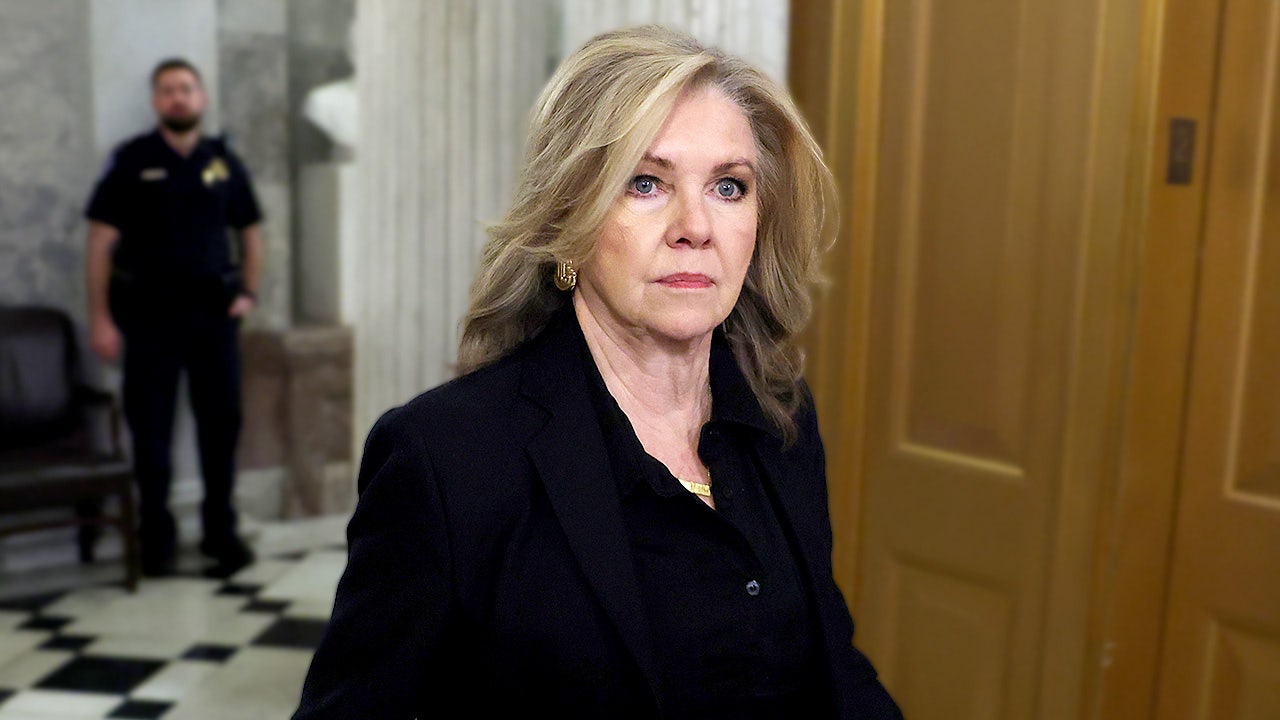
Sen. Marsha Blackburn said Congress is not finished examining the rapid growth of sports betting and prediction markets.
The Tennessee Republican, who chairs the Senate Commerce Subcommittee on Consumer Protection, Technology, and Data Privacy, spoke to Fox News Digital/OutKick after a hearing titled "No Sure Bets: Protecting Sports Integrity in America." She said lawmakers now must determine where Congress should act and where states should keep control.
"One of the things for consideration today [was] looking at the impact on the integrity of sports and gaming and then saying, all right, how do we make certain that we preserve fair play," Blackburn said.
The hearing looked at legal sports betting, sports-related prediction markets, gambling addiction, social media advertising and recent scandals involving alleged manipulation in professional and college sports.
Blackburn said one of the main points was the need to sort out the proper role for federal regulators versus state gaming officials.
"You heard a good bit today about the regulation on the prediction markets, the difference there against what you have as betting and gaming," she said. "And we are going to have to parse out what part of that should be federal and what is best left to state regulators."
Sports betting is regulated mainly at the state level. Prediction markets, which let users trade contracts tied to future events, have argued they fall under federal commodities law and the Commodity Futures Trading Commission.
American Gaming Association President and CEO Bill Miller said prediction markets operate as "backdoor sports betting operations" and undercut state and tribal gaming systems built since the Supreme Court struck down the federal sports betting ban in 2018.
"They are running sports books at a national level without any of the regulatory constraints and frameworks that have been created either in Tennessee or in any other state that has chosen to legalize sports betting," Miller testified.
Former Rep. Patrick McHenry, now a senior advisor for the Coalition for Prediction Markets, said prediction markets differ from sportsbooks because users trade against each other while the platform collects transaction fees.
"In a casino or sportsbook, the house sets the odds and profits when customers lose," McHenry said. "In a prediction market exchange, participants trade with one another, while the platform earns transaction fees for facilitating the market."
Sen. John Curtis, R-Utah, said he would have trouble explaining the difference to people in his state.
"If I were hearing that back in Utah, I would say I think something might happen, I’m going to put money down on it, and I have the chance of either making more money or losing money on that," Curtis said. "Tell me how that is not gambling."
Sen. Jacky Rosen, D-Nev., said, "If it walks like a duck and quacks like a duck and looks like a duck, it’s probably a duck."
Blackburn also raised concerns about young people seeing gambling content online. She said more than one third of boys ages 11 to 17 admitted to gambling last year and that 60 percent of those who saw gambling content online had it appear through social media algorithms.
"It is insufficient to say, ‘We do not market to teenagers and we do not market to young people under the age of 18 or 21,’ when those are the places that they are advertising," Blackburn said.
Dr. Harry Levant, director of gambling policy at the Public Health Advocacy Institute, warned that microbetting tied to rapid in-game events is especially risky.
"The human brain is not built to absorb an addictive product every 10 seconds or less," Levant testified.
Scott Sadin, co-founder and co-CEO of Integrity Compliance 360, said player props, microbetting and in-game markets are more open to manipulation.
Tennessee Sports Wagering Council Executive Director Mary Beth Thomas said the state has banned some high-risk bets, including individual college player prop bets and wagers tied to injuries or penalties. She said regulators investigated 25 potential integrity cases and referred 13 to the FBI.
Blackburn said the committee will hold more hearings and must decide whether a minimum federal standard is needed or whether the issue should stay with the states.
"Making certain that laws are in place in the physical space are replicated in some way in the virtual space is going to be important for Congress to step in and take an action," she said.
What's Your Reaction?
 Like
0
Like
0
 Dislike
0
Dislike
0
 Love
0
Love
0
 Funny
0
Funny
0
 Wow
0
Wow
0
 Sad
0
Sad
0
 Angry
0
Angry
0





Comments (0)