

Beijing Confirms Trump-Xi Meeting Amid US-China Tariff Truce

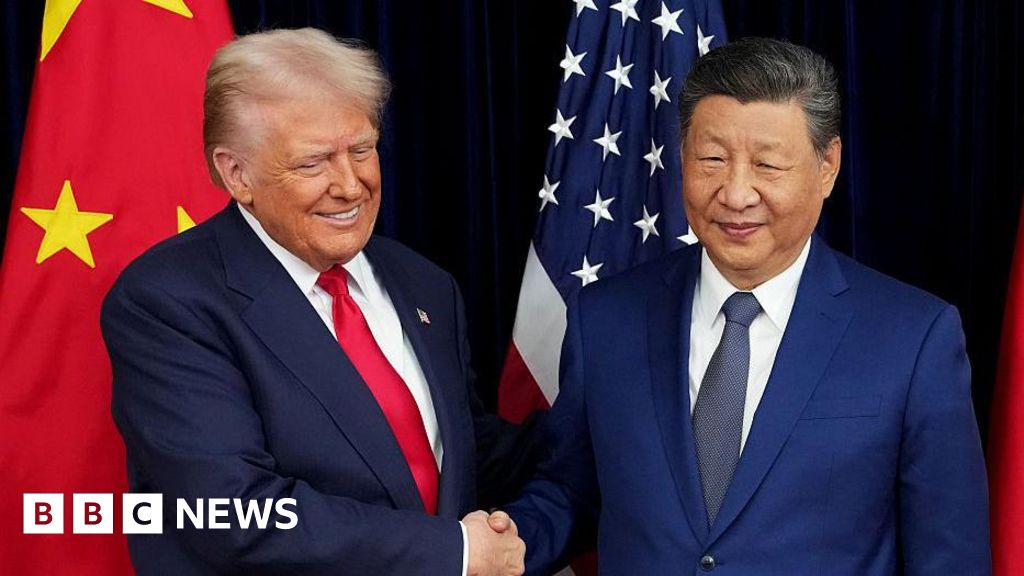
Beijing confirmed that US President Donald Trump will visit China this week to meet Xi Jinping.
The trip, set for May 13-15, marks the first visit to China by a US president in nearly a decade. It arrives during tense relations between the world's two largest economies.
Executives from Boeing, Citigroup and Qualcomm plan to accompany Trump and seek deals with Chinese firms. The visit tests the fragile trade truce between Washington and Beijing.
In April 2025, Trump announced broad import taxes on countries worldwide. That sparked a tit-for-tat trade war with China, where tariffs exceeded 100%. The duties paused after Trump and Xi met in South Korea in October. Threats from both sides persisted.
Trump won the 2016 election promising fairer trade and a return of manufacturing jobs to the US.
In 2018, he imposed tariffs on $250 billion of Chinese imports, a move analysts call the trade war's start. That year, he added levies on Mexico, Canada and Europe, claiming they exploited the US.
The measures shocked China, said Ning Leng, a policy researcher at Georgetown University. "It was the first time they dealt with Trump seriously, and they probably did not expect him to go ahead with it," Ning said.
China relied heavily on trade with the US at the time. America imported many Chinese manufactured goods, threatening Chinese workers if US buyers pulled back due to tariffs.
Tensions worsened China's existing problems: slow domestic spending, high unemployment and a drawn-out property crisis. Exports to the US supported Chinese jobs, but Trump put that at risk. "It's harder for one country to withstand a trade war with another that it has trade surplus with," Ning said.
Joe Biden kept Trump's China tariffs when he took office in 2021. His administration aimed to curb China's growth in technology and other sectors, Ning said.
Biden restricted Huawei over national security, effectively barring it from the US. He scrutinized TikTok, leading to separation of its US operations from the Chinese parent. Biden also blocked Chinese electric vehicles with heavy tariffs.
"We often think that Trump is tough on China, but there is an argument to say that Biden was even more protectionist than Trump was," said economist Tang Heiwai of the University of Hong Kong.
After returning to office in 2025, Trump raised tariffs on China to 20%, blaming it for fentanyl inflows. On Liberation Day, he added a 34% levy on Chinese goods, among the highest worldwide.
The tariffs disrupted Chinese businesses, filled warehouses with unsold goods and forced US firms to seek other suppliers. Beijing hit back with duties on US farm products, hurting Trump's rural supporters.
Trump overlooked China's dominance in rare earths, vital for smartphones and fighter jets. He had used tariffs to extract favorable deals, but could not risk US firms dependent on Chinese materials.
Their October meeting led Beijing to suspend rare earth export controls, a Trump win. China agreed to buy US farm goods immediately. In exchange, Washington eased tariffs on fentanyl precursor imports. Planned tariff hikes paused, and limits eased on advanced semiconductor sales to China, excluding the most advanced chips.
Last year's truce brought no permanent fix. China's manufacturing push leaves firms dependent on foreign sales amid weak domestic demand, Tang said. "It will need the US. There's no single country as big as them as a consumer market," Tang said.
Beijing enters stronger, with record exports from new global partners as US ties cooled. It invests in robotics and domestic advanced chips to reduce reliance on firms like Nvidia.
Trump's team will press for more Chinese purchases of US soybeans and aircraft parts. The visit follows a US Supreme Court ruling against Trump's Liberation Day tariffs.
China has managed fallout from the Iran war better than neighbors, thanks to its oil production and Russian imports. It remains Iran's top oil buyer. Senior officials promise steps to secure energy and supply chains as the conflict continues, said Morris.
Both sides may seek an end to the war, but they differ sharply on Iran.
What's Your Reaction?
 Like
0
Like
0
 Dislike
0
Dislike
0
 Love
0
Love
0
 Funny
0
Funny
0
 Wow
0
Wow
0
 Sad
0
Sad
0
 Angry
0
Angry
0








Comments (0)