

Australian Scientists Use Biobanks to Preserve Golden Kelp, Oysters and Seagrass

Royal spoonbills sweep their paddle-shaped bills through shallow water in the mudflats of Swan Bay, Victoria. Inside the nearby Queenscliff marine research centre, Deakin University scientists work to revive ecosystems that support those birds and many others.
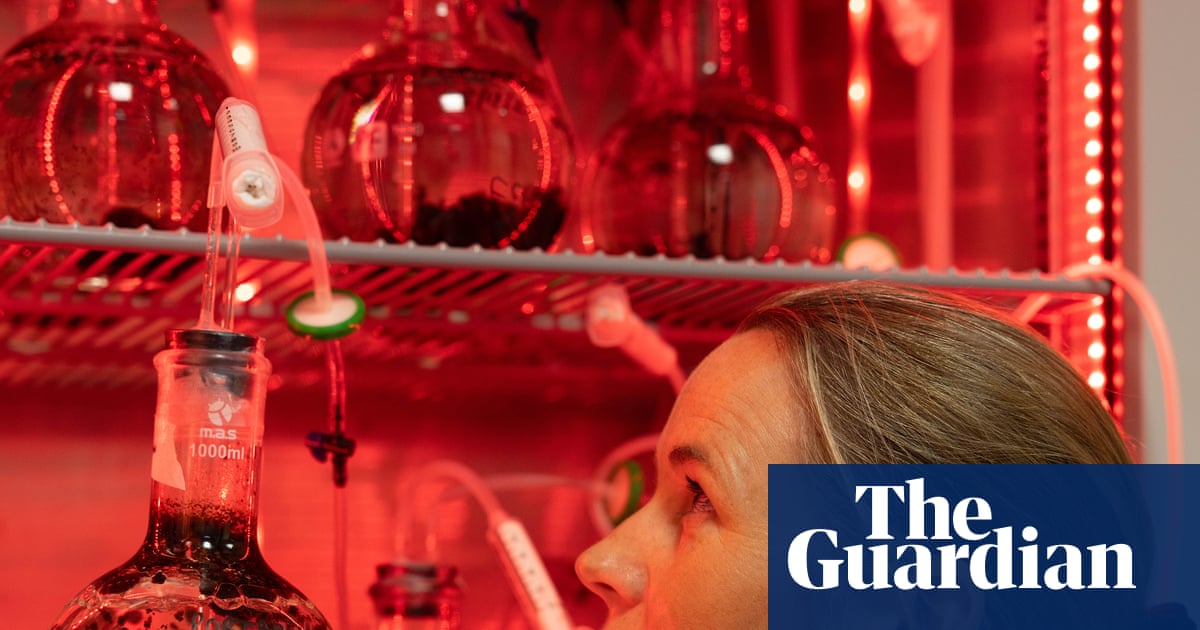
Associate Professor Prue Francis keeps beakers of golden kelp – bubbling brown gunk – under red light in a fridge with sensors, alarms and a backup generator. The light holds the kelp in an early algal stage. "They won't produce the next stage. They'll just keep growing like grass," Francis says. A smaller, colder fridge stores trays of dormant vials of the same kelp.
These fridges form part of the university's "living library," a biobank for long-term storage of at-risk marine life. Biobanks serve as insurance against species extinction and research centers for genetics, growth and resilience amid environmental crisis.
"Restoration has become quite an urgent need for not just our coastline but for coastlines all across Australia and the world," Francis says. "A lot of our research teams are looking at ways of being able to do restoration, or future-proofing some of our organisms that are getting lost at such a high rate."
Deakin's living library joins other Australian biobanks that store seeds of native plants and cells or tissue from threatened animals. The Australian National Botanic Gardens in Canberra gathers seeds from the ACT region, the Australian Alps, Uluru, Kakadu and Norfolk, Christmas and Cocos islands. The seeds go into a -20C vault and can grow into adult plants if required.
Melbourne Museum cryogenically freezes living cells of Australian wildlife at -196C in 2ml tubes. Samples include ear snips from mammals, tail tips from reptiles, DNA and living cells. The collection could store embryos from threatened species.
A marine heatwave off Western Australia prompted biobanks for golden kelp, a foundation species in the 8,000 km Great Southern Reef. The kelp supplies habitat and food for lobsters, abalone and unique fish. It dies first in warming water.
"There was a really intense marine heatwave off the coast of Western Australia a few years back and it wiped out a lot of the golden kelp," Francis says. "And that was scientists' call to action, seeing that huge decline, to start establishing biobanks around the different areas where this golden kelp is found."
Francis joined a kelp restoration project in Port Phillip Bay's Jawbone and Ricketts Point marine sanctuaries, where purple sea urchins had overgrazed the kelp. "The first thing we did was to reduce the urchins in those areas to a density that we know that they can coexist with the kelp," Francis says. "Then part of our work was to grow the kelp."
Golden kelp uses a holdfast to anchor to substrate instead of roots. In the lab, kelp grew on cotton twine or green gravel pieces for six weeks before scuba divers planted it in 2022. "Gardening at its best!" Francis says.
A few weeks ago, a Nature Conservancy partner sent Francis photos of the sites. "They just look absolutely fantastic," Francis says. "Some of those kelp have gone beyond 30cm in length and are showing reproductive signs as well."
A briny smell fills the Queenscliff centre from 800,000 litres of seawater pumped daily through labs of Deakin, the Victorian Fisheries Authority and Shellfish Hatchery.
In bubbling tanks, Dr Kathy Overton tends native flat oysters, which once formed vast reefs in temperate Australia until fishing destroyed them. "Less than 1% of historical reefs remain," Overton says. "They're definitely one of the most imperilled marine ecosystems that we have here in Australia."
Last year, Overton sampled remnant reefs in Victoria to study genetic diversity and reproduction. Three of four populations reproduced successfully. "Having these oysters here means that we can look for different experiments to better understand how we can restore them," Overton says. "In the long term, it'd be really fantastic to be able to build on this."
Marine ecologist Laney Callahan tests seagrass seeds, the only flowering marine plant. Seagrass meadows house fish and crustaceans, process carbon and nitrogen, trap sediment and clear water. Human activities like development, runoff, dredging and climate change hit them hard in estuaries and intertidal zones.
"Any time the ocean's changing because of something that we're doing, they're vulnerable to that," Callahan says.
Seagrass declined in Port Phillip Bay during the millennium drought and in Western Port Bay amid 1970s and 1980s industrialization. Western Port's worst spots have waist-deep mud and sediment-filled water. "That's one of my dream sites to restore but it's definitely the most difficult," Callahan says.
Six months ago, Callahan planted 300 square metres of seagrass in Coronet Bay with early positive results. "The goal is to grow bigger. We really want to achieve larger scale restoration this year, hopefully," Callahan says. "It's a global challenge at the moment, seagrass restoration. There's a handful of successful projects that have achieved restoration at a scale that's ecologically relevant, but very few. And that's something that we're all working towards together."
What's Your Reaction?
 Like
0
Like
0
 Dislike
0
Dislike
0
 Love
0
Love
0
 Funny
0
Funny
0
 Wow
0
Wow
0
 Sad
0
Sad
0
 Angry
0
Angry
0








Comments (0)